Wednesday, April 22, 2026Vol. III · No. 112Subscribe

Stake & Paper

The Mining, Energy & Technology Wire
Mining · Analysis

Lithium's Comeback and the Global Scramble for Critical Minerals

The lithium market is flipping from surplus to deficit as analysts project shortages by year-end, while the U.S. pushes allies to pay a 'national security premium' for critical minerals and Congo tightens its grip on global cobalt supply.

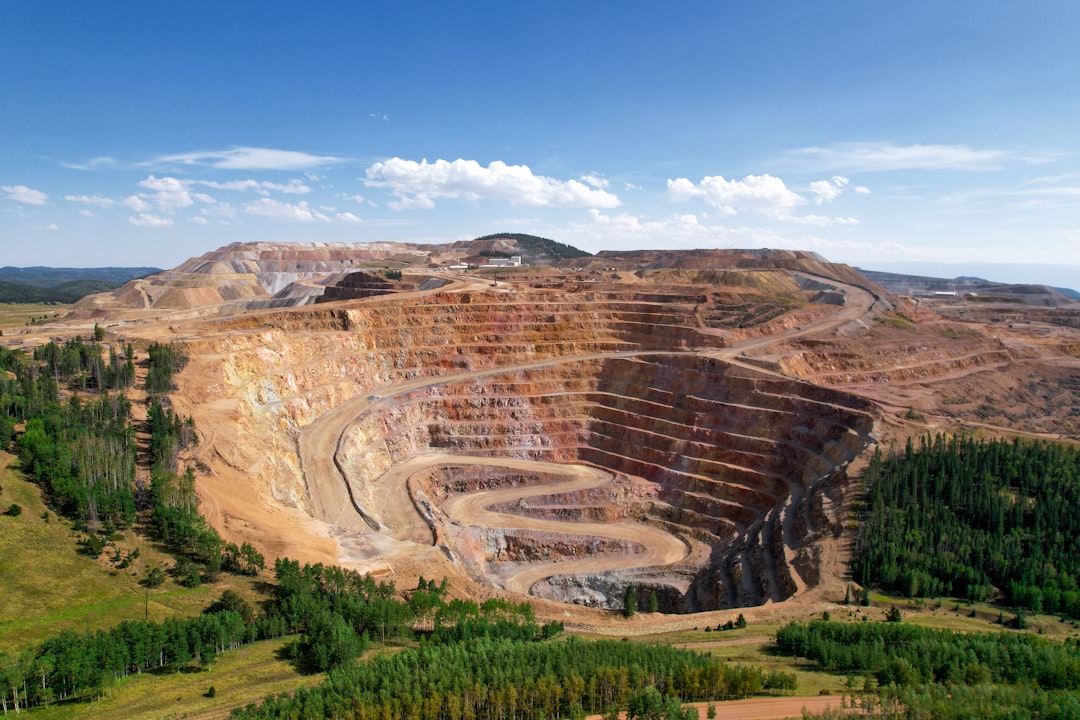
PhotographThe lithium market is flipping from surplus to deficit as analysts project shortages by year-end, while the U.S. pushes allies to pay a 'national security premium' for critical minerals and Congo tightens its grip on global cobalt supply.

The lithium market is undergoing what analysts are calling a "seismic shift." After years of severe oversupply that crushed spot prices, the critical battery metal is now aggressively tightening, with major financial institutions projecting a steep supply deficit by 2026 .

Lithium prices surged in Q1 2026, with battery-grade lithium carbonate nearly doubling to $26,278 per ton from about $13,433 per metric ton in early December . Morgan Stanley is now modeling an 80,000 tonne lithium carbonate equivalent deficit in the lithium market for 2026 , while Canaccord Genuity has estimated that Zimbabwe's export ban removes approximately 7% of the total global 2026 lithium supply .

The turnaround has been dramatic. According to Fastmarkets, the market surplus peaked at approximately 175,000 tons of Lithium Carbonate Equivalent in 2023, and this excess inventory crushed spot prices, which plummeted by more than 80 percent from their late-2022 highs, bottoming out at just $8,259 per ton in China by June 2025 . But S&P Global Energy CERA reported in December that the global lithium chemicals market is anticipated to record a reduced surplus of 109,000 metric tons of lithium carbonate equivalent in 2026, down from 141,000 mt in 2025, with global consumption forecast to rise 13.5% year over year to 1.48 million mt LCE in 2026 .

Europe's First Lithium Mine Seeks Protection

As lithium prices rebound, Europe is racing to secure its own supply. South Africa's Sibanye Stillwater said on Monday it is seeking concessions from the European Union to shield Europe's first large-scale lithium mining and processing venture from price volatility and unfair competition, as it advances its Keliber lithium project in Finland in phases and began mining lithium ore at the Syväjärvi open-cast mine in February with plans to commission a concentrator during the third quarter of 2026, producing spodumene concentrate at a rate of about 140,000 metric tons annually .

A decision on commissioning a refinery to produce ~15K metric tons/year of battery-grade lithium hydroxide will be taken in Q3 and largely depends on ongoing talks with the European Union, including on a floor price, Sibanye's chief European advisor Mika Seitovirta told analysts at the company's Capital Day in Finland . Sibanye is seeking EU concessions—such as a floor price and trade measures—to shield its refinery from price volatility, unfair competition and Chinese oversupply .

Trump Administration Demands "National Security Premium"

The U.S. is taking a more aggressive stance on critical minerals procurement. U.S. Trade Representative Jamieson Greer has told American allies they must pay more for critical minerals sourced from outside China, the Financial Times reported on Wednesday .

On February 26, 2026, the Office of the United States Trade Representative opened a public docket to seek stakeholder input for a proposed "Plurilateral Agreement on Trade in Critical Minerals," with the Trump administration intending to use the proposed trade agreement to establish new multinational price management and investment support policies to develop a more resilient and diversified critical minerals supply chain for the United States and like-minded partners .

President Donald J. Trump signed a Proclamation pursuant to Section 232 of the Trade Expansion Act of 1962 ordering the U.S. Secretary of Commerce and U.S. Trade Representative to jointly negotiate agreements with trading partners to address the threatened impairment of national security with respect to imports of processed critical minerals and their derivative products from any country, and in negotiating, the Administration will, working with allies, promote the adoption of price floors for trade in PCMDPs .
Congo Tightens Grip on Cobalt Markets

The Democratic Republic of Congo is asserting greater control over its critical mineral wealth. The Democratic Republic of Congo has transferred management of its strategic mineral reserve to the markets regulator, with the decision approved by the Council of Ministers on April 10, 2026, granting the Autorité de Régulation et de Contrôle des Marchés des Substances Minérales Stratégiques powers to manage a strategic reserve aimed at stabilising markets, and in a statement, Kinshasa said the reserve, covering cobalt and other critical minerals, would allow it to stockpile unused export quotas and exert greater control over global supply .

Congo is the world's largest producer of cobalt, a key component in electric vehicle batteries, accounting for about 70 percent of global supply last year, and the country exported about 48,800 metric tonnes of cobalt in the first quarter of this year, down from roughly 123,000 tonnes in the same period last year, when shipments were front-loaded ahead of a four-month freeze . Under the quota framework, Congo said it would reserve 10% of national cobalt export volumes for strategic use by the state, and for 2026, that amounted to 9,600 metric tons .

BHP Settles China Iron Ore Dispute

In a development that eases pressure on global iron ore markets, BHP Group has struck a supply deal with China's state-backed iron ore buyer, ending a months-long standoff between a vital consumer and the world's largest miner that has roiled markets and hampered steel mills' access to key products .

The world's largest listed miner said it had concluded talks with China Mineral Resources Group, the state iron ore buyer, ending a months-long dispute stemming from bans on the procurement of the key steel-making ingredient from BHP . The deal follows prolonged discussions, with CMRG who represents 80 per cent of China's steel mills pushing for price concessions and applying pressure to certain BHP products, including Jimblebar fines .

Copper's Uncertain Path

While lithium surges, copper faces a more complex outlook. Goldman Sachs on Tuesday maintained its forecast for the copper price to average $12,650 per metric ton this year and its estimate of a 490,000-ton 2026 surplus for the metal . However, companies in the DRC still hold two to three months of inventory, but if supply-chain delays extend beyond late May through June, Goldman estimates the country could curtail about 125,000 tons of production in 2026, and separately, China's ban on sulphuric acid exports lasting through the year would put 200,000 tons of Chilean production at risk, equivalent to 1% of global supply .

The critical minerals landscape is being reshaped by a combination of market forces, geopolitical maneuvering, and resource nationalism. As countries and companies scramble to secure supply chains, the era of cheap, abundant battery metals appears to be ending—replaced by a more volatile environment where strategic positioning matters as much as geology.

Coverage aggregated and synthesized from leading energy-sector publications. See linked sources within the article.

Share this story

Was this article helpful?

Discussion

Not published • Used for Gravatar

0/2000 characters

Loading comments...

ClaimWatch

Mining claims intelligence — from query to map, in minutes.

Every unpatented mining claim across eleven western states. Due diligence, prospecting, and monitoring delivered as complete reports with publication-ready ArcGIS maps.

4.4M+
Claims Tracked
11
Western States
3
Report Types
Request a Sample Report
Stake & Paper AM

One morning brief. The whole energy sector.

Original analysis, the day's most important wire stories, and market data — delivered before your first cup of coffee. Free.