Mining · Analysis
What is the difference between open pit and underground mining?
Open pit mining extracts minerals from the surface by removing overburden in a large excavation, while underground mining accesses deeper deposits through tunnels and shafts.
Stake & Paper Editorial TeamApril 28, 2026
The primary difference between surface mining and underground mining is where the extraction takes place. Surface mining occurs on the Earth's surface, where minerals and resources are located close to the topsoil. Underground mining, on the other hand, involves creating tunnels and shafts to extract resources buried deep beneath the surface.
Key Points
-
The choice between open-pit and underground mining depends on factors such as deposit depth, geology, environmental impact, economic viability, and safety. Open-pit mining is generally used for shallow deposits due to its cost-effectiveness, high productivity, and safer working conditions.
-
Underground mining is suited for deeper deposits, offering more selective extraction and less surface disruption, though it typically involves higher costs and greater safety challenges.
-
Surface mining is cost-effective for extracting lower-grade metal ores and industrial minerals near the Earth's surface.
-
In terms of cost, underground mining is typically more expensive than surface mining. This is due to the complexity of constructing tunnels and the sophisticated equipment needed to operate below the surface.
-
While underground mines are generally more hazardous for miners, open pit mines are generally more hazardous to the local environment.
Understanding Mining Methods
Mining companies must choose between two fundamentally different approaches to extract valuable minerals from the earth.
The choice of mining methods depends on several factors, including the type of mineral, its location, and the quantity of the deposit. Careful planning ensures the economic viability of mining operations.
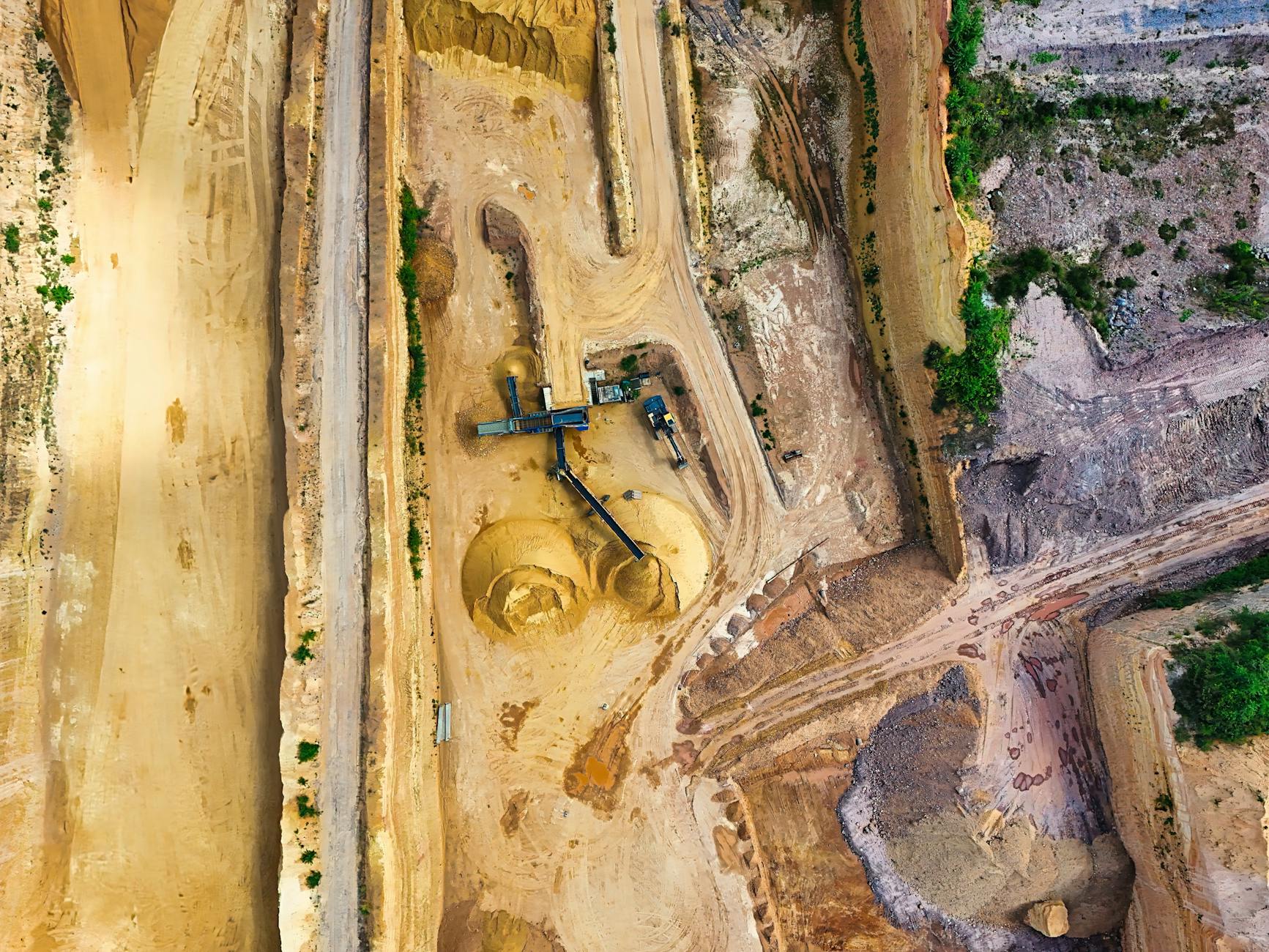
Open-pit mining, also known as open-cast or open-cut mining and in larger contexts mega-mining, is a surface mining technique that extracts rock or minerals from the earth. Open-pit mines are used when deposits of commercially useful ore or rocks are found near the surface where the overburden is relatively thin. In contrast, deeper mineral deposits can be reached using underground mining.
The depth of the mineral deposit plays a crucial role in determining which method to use.
Open-pit mining works best for near-surface deposits (typically under 300-500 meters), allowing bulk extraction with large equipment. Underground mining targets deeper ores to minimize waste rock removal.
Surface mining becomes unsuitable below 60m (200ft), therefore drilling operations must adjust accordingly.
How It Works
Open Pit Mining Process
Overburden Removal:
This involves removing the overburden, the material covering the coal seam/ore body. This overburden can consist of soil, rocks, or any type of ecosystem.
Bench Excavation:
Open-cast mines are dug on benches, which describe vertical levels of the hole. The interval of the benches depends on the deposit being mined, the mineral being mined, and the size of the machinery that is being used. Generally, large mine benches are 12 to 15 metres thick.
Drilling and Blasting:
The blast is controlled to break the rock into pieces without wasting it or harming the ore. Engineers plan the blast based on rock type, pit shape, and safety—too big a blast could weaken the pit walls, too small leaves big chunks.
Loading and Hauling:
Giant shovels or draglines scoop up the broken rock and load it into huge haul trucks—some carry over 400 tons. These trucks take the ore to a processing plant or storage.
Underground Mining Process
Access Development:
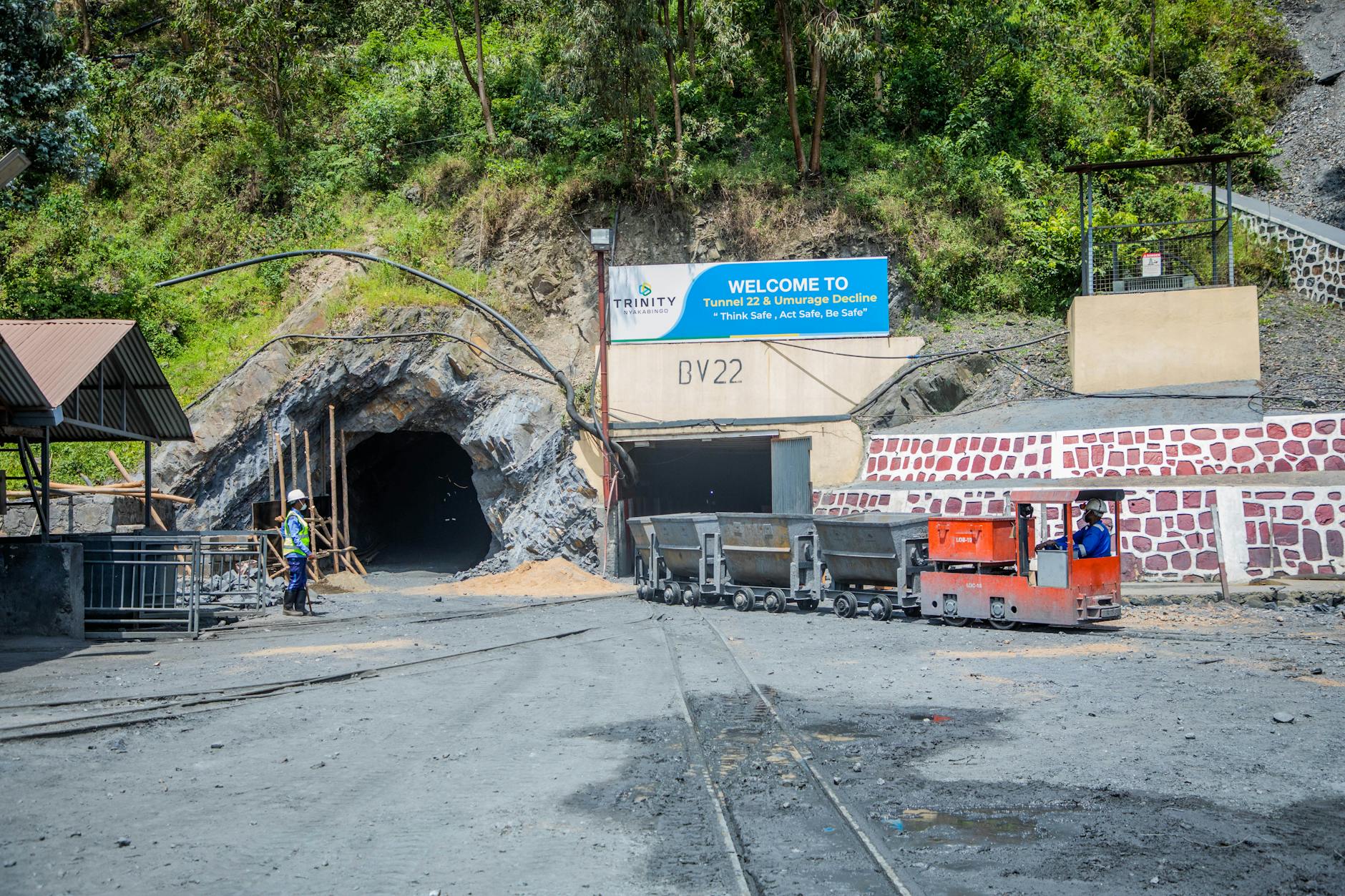
Ramps (inclined tunnels) are excavated to connect the surface to the underground ore body. Drifts (horizontal tunnels) are excavated at different elevations to surround the ore body.
Stope Creation:
Stopes (tunnels that have direct access to mining the ore) are mined to gain access to the ore. All tunnels are excavated by drilling and blasting.
Ore Extraction:
There are two principal phases of underground mining: development mining and production mining. Development mining is composed of excavation almost entirely in (non-valuable) waste rock in order to gain access to the orebody.
Ventilation and Support:
Ventilation is the primary method of clearing hazardous gases and/or dust which are created from drilling and blasting activity (e.g., silica dust, NOx), diesel equipment (e.g., diesel particulate, carbon monoxide), or to protect against gases that are naturally emanating from the rock (e.g., radon gas).
Why It Matters
The choice between open pit and underground mining has profound implications for project economics, worker safety, and environmental impact.
Open pit mining grants access to the majority of the deposit, which makes it a practical option when possible. As open pit mining is also more economically efficient, it can add to the overall profitability of the project if the mineral at hand is of a lower market value.
However, the environmental footprint differs significantly between the two methods.
Open-pit mining has a more significant and visible environmental footprint. It requires the removal of large areas of land, alters landscapes, and generates substantial amounts of waste rock. Underground mining, while still impacting the environment, generally has a smaller surface footprint.
Safety considerations also vary by method.
Open-pit mines are safer than underground mines, as workers can more easily evacuate disaster sites.
Yet underground mining faces unique hazards.
Underground mining comes with significant risks for workers. Cave-ins, explosions, and toxic air are some of the most dangerous hazards that underground miners face. Without proper ventilation, toxic gases like methane and carbon monoxide can build up, creating potentially life-threatening conditions.
Related Terms
- Overburden: The soil, rock, and other material that covers a mineral deposit and must be removed before mining can begin.
- Stripping Ratio: The ratio of waste material (overburden) that must be removed to access a unit of ore, a key economic factor in open pit mining.
- Bench: A horizontal ledge or step in an open pit mine that allows equipment access and helps maintain slope stability.
- Drift: A horizontal tunnel in an underground mine that follows the ore body or provides access to mining areas.
- Stope: An underground excavation from which ore is extracted in underground mining operations.
Frequently Asked Questions
When does a mine transition from open pit to underground?
Open-pit mines are typically worked until either the mineral resource is exhausted, or an increasing ratio of overburden to ore makes further mining uneconomic.
To extend mine life and increase economic reserves, transitioning from open-pit to underground mining has proven to be a viable strategy. Identifying this critical transition depth is pivotal, as it significantly impacts mining profitability.
Which method produces less waste?
One of the primary advantages of underground mining is that it produces less waste compared to surface mining. Because underground mining targets deep deposits, it doesn't require the removal of large amounts of overlying material or soil.
However, open pit mining can process larger volumes of lower-grade ore economically.
What are the main environmental differences?
Underground mining generally results in relatively small waste rock disposal areas ranging from a few acres in size to tens of acres. Open pit mining disturbs larger areas than underground mining, and thus has larger visual and physical impacts.
Unlike surface mining, which requires extensive land clearing, underground mining operates below the surface, leaving the above-ground environment largely intact. This approach preserves natural habitats, reduces deforestation, and limits visual scars on the landscape.
Last updated: April 28, 2026. For the latest energy news and analysis, visit stakeandpaper.com.