In 2025, data centers consumed 485 terawatt-hours of electricity. Thirty percent of that—more than Sweden's entire annual power consumption—went to cooling. Now a team at the University of Illinois Urbana-Champaign has published research showing that 3D-printed pure copper cooling plates could reduce data center cooling energy use from 30-40% of total power draw to just 1.1%.
The timing matters. Amazon, Microsoft, Google, and Meta are expected to collectively spend $725 billion on AI infrastructure in 2026, according to Blocknow—77% above the prior year's $410 billion. That figure exceeds Switzerland's GDP. But nearly half of all U.S. data centers planned for 2026 have been canceled or delayed, according to Bloomberg. Out of 12 GW of AI data center capacity announced for this year, only about 5 GW is under active construction. The bottleneck isn't chips. It's transformers, switchgear, and the mundane electrical gear needed to deliver power—and keep it from melting the hardware.
Can a Copper Plate Really Cut Cooling by 97%?
The plates use a mathematical topology optimization algorithm to redesign internal fin structures into complex shapes that maximize heat transfer while slashing the pumping energy required to move coolant.
They're built using electrochemical additive manufacturing (ECAM), which can produce pure copper components with detail down to 30-50 micrometers—finer than a human hair.
The performance gains are striking. The copper cold plates deliver up to 32% better cooling than conventional cold plates and reduce pressure drop by 68%, making it easier for liquid coolant to flow through the plate.
If used widely, a big data center could drop its cooling power needs from 550 MW to just 11 MW, almost reaching perfect efficiency, researchers told NewsBytesApp.
The research, funded by the U.S. Department of Energy and published in Cell Reports Physical Science, arrives as data centers are projected to consume up to 12% of the U.S. national grid load by 2028.
"Cooling is the bottleneck in chip design," said Behnood Bazmi, the study's first author.
But the copper breakthrough solves only half the problem. The other half is delivering enough power in the first place.
Why Are Half the Data Centers Delayed?
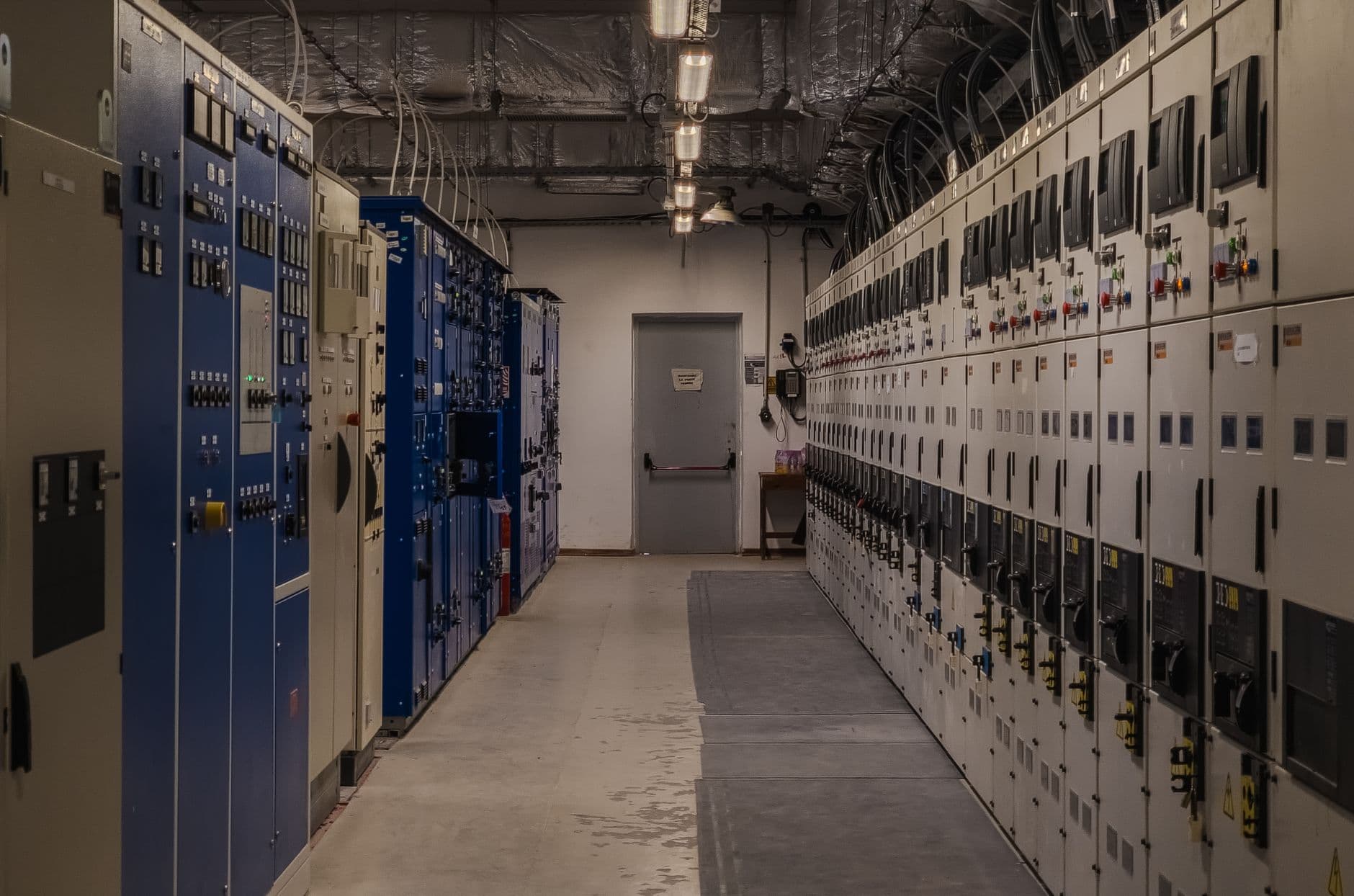
The delays stem from a convergence of supply chain constraints. The most critical bottleneck is not compute chips or GPU supply—it's the mundane but essential electrical infrastructure required to deliver power to these facilities. Transformers, switchgear, and battery systems are in severe shortage.
Lead times for high-voltage transformers have stretched from 12–18 months to as long as 36–48 months in some cases.
The most counterintuitive aspect is the disproportion between cost and criticality. Batteries, electrical transformers, switchgear, and circuit breakers—the components currently holding up the entire pipeline—represent less than 10% of total data center construction costs.
The grid itself is buckling. PJM Interconnection, the largest U.S. grid operator serving over 65 million people across 13 states, projects that it will be a full six gigawatts short of its reliability requirements in 2027.
PJM's territory includes a large number of data centers, including the compute-dense region of Northern Virginia. What happens to PJM will send ripples throughout the tech world.
One utility, American Electric Power (AEP), is considering pulling out of PJM altogether. "The current state of PJM's performance and stakeholder approval process does not give me great confidence that these issues will be resolved anytime soon," Bill Fehrman, AEP's CEO, said in an earnings call. "In fact, if something is not done now, I expect we could still be having these same conversations in 10 years."
The political backlash is mounting. Retail electricity prices have risen 42 percent since 2019, outpacing the 29 percent increase in the Consumer Price Index over the same period. Goldman Sachs projects that data center power consumption will boost core inflation by 0.1 percent in both 2026 and 2027. Capacity market prices in PJM have spiked nearly tenfold, driving retail electricity increases above 15 percent in some service areas.