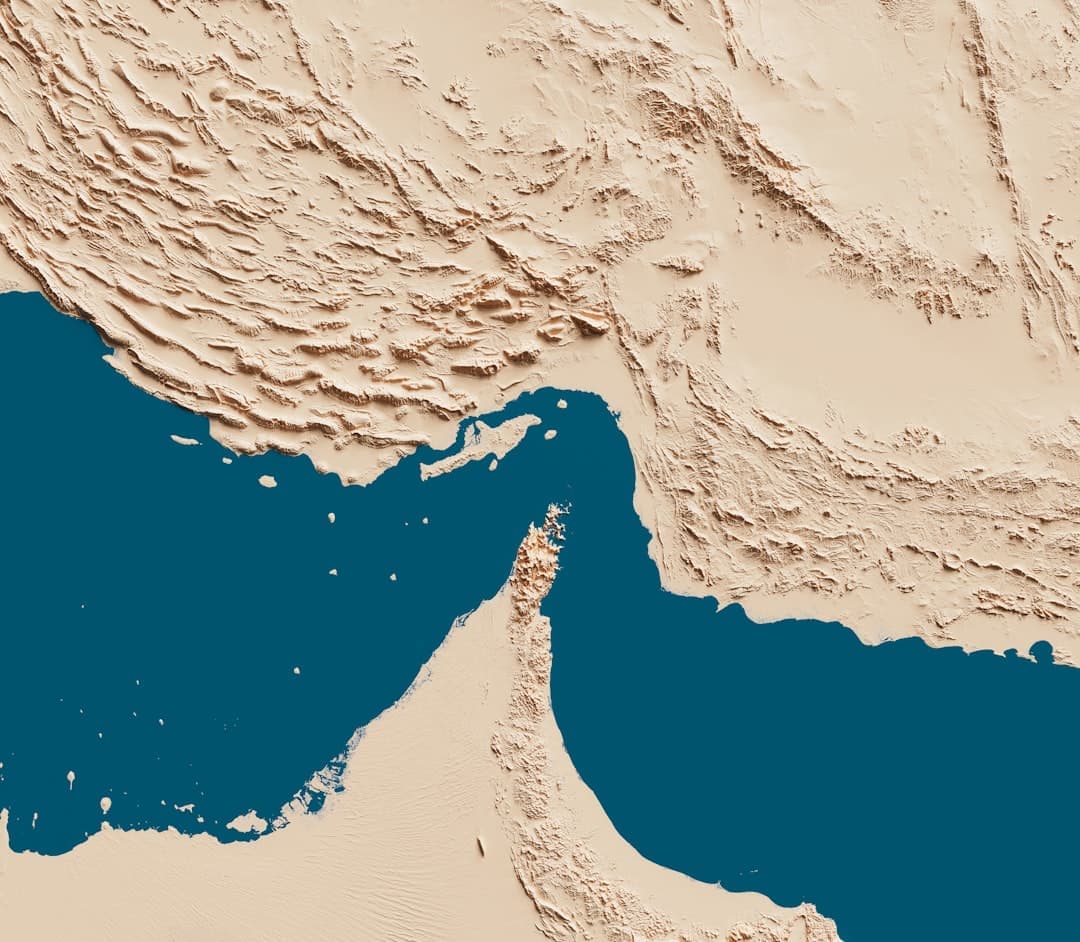
Over 14 million barrels per day of Middle East oil output shut in during the three-month Hormuz crisis —enough to run the entire European Union for a month. Now it's coming back. The U.S. and Iran are set to sign a peace deal on June 19 , and at least three Iranian crude tankers have already exited the Strait of Hormuz this week , moving past the U.S. blockade before the ink is even dry.
Oil markets are pricing in relief. Brent crude closed at $80.50 per barrel on Tuesday, down 4.58%, while WTI settled at $79.80/bbl, losing 5.73%, according to market data. Brent has traded at three-month lows around $79 per barrel after falling for four straight sessions , pressured by expectations that the strait will fully reopen. But the International Energy Agency is looking past the relief rally to what comes next: a substantial supply surplus in 2027, with supply projected to rise by 8 million barrels per day against a demand increase of just 2 million bpd .
That's not a glut. That's a deluge—roughly 4% of global demand flooding back into a market that spent three months learning to live without it.
Can the Market Absorb What's Coming?
The Hormuz closure was the largest oil supply disruption in history, according to the IEA . Government inventories in OECD countries reached their lowest level since December 1990 as nations burned through strategic reserves to keep fuel flowing. The IEA has cut its 2026 demand forecast to 103.3 million bpd—a 1.1 million bpd drop from 2025 —as higher prices and supply disruptions crushed consumption. Preliminary data suggest second-quarter demand will be 5 million bpd lower than a year earlier .
Now the pendulum swings. If the deal holds, exports and production from the Gulf should see a gradual recovery, including the full resumption of Iranian oil exports once U.S. sanctions lift . Additional supplies from the region are expected to replenish refinery inventories globally, alongside higher OPEC+ export quotas and increased output from the UAE, which left the cartel during the conflict . The release of more than 100 oil-laden ships currently stuck in the Gulf could further boost supply .
The math is stark. In 2027, the IEA forecasts an 8 million bpd surge in supply, to 110.3 million bpd, as Mideast Gulf production recovers and OPEC+ raises output targets . Against global oil demand projected to increase by a relatively modest 2 million bpd to 105.3 million bpd , that leaves a 6 million barrel-per-day gap—more oil than Saudi Arabia exports on a typical day.
The IEA stated that a large supply surplus could "offer a welcome relief to the market and an opportunity to rebuild depleted stockpiles or establish new strategic reserves" . But for producers who watched prices spike above $118 per barrel in March, the prospect of sustained oversupply is anything but welcome.
Who Wins When the Tap Turns Back On?
China, for one. Gasoline car demand in China is slumping on higher fuel prices, with passenger car sales dropping over 22% in May, while EV and hybrid vehicle sales rose strongly to account for 62.9% of total car sales , Bloomberg reported. Discounts on gasoline cars had almost doubled over the first five months of the year as oil and fuel prices crept up , with some Range Rovers fetching discounts of up to 60%. Lower crude prices could ease that pressure—but they won't reverse the structural shift toward electrification that the crisis accelerated.
Elsewhere, the supply picture is getting more complex. Venezuela signed five contracts with Shell on June 11 that give the European supermajor rights to operate the giant Loran natural gas field, estimated to hold 7 trillion cubic feet , Upstream Online reported. The field will be developed alongside the Dragon project, also involving Shell, estimated to hold 4.2 Tcf, paving the way for Venezuela's entry into offshore gas exports . The timing matters: as Middle East LNG exports normalize, new Western Hemisphere supply could reshape Atlantic Basin gas markets just as European buyers look to diversify away from Gulf dependence.
In the U.S., LNG infrastructure is finally catching up to ambition. Natural Gas Intel reported that Golden Pass LNG achieved first LNG production from Train 1 on March 30, with feedgas demand expected to ramp to over 800 MMcf/d in the second quarter of 2026, and Trains 2 and 3 to begin service in 2027 . Pipeline flows to the project near Sabine Pass, Texas, have grown to nearly 350 MMcf/d in early April . But the ramp has been uneven: feedgas nominations slumped in early June before rebounding sharply this week, helping offset missed Qatari deliveries to Italy caused by the near-closure of Hormuz .
Natural gas closed at $3.10 per MMBtu on Tuesday, up 1.31%, according to market data, as summer heat lifted power burn but traders weighed the return of Gulf LNG flows.