Monday, May 4, 2026Vol. III · No. 124Subscribe

Stake & Paper

The Mining, Energy & Technology Wire
Oil & Gas · Analysis

Oil Markets Whipsaw as Iran Attacks Resume and UAE Exits OPEC

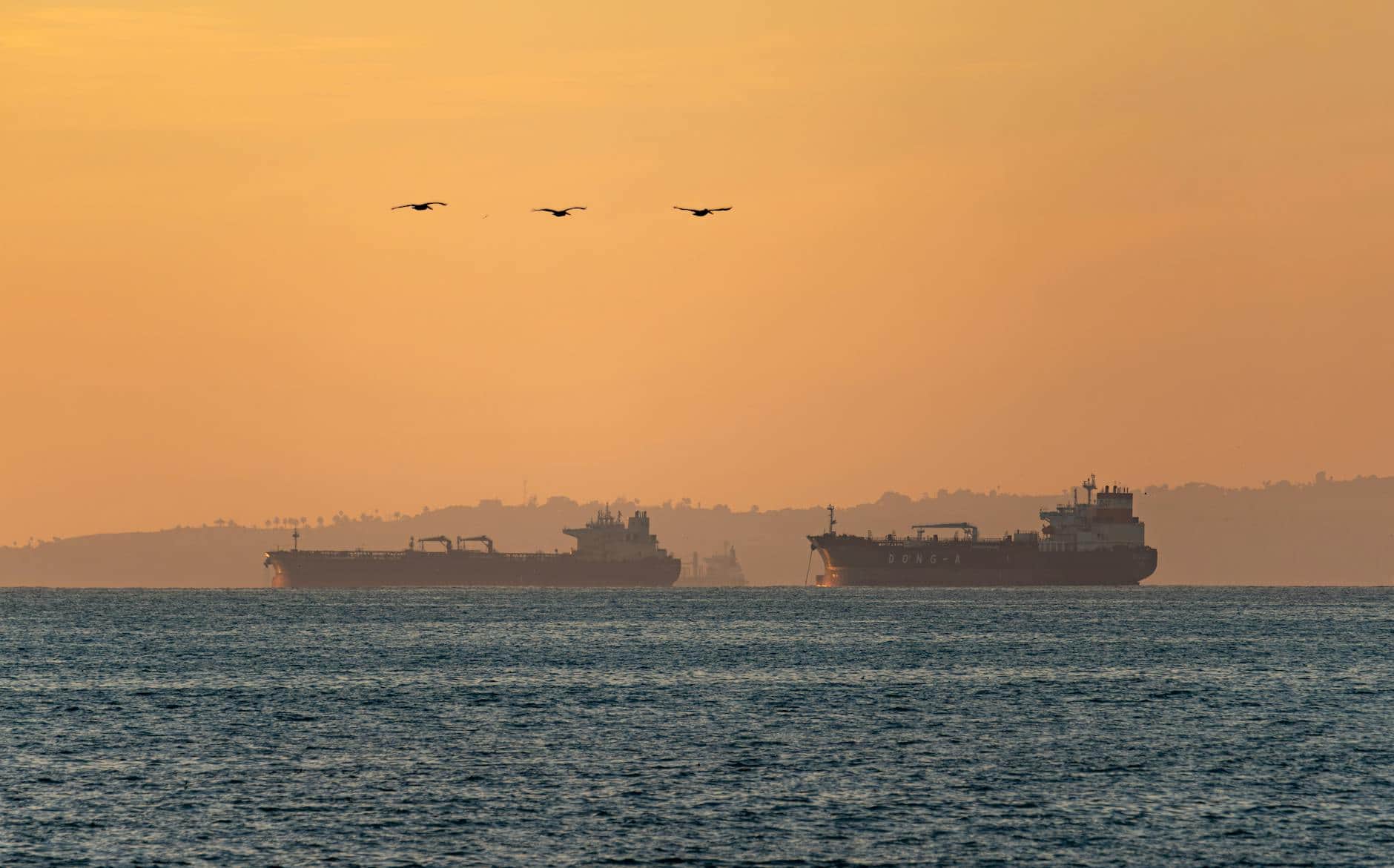
The UAE accused Iran of attacking an ADNOC tanker in the Strait of Hormuz on Monday as the U.S. military moved to reopen the waterway, while the Gulf state officially left OPEC to pursue independent production goals. U.S. crude exports hit record highs and gasoline prices surged past $4 per gallon nationwide.

PhotographThe UAE accused Iran of attacking an ADNOC tanker in the Strait of Hormuz on Monday as the U.S. military moved to reopen the waterway, while the Gulf state officially left OPEC to pursue independent production goals. U.S. crude exports hit record highs and gasoline prices surged past $4 per gallon nationwide.

The UAE on Monday strongly condemned an Iranian drone attack on an ADNOC oil tanker in the blockaded Strait of Hormuz, as the US was due to start guiding ships through the waterway.

The U.S. military said it battled Iranian forces and sank six small boats as it moved to reopen the Strait of Hormuz on Monday. The United Arab Emirates, a key American ally, said it had come under attack from Iran for the first time since a fragile ceasefire took hold in early April.

The United Arab Emirates condemned what it said was an "Iranian terrorist attack" that targeted a tanker belonging to the state-owned Abu Dhabi National Oil Company (ADNOC) that tried to pass through the Strait of Hormuz.

The UAE Defense Ministry said Iran had launched four cruise missiles, with three shot down and one falling into the sea. Authorities in the eastern emirate of Fujairah said an Iranian drone sparked a fire at a key oil facility, wounding three Indian nationals.

The attacks came as two US-flagged merchant vessels successfully transited through the Strait of Hormuz, the US military said Monday morning. "American forces are actively assisting efforts to restore transit for commercial shipping," US Central Command said in a post on X. The ships' successful navigation of the strait comes a day after President Donald Trump vowed to guide vessels through the waterway, where Iran is attempting to control shipping.

UAE Officially Leaves OPEC Amid Production Tensions

The violence in the strait coincided with the United Arab Emirates officially exiting OPEC and OPEC+ on Friday to focus on "national interests", dealing a heavy blow to the oil-exporting groups at a time when the US-Israel war on Iran has caused a historic energy shock and rattled the global economy. The move reflects "the UAE's long-term strategic and economic vision and evolving energy profile", a statement carried by state media said.

The UAE was the third-largest producer in OPEC behind Saudi Arabia and Iraq.

Before the start of the war, the UAE's production capacity had grown to 4.8 million bpd, but under its OPEC agreement, it was only allowed to produce 3.2 million bpd. Experts say its departure from the cartel is unlikely to have an immediate impact on the market because the UAE's exports, like those of all its neighbouring countries, are currently constrained by Iran's control of the Strait of Hormuz.

Energy Minister Suhail Al Mazrouei told CNBC that the UAE made the decision to leave OPEC at a time when it would be the least disruptive to the other producers in the group. "Our exit at this time is the right time for it, because it will have a minimum impact on the price and it will have a minimum impact on our friends at OPEC and OPEC+," Al Mazrouei said.

U.S. Crude Exports Surge to Record Levels

As Middle Eastern oil remains largely trapped behind Iran's blockade, US crude exports surged to a record last week as the Iran war sends overseas buyers hunting for replacements to Middle Eastern oil. Even as the US and Iran hold on to a fragile ceasefire, oil buyers across the world are still grappling with the worst disruption to global energy supplies in history. American exports have been critical to help fill the gap, with President Donald Trump pushing for more US production as part of his energy dominance agenda.

Over the past two months, the United States has sold more than 250 million barrels of oil to foreign buyers as exports have increased by 30%, from 3.9 million barrels per day in February to 5.2 million barrels per day in April, Bloomberg and CNBC reported.

The U.S. Energy Information Administration (EIA) reported a staggering 6.4 million barrels of crude oil exports for the week ending April 24, marking the highest weekly figure ever recorded.

March was the busiest month in the history of the Port of Corpus Christi, and the first quarter was its busiest quarter ever, said CEO Kent Britton. Oil exports have increased to about 2.5 million barrels per day since the war started compared to 2.2 million bpd last year, Britton said. However, experts have warned that domestic oil inventories are depleting stockpiles and there is a question of how long the country will be able to continue replacing oil on the market that is stuck in the Strait. Although selling oil is good for business, oil producers are struggling to keep up with the demand and it is possible that selling so much could have an add-on effect of pushing gas prices for American consumers even higher than they have gone since the war started.

Gasoline Prices Hit Four-Year Highs

The once-unthinkable closure of the strategic waterway could lift gasoline prices to $5 a gallon if the situation is not resolved soon. US gas prices skyrockated from an average of $2.98 a gallon before the war started to $4.46 a gallon on Monday, according to AAA.

Gas prices in the U.S. are the highest they have been since late July 2022, said the automotive group.

The Tennessee state gas price average has reached $4 per gallon for the first time since July of 2022. The Tennessee Gas Price average is now $4.03 which is 18 cents more expensive than one month ago and $1.31 more expensive than one year ago.

In Mono County, California, prices rose to $7 per gallon. The state of California also ranked as the most expensive Monday, with prices averaging $6.11.

"Another surge in crude oil prices due to the ongoing Iranian conflict and closure of the Strait of Hormuz is placing additional upward pressure on pump prices. It's likely that drivers will continue to see increases in pump prices again this week," said Megan Cooper, spokeswoman for AAA – The Auto Club Group.

Heat Pump Sales Jump in Europe

While American drivers face pain at the pump, European consumers are responding to high fossil fuel prices by switching to electric heating. Residential heat pump sales increased 17% across 11 European countries in the first quarter of 2026, following a sharp rise in gas and oil prices after Iran closed the Strait of Hormuz in March, says the European Heat Pump Association (EHPA). Residential heat pump sales rose 17% year on year across 11 European countries in the first quarter of 2026, with France, Germany, and Poland averaging 25% growth following a sharp jump in gas and oil prices after Iran closed the Strait of Hormuz in March.

A total of around 575,000 residential heat pump units were sold across 11 European countries from January to March 2026, up from 494,000 in the same period in 2025, according to the EHPA. France, Germany, and Poland averaged 25% sales growth over the quarter, with national experts citing rising energy prices and energy insecurity concerns as key drivers, effects that EHPA said were particularly pronounced from March onward.

"If your streaming service doubled its price then blocked its movies you'd find a better one," said Paul Kenny, director general of the EHPA. "Consumers have realized heat pumps are the solution when gas and oil are erratic in price and supply."

Natural Gas Holds Steady Despite Global Turmoil

In a counterintuitive twist, U.S. natural gas prices have remained relatively stable despite the global energy crisis. According to market data, Henry Hub Natural Gas traded at $3.25/MMBtu on May 4, down 2.4% from recent levels. EQT CEO Toby Rice has pointed to this stability as evidence that expanding U.S. LNG exports would not necessarily pull domestic natural gas prices into global volatility, even during major supply disruptions like the Strait of Hormuz closure.

The divergence between soaring oil prices and stable gas prices reflects the different market dynamics at play—while crude oil is a globally traded commodity with prices set by international supply and demand, U.S. natural gas markets remain more regionally isolated, with domestic production continuing to meet demand even as LNG export capacity grows.

Coverage aggregated and synthesized from leading energy-sector publications. See linked sources within the article.

Share this story

Was this article helpful?

Discussion

Not published • Used for Gravatar

0/2000 characters

Loading comments...

ClaimWatch

Mining claims intelligence — from query to map, in minutes.

Every unpatented mining claim across eleven western states. Due diligence, prospecting, and monitoring delivered as complete reports with publication-ready ArcGIS maps.

4.4M+
Claims Tracked
11
Western States
3
Report Types
Request a Sample Report
Stake & Paper AM

One morning brief. The whole energy sector.

Original analysis, the day's most important wire stories, and market data — delivered before your first cup of coffee. Free.