Monday, May 11, 2026Vol. III · No. 131Subscribe
The Mining, Energy & Technology Wire
Mining · Analysis

Washington Races to Break China's Grip on Critical Minerals as Processing Dominance Deepens

The U.S. and EU signed a strategic partnership on critical minerals in late April, part of a broader push to counter China's control over 90% of rare earth processing. But with copper facing a potential 30% supply shortfall by 2035 and lithium prices swinging wildly, the race to secure alternative supply chains is proving more complex than anticipated.

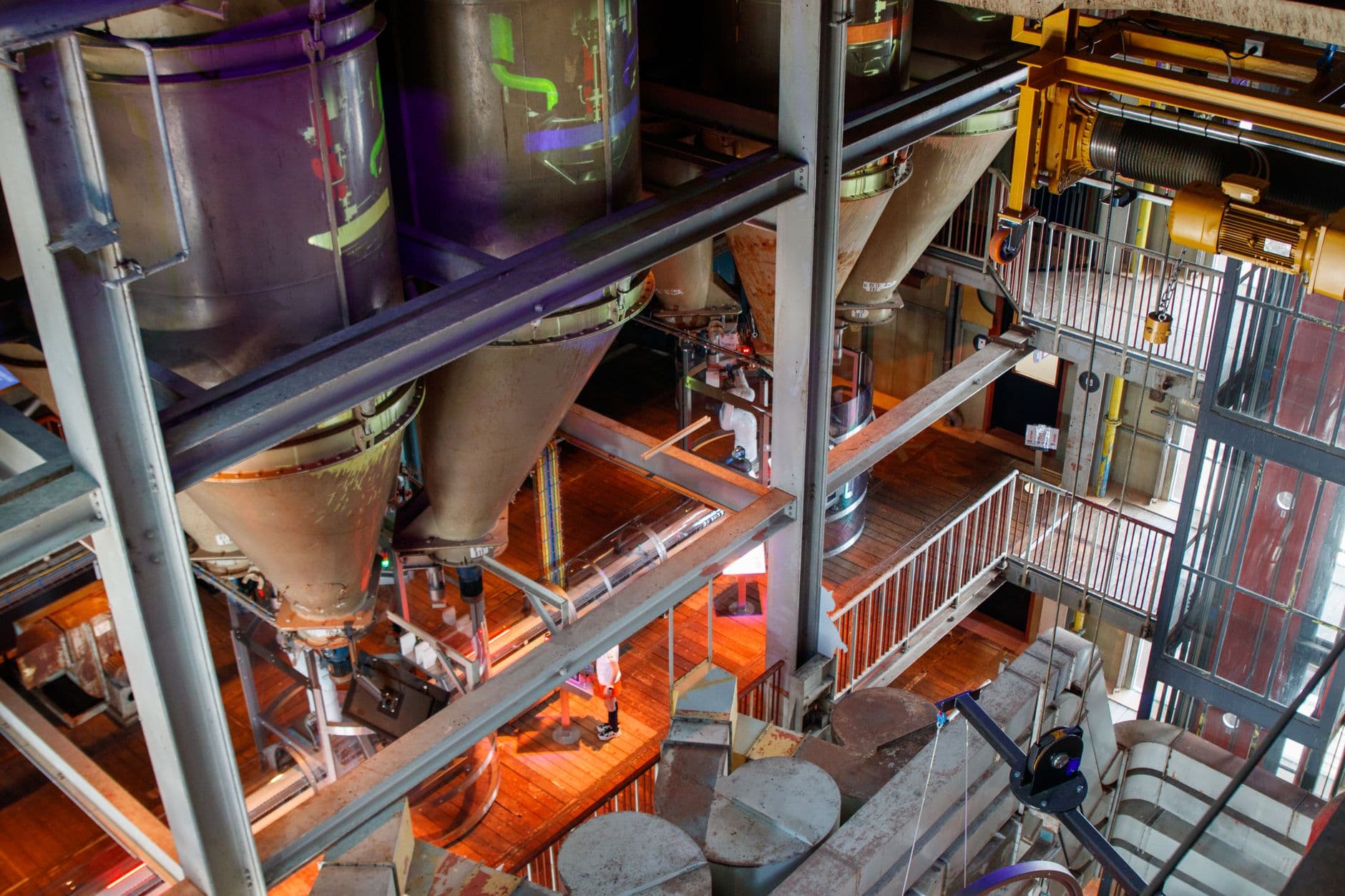
PhotographThe U.S. and EU signed a strategic partnership on critical minerals in late April, part of a broader push to counter China's control over 90% of rare earth processing. But with copper facing a potential 30% supply shortfall by 2035 and lithium prices swinging wildly, the race to secure alternative supply chains is proving more complex than anticipated.

On April 25, 2026, the US and EU signed a strategic partnership on critical minerals to diversify supply chains and reduce dependence on dominant producers.

US Secretary of State Marco Rubio and EU Trade Commissioner Maros Sefcovic signed a Memorandum of Understanding for a Strategic Partnership on Critical Minerals at the State Department in Washington.

Rubio emphasized that the commitment to the EU reflects the significance of supply chains and critical minerals for economic success and national security, noting that the current over-concentration of these resources, dominated by one or two places, poses an unacceptable risk. The agreement comes as the average market share of the top three refining nations for copper, lithium, nickel, cobalt, graphite and rare earth elements rose to 86% in 2024 from around 82% in 2020, with almost all supply growth coming from the single top supplier: Indonesia for nickel, and China for all others.

China's Processing Stranglehold Tightens Despite Diversification Efforts

The numbers paint a stark picture of concentration. China is listed as the dominant refiner for 19 of 20 minerals analyzed by the IEA in their Global Critical Minerals Outlook for 2025, making up roughly 70% of the global processing capacity overall.

China dominates the production of at least 15 critical minerals and mineral groups, including gallium (98.7%), magnesium (95%), tungsten (82.7%), and rare earths (69.2%).

Government involvement is expected to accelerate in 2026 as recent restrictions on Chinese rare earths exports highlight vulnerabilities and drive the US and EU to reshape the global supply landscape, experts told Platts, a part of S&P Global Energy.

Julie Klinger, a University of Delaware professor in the geography and spatial sciences program, noted that "what we're seeing globally is that the composition of mining companies is getting much more complex where you have a combination of government stakeholders, private equity, private investors and even capital from export and import banks."

It is less about where ores are dug out of the ground and more about where they are turned into usable components—Chinese processing plants are essentially the gatekeepers of global supply.

U.S. Launches Multi-Billion Dollar Push for Domestic Production

In February, the U.S. government made its most aggressive move yet to counter Chinese dominance. Secretary of State Marco Rubio, joined by Vice President JD Vance, Treasury Secretary Scott Bessent, Interior Secretary Doug Burgum, Energy Secretary Chris Wright, and U.S. Trade Representative Ambassador Jamieson Greer, hosted representatives of 54 countries and the European Commission, including 43 foreign and other ministers, at the 2026 Critical Minerals Ministerial.

Over the past year, EXIM has issued $14.8 billion in Letters of Interest for critical minerals projects under the Trump Administration, including, in recent months, $455 million for rare earth development and processing in the United States; $400 million for lithium extraction in Arkansas; $350 million for cobalt and nickel production in Australia; and $215 million for tin extraction across the United Kingdom and Australia.

EXIM's critical minerals portfolio of authorized transactions includes $10 billion for Project Vault: Establishing the U.S. Strategic Critical Minerals Reserve to support domestic manufacturers and strengthen supply chain security, and $1.3 billion for Reko Diq (Pakistan) copper and gold production.

In 2026, federal investment will likely expand beyond rare earth elements to include other high-risk minerals like antimony and tungsten—materials that have so far not attracted the same attention as rare earths, yet they represent some of the US's most vulnerable supply chains, with the country dependent on China, Tajikistan and Russia for the majority of its antimony sourcing.
Copper Faces Looming Supply Crisis

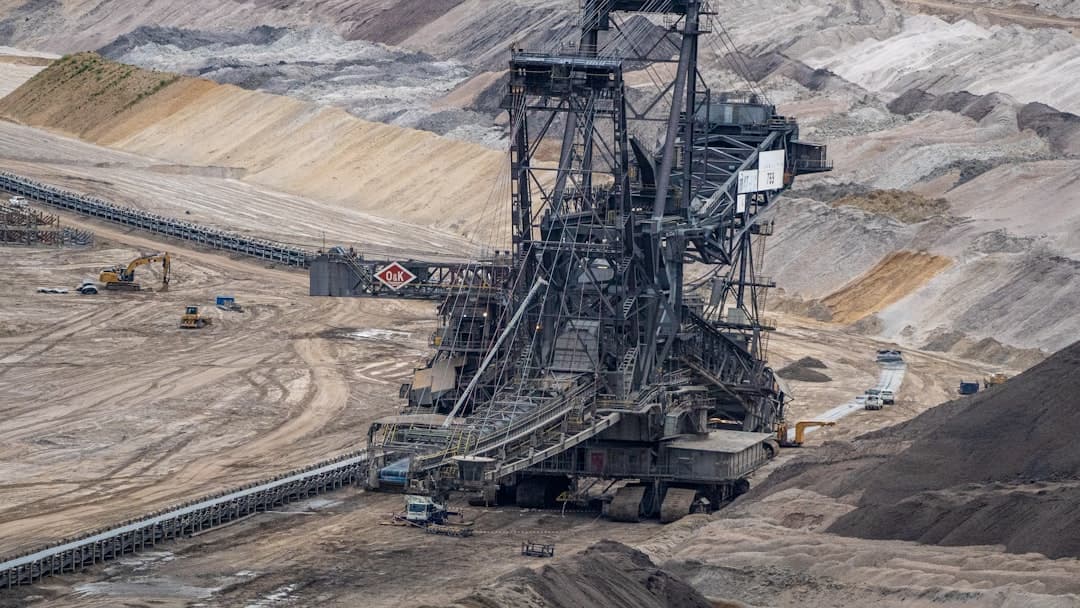
While governments focus on rare earths, copper is emerging as a critical bottleneck. Despite strong copper demand from electrification, the current mine project pipeline points to a potential 30% supply shortfall by 2035 due to declining ore grades, rising capital costs, limited resource discoveries and long lead times.

Demand for copper is on track to surge 50% by 2040, driven in part by the need for copper in AI data centers, along with the vital role copper plays in supporting the electrification of the transportation sector and producing renewable energy.

For many operations, energy expenditures now often represent between 25-40% of cash operating costs per tonne of copper produced, fundamentally influencing unit economics, investment planning, and risk strategies.

Geographical concentration is expected to intensify for copper, nickel and cobalt.

Mined supply is set to increase in concentration in the top three countries for copper, nickel and cobalt by 2035—in 2035, the top three producing countries for nickel supply 85% of the market, up from 75% in 2024.

Lithium Price Volatility Stalls Mining Projects

The lithium market has experienced dramatic swings that are reshaping investment decisions. Lithium carbonate prices collapsed from $80,000/tonne in late 2022 to under $12,000/tonne in late 2024, before partially recovering to $18,000-22,000/tonne in early 2026.

This 75%+ price swing has delayed or cancelled multiple mining projects, with at least 15 lithium developments globally placed on care and maintenance during the price trough.

Lithium demand rose by nearly 30% in 2024, significantly exceeding the 10% annual growth rate seen in the 2010s. Yet while the market is poised to be well-supplied in the near term, rapidly growing demand is projected to turn market balances into deficits by the 2030s although the prospects for developing new lithium projects are stronger than for copper.

The Innovation Alternative

Some experts argue the U.S. cannot win a traditional mining race against China. The United States cannot out-mine and out-process China—instead, it should leapfrog China's dominance by scaling disruptive innovation, recovery, and recycling.

The growth in new mining supply for critical minerals could be brought down by between 25% and 40% by mid-century by scaling up recycling—in a scenario in which countries around the world deliver on all announced national pledges on energy and climate, recycling reduces new mine development needs by 40% for copper and cobalt, and by 25% for lithium and nickel by 2050.

Current executive actions focus largely on expanding traditional mining and processing capacity—that is a necessary approach, but one that takes years, often decades, and is insufficient to address potential escalation of tensions with China in the present.

The race to secure critical mineral supply chains is accelerating, but the path forward requires more than just new mines. With China's processing dominance actually increasing in recent years and copper facing structural shortages, Western nations are discovering that breaking free from concentrated supply chains will require a combination of traditional mining expansion, innovative processing technologies, and strategic stockpiling—all while navigating volatile commodity prices and geopolitical tensions.

Coverage aggregated and synthesized from leading energy-sector publications. See linked sources within the article.

Share this story

Was this article helpful?

Discussion

Not published • Used for Gravatar

0/2000 characters

Loading comments...

ClaimWatch

Mining claims intelligence — from query to report, in minutes.

Every unpatented mining claim across all twelve BLM states. Leadfile audits, due diligence, site selection, regional prospecting, entity investigations, and AOI monitoring — delivered as complete report packages.

4.4M+
Claims Tracked
12
BLM States
7
Report Types
Request a Sample Report
Stake & Paper AM

One morning brief. The whole energy sector.

Original analysis, the day's most important wire stories, and market data — delivered before your first cup of coffee. Free.