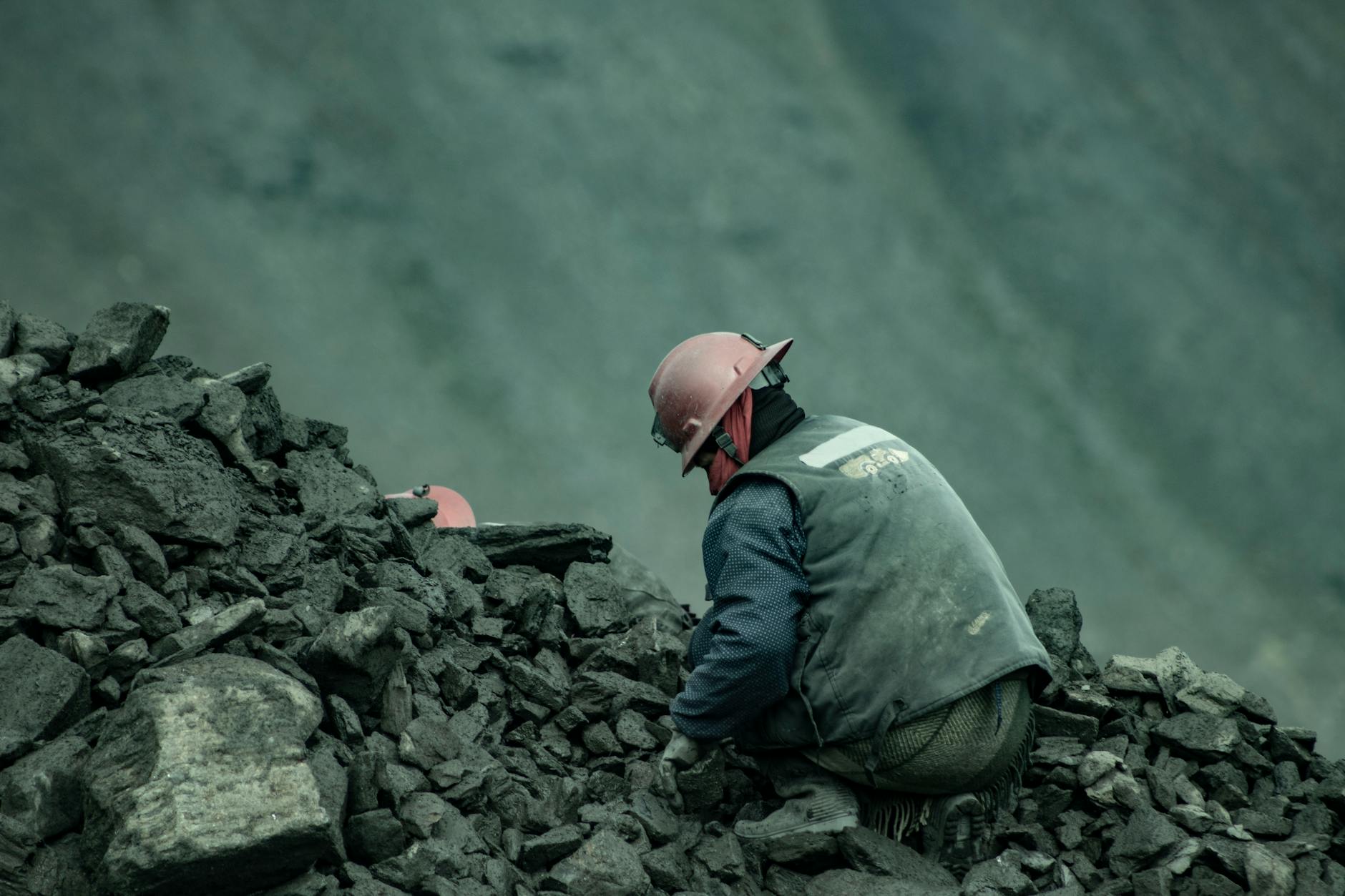
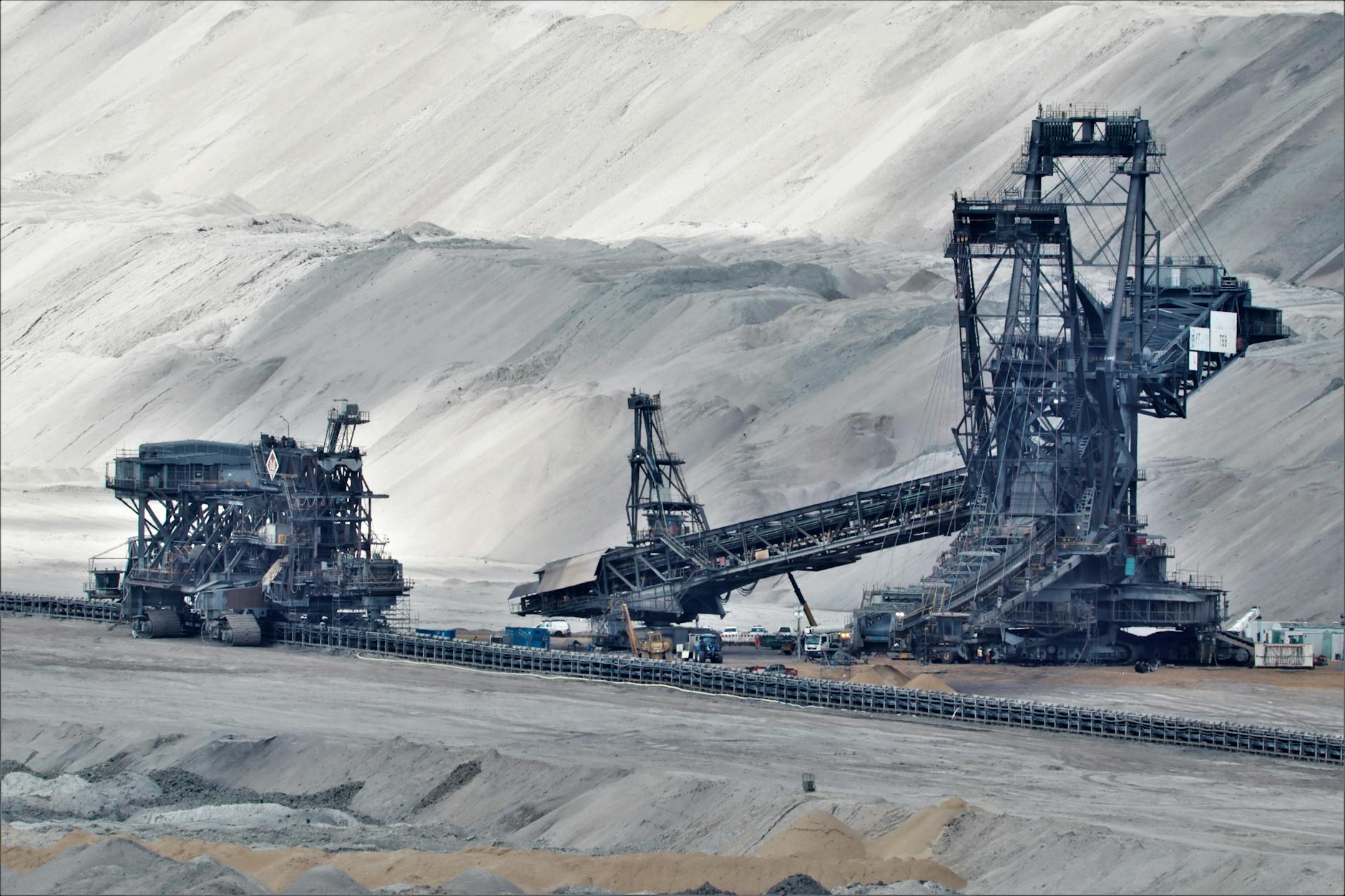
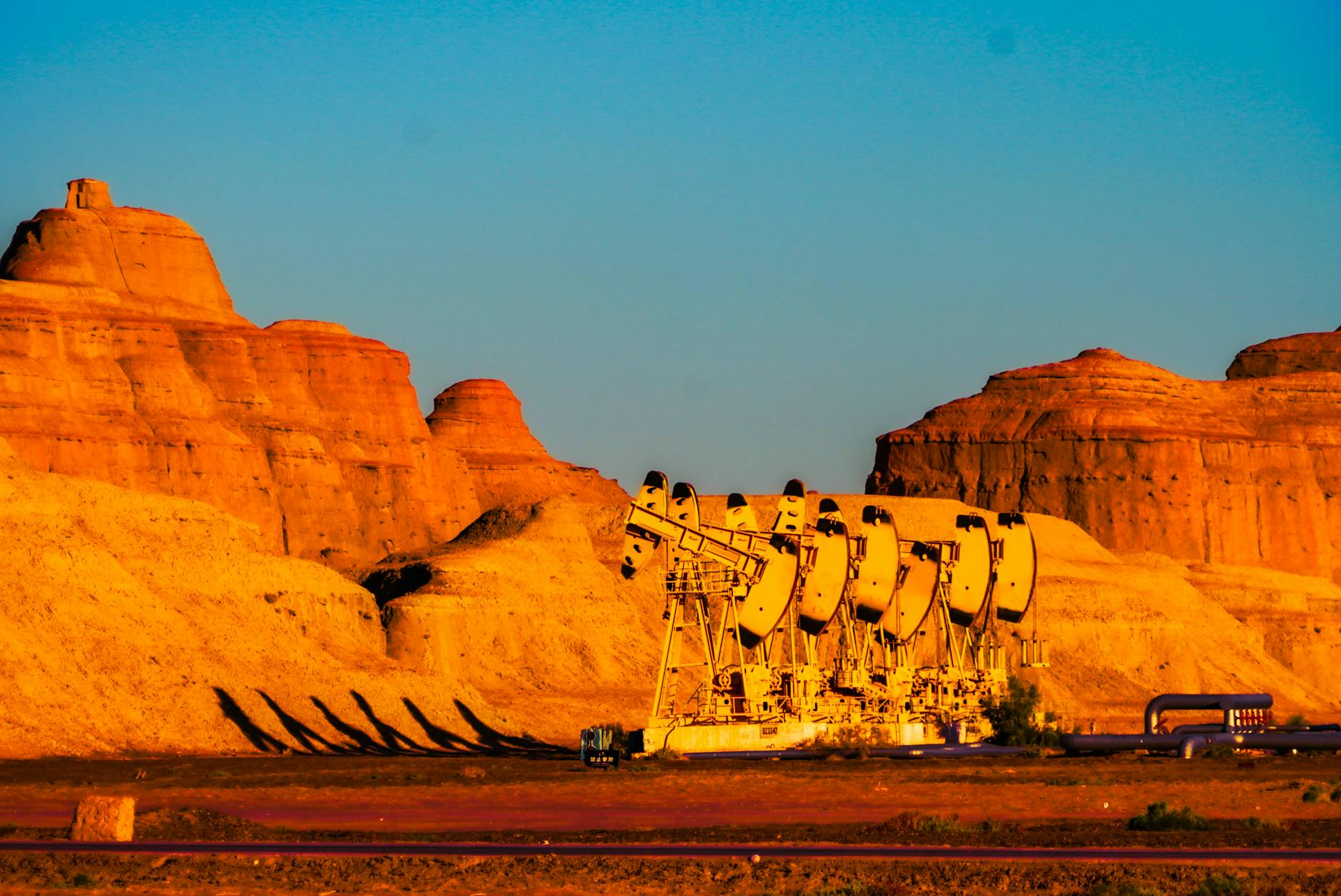
Mineral exploration is the process of seeking concentrated deposits of minerals for the purpose of mining these minerals for economic benefit.
The process searches for evidence of any mineralization hosted in the surrounding rocks by extracting pieces of geological information from several places and extrapolating this over the larger area to develop a geological picture.
Exploration works in stages of increasing sophistication, with cheap, cruder methods implemented at the start, and if the resultant information is economically interesting, this warrants the next, more advanced (and expensive) techniques.
Key Points
-
Initial prospecting covers large areas with relatively low costs, whilst later stages involve more intensive and expensive investigations of smaller, more promising areas
-
Geophysical studies such as gravitational, magnetic, and electromagnetic surveys find anomalies or indicators that mineral deposits may be present
-
Exploration drilling provides direct access to subsurface rocks through core samples that reveal mineral content, geological structures, and deposit characteristics, representing the most expensive but definitive method for evaluating mineral potential
-
Geochemical prospecting is an important tool in the early stages of exploration that allows delimiting anomalous areas, since some elements (pathfinders) will be dispersed to a greater extent and can be used as tracers of the deposit
-
Exploration determines the viability of a mining project, ensuring that resources are defined adequately to sustain economical extraction, and without thorough exploration, mining operations cannot be maintained nor sustained
Understanding Mineral Exploration
Mineral exploration is the art and science of exploring concentrated deposits hosted in the earth's crust that can be mined economically, resulting in the delineation, definition and quantification of the proposed mineral resource.
The process is inherently risky and expensive, with most exploration programs never reaching production.
It is very rare to find sufficiently enriched ore bodies, and so most exploration campaigns stop after the first couple of stages.
Mineral deposits tend to form in clusters within prolific geologic belts, and exploration typically occurs outward from known mineralization.
Since mineral deposits tend to form in clusters, prospective areas may be near other areas of known mineralization or near existing mine sites, and may also be identified with aeromagnetic surveys, satellite photos, or detailed maps.
This geological understanding guides where exploration companies focus their efforts.
The exploration of mineral resources is influenced by various factors including geological factors, depth of the deposits, strike length extensions, structural complexities and ore characteristics, economic considerations, and even political stability in the region, and understanding these factors is crucial to ensure the success of the exploration process.
How It Works
Mineral exploration follows a systematic progression from broad regional surveys to focused, detailed investigations:
1. Initial Prospecting and Target Generation:
The initial prospecting stage involves desktop studies, regional geological mapping, and preliminary target identification using existing geological data and historical information, covering large areas cost-effectively to identify regions with mineral potential through examination of geological maps, previous exploration reports, and regional geological surveys.
Prospectors must ensure the prospective area is open to mining and that no existing claims are placed on the land, after which the prospector will likely stake a claim on a potential mineral site.
2. Surface Exploration and Geological Mapping:
Prospectors map outcrops and showings and search for indicator minerals, providing early geological sampling and analysis to identify areas with "clues" that mineral deposits may be present in the area.
Mapping is the foundation of all geological-related studies and is vital for developing the base-level picture of an area's geology, with each subsequent step of work in an area building off and correlating back to this initial stage.
3. Geophysical Surveys:
This typically includes geophysical studies such as gravitational, magnetic, and electromagnetic surveys, with the purpose of finding anomalies or indicators that mineral deposits may be present.
Geophysical surveys refer to methods used to detect changes in physical properties such as gravity, magnetic fields, electromagnetic responses, resistivity, and seismic wave velocity that are associated with variations in geological conditions, and can involve various techniques, including surface methods, downhole logging, and airborne geophysics.
Certain rock-forming minerals have a naturally occurring magnetic property, particularly the iron-containing minerals magnetite and pyrrhotite, which are common constituents in volcanic metal sulphide deposits and may highlight an area of high copper, lead or zinc concentrations.
Electromagnetic surveys can be used to help detect a wide variety of mineral deposits, especially base metal sulphides via detection of conductivity anomalies, and are also used in diamond exploration where kimberlite pipes tend to have lower resistance than enclosing rocks.
4. Geochemical Analysis:
Geochemical exploration is any method of mineral or petroleum exploration that utilizes systematic measurements of one or more chemical properties of a naturally occurring material.
Soil is composed of several layers, and one in particular 'catches' the metal ions leaking from the underlying rocks, accumulating a mineral-rich horizon from which a specimen is collected to test the chemistry of the geology beneath, and because of the vast swathes of pasture and woodland, this technique is extremely important for collecting data in the countryside where the rocks are blanketed by soil and vegetation.
5. Remote Sensing:
Remote sensing images are used for mineral exploration in two applications: map geology and the faults and fractures that localize ore deposits, and recognize hydrothermally altered rocks by their spectral signatures.
The amount of solar radiation that a particular mineral reflects, transmits, and scatters due to its chemical composition is unique and resembles a human fingerprint called a spectral signature, which can be determined from space by measuring tiny fluctuations in the length of electromagnetic waves with the help of satellites.
6. Exploration Drilling:
After a certain level of confidence is attained, core drilling will take place to prove and analyze mineral deposits, referring to drilling a small diameter of rock (called core) from the earth, with holes drilled up to tens, hundreds, or even thousands of meters.
Core drilling in mineral exploration is a fundamental technique that extracts continuous cylindrical rock samples from the ground to analyse subsurface geology, providing geologists with direct access to underground rock formations, allowing them to identify mineral deposits, assess ore quality, and determine the viability of mining projects through detailed geological analysis.
Drilling is the peak of a mineral exploration campaign and is an extremely expensive process that will only be used in the rare locations which have proven considerably interesting for their mineral potential, but in these few places, drilling provides physical evidence of the rock below and is used to confirm the theories of the underlying geology which were developed during earlier techniques.
7. Resource Assessment:
The resource delineation phase includes delineation/step-out drilling and preliminary economic assessment, where delineation drilling is aimed at defining the exact limits of a deposit by drilling around the mineralized zone so geologists can map the shape, extent and depth of the resource, enabling them to better estimate available reserves and guide decisions for the next stage of the project.
8. Feasibility Studies:
The mineral exploration process concludes with the pre-construction phase, which includes feasibility studies as well as in-depth geotechnical, metallurgical, and environmental analyses, and these results allow the company to decide whether to proceed with the project by developing, constructing, operating, and restoring the site, or to temporarily suspend the project.
Why It Matters
Mineral exploration is essential to modern society's access to critical materials.
Mineral exploration plays a vital role in uncovering the mineral deposits that fuel everyday necessities, from electric vehicles to wind turbines.
The process enables the discovery of resources needed for energy transition technologies, construction materials, electronics, and countless other applications.
The economic impact extends beyond resource discovery. Exploration creates employment opportunities, drives technological innovation, and supports regional development in areas with mineral potential. However, the process requires substantial capital investment with uncertain returns, making it a high-risk endeavor that demands careful planning and execution at every stage.
Related Terms
Geophysical Survey:
Methods used to detect changes in physical properties such as gravity, magnetic fields, electromagnetic responses, resistivity, and seismic wave velocity that are associated with variations in geological conditions
Core Sample:
A roughly cylindrical piece of subsurface material removed by a special drill and brought to the surface for examination
Geochemical Prospecting:
The application of geochemistry to the exploration of mineral deposits, requiring understanding of the geochemical dispersion of elements based on their chemical properties
Remote Sensing:
The science of acquiring, processing, and interpreting images and related data, acquired from aircraft and satellites, that record the interaction between matter and electromagnetic energy
Frequently Asked Questions
What is the success rate of mineral exploration?
It is very rare to find sufficiently enriched ore bodies, and so most exploration campaigns stop after the first couple of stages.
The exploration process is designed as a funnel, progressively eliminating unpromising areas while focusing resources on the most prospective targets. Only a small fraction of initial exploration projects ultimately become operating mines.
How long does mineral exploration take?
The exploration phases extend over several years.
The timeline varies significantly depending on the deposit type, location accessibility, regulatory requirements, and exploration results. Early-stage reconnaissance might take months, while advancing a discovery through resource definition to feasibility studies can take many years before a production decision is made.
Why is drilling so expensive in mineral exploration?
Drilling is the peak of a mineral exploration campaign and is an extremely expensive process.
The costs stem from specialized equipment requirements, mobilization to remote locations, the need for skilled personnel, and the depth required to adequately test targets. Despite the expense, drilling remains essential because it provides the only direct physical evidence of subsurface mineralization.
Last updated: April 27, 2026. For the latest energy news and analysis, visit stakeandpaper.com.