Correction, 9/22/2026. An earlier version said transformer lead times had stretched from 24 to 30 months before 2020 to as long as five years. The Department of Energy's figures are three to six months in 2019 and 12 to 30 months in 2023; the five-year figure could not be verified and has been removed. The Greenlight gas plant's $4.6 billion cost is in Canadian dollars.
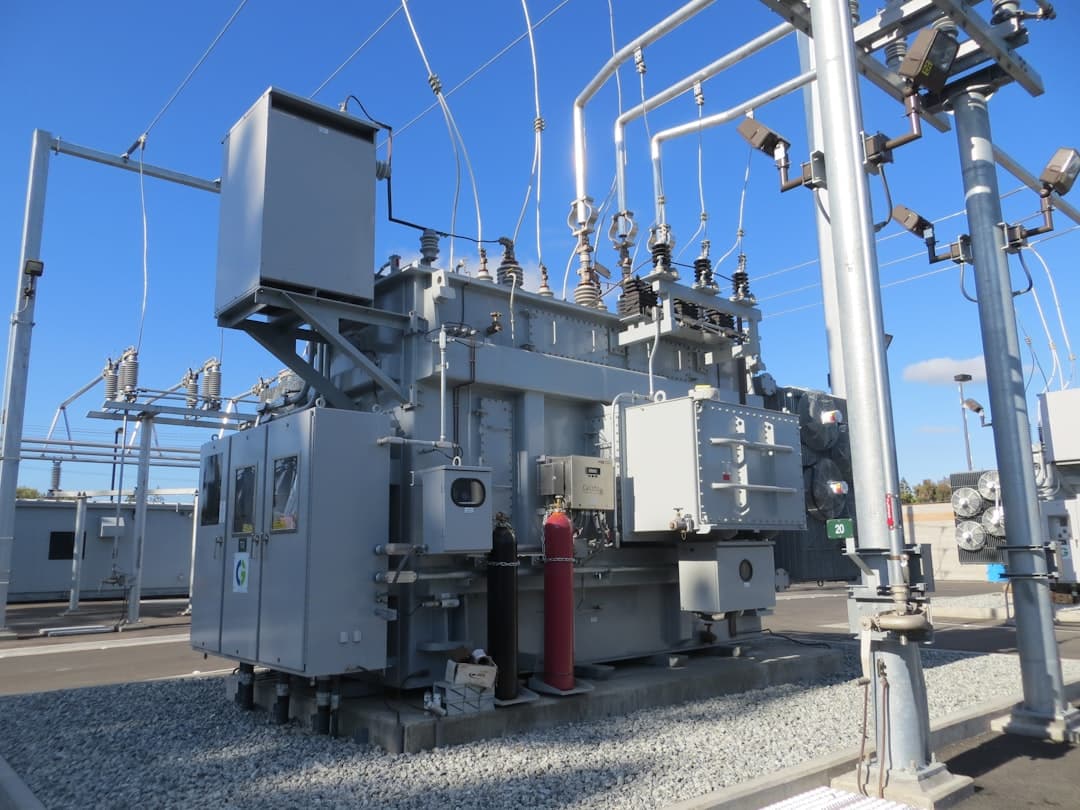
Global data center electricity consumption will hit 565 terawatt-hours in 2026, up from 447 TWh in 2025 , according to Gartner. That's roughly the annual power draw of Japan. Communities across the United States have now blocked or delayed more than $130 billion in AI data centers in the first three months of 2026 , OilPrice.com reported—a figure that matches all of 2025 in a single quarter. The constraint on artificial intelligence is no longer silicon or software. It's something far more mundane: the hulking cylindrical transformers that step voltage down from transmission lines to data centers, and the communities that no longer want either one next door.
Tesla CEO Elon Musk warned earlier this year that "very soon, maybe even later this year, we'll be producing more chips than we can turn on," Bloomberg reported. He wasn't wrong. Lead times for high-power transformers stretched from three to six months in 2019 to 12 to 30 months in 2023 , according to the Department of Energy—timelines that clash with AI deployment cycles under 18 months. Demand for power transformers increased by 116 percent from 2019 to 2025 , the National Interest found, and Citi Research warns the global shortage of high-voltage power transformers will last at least until 2029, with the cumulative shortage expected to peak at 1,699 GVA in 2028 .
The bottleneck is structural, not cyclical. A large transformer requires tons of copper—a base metal that takes decades to dig out—and magnetic steel made in few places , according to industry analysis. Researchers at Johns Hopkins' Ralph O'Connor Sustainable Energy Institute warn that transformers, inverters and other grid-supporting equipment may not be available in the quantities needed to connect new data centers and power infrastructure fast enough . The Financial Times called it "the century-old device choking the world's AI push."
Can Big Tech Build Around the Grid?
Meta is building its first big Canadian data center in Alberta, a 1 gigawatt facility that will cost about $9 billion and take two to three years to build , CNBC reported Wednesday. Alberta represents an attractive spot due to the province's hefty amount of available energy and friendly regulatory environment . The project pairs with a C$4.6 billion natural gas-fired power plant—what the industry calls "bring your own power," or BYOP. It's a workaround that's becoming standard. Electrical grid interconnections are often taking up to four years, making Bring-Your-Own-Power solutions increasingly attractive despite their complexities , according to a recent data center investment conference.
But BYOP doesn't solve the transformer problem—it just moves it behind the meter. An HSBC report on AI bottlenecks notes that grid equipment lead times are rising, with the key bottleneck in high voltage substations where lead times are 3-5 years, driving the rise of the BYOP model . And it doesn't solve the community problem either. $18 billion worth of data center projects were blocked, and another $46 billion delayed over the last two years, with at least 142 activist groups across 24 states organizing to block data center construction , according to Data Center Watch.
The backlash is bipartisan. A review of public statements found that 55% of politicians who had taken public positions against data center projects were Republicans, and 45% were Democrats . At least 69 local government units have enacted bans as of May 2026, with Seattle—the hometown of Microsoft and Amazon—passing a one-year pause on data center projects , Tom's Hardware reported. Lawmakers introduced more than 300 data center bills in the first six weeks of 2026, and 14 states floated outright moratoriums on new construction .