U.S. battery storage deployments are set to hit 70 GWh this year — enough capacity to power roughly 7 million homes for an hour. That's a 60% jump from the record 15 GW added in 2025 , according to the Solar Energy Industries Association. The reason has less to do with falling costs than rising panic. Virginia is home to the world's largest collection of energy-hungry data centers for cloud computing and artificial intelligence , and the grid can't keep up without massive storage buildouts.
The battery surge is colliding with a policy cliff. Wind and solar projects must begin construction by July 4, 2026, or be placed in service by December 31, 2027, to qualify for federal tax credits under the One Big Beautiful Bill Act, per IRS guidance. Developers are sprinting. The U.S. is forecast to add a record 43.4 GW of utility-scale solar this year — 60% more than 2025 and over 12 GW above the 2024 record , the Energy Information Administration reported. But the math is brutal: projects that miss the July cutoff lose the financial foundation that made them viable in the first place.
Can Storage Fill the Gap Without Subsidies?
Battery cells and modules now account for just 25% to 45% of total BESS project costs in 2026, down sharply from the early 2020s , according to pv magazine. The rest is permitting, interconnection, and execution — the unglamorous work of actually building things. Despite lithium carbonate prices rising more than 102% in six months and cell costs jumping 15% to 30%, total utility-scale BESS project costs in the U.S., Germany, and China increased by less than 15% , S&P Global Energy found.
That cost resilience explains why storage keeps scaling even as lithium spikes. Global energy storage demand is expected to grow 7% from 2025 to 2026, with installations projected to expand over the next decade . The real constraint isn't hardware. It's whether developers can navigate the regulatory gauntlet fast enough to claim expiring credits — or survive without them.
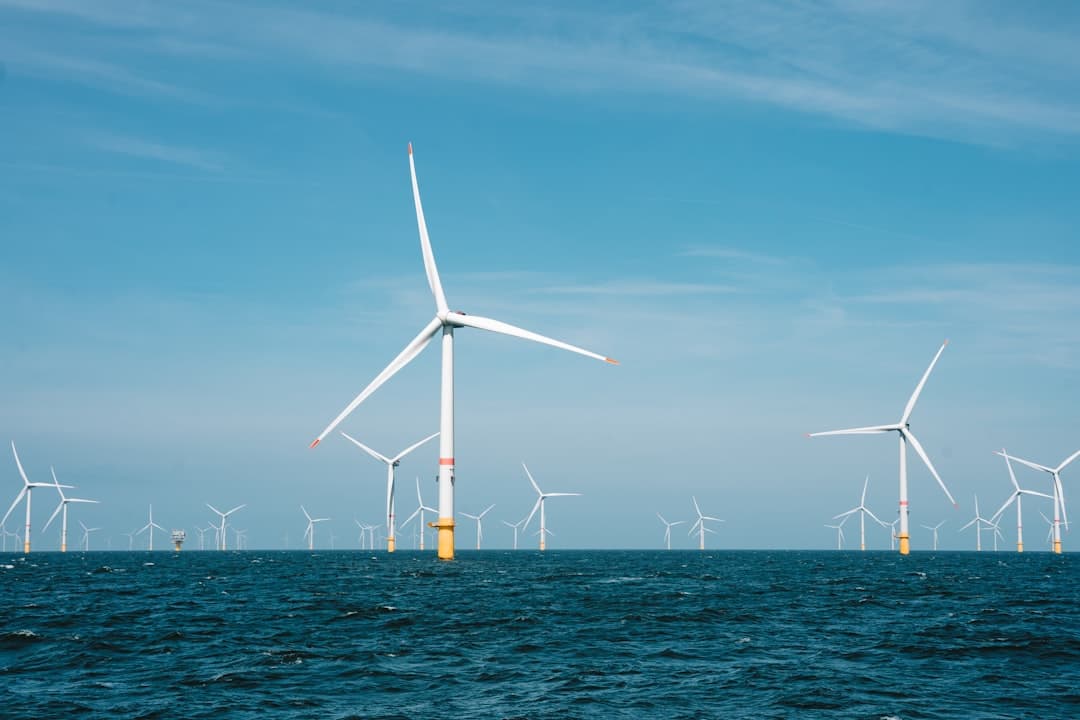
The policy uncertainty is already reshaping the industry. NextEra Energy and Dominion Energy have agreed to combine in a deal that will merge two of the country's biggest wind power players , Windpower Monthly reported Monday. The combined company would rank as the nation's largest gas plant operator and the largest operator of utility-scale battery storage , according to E&E News. The merged entity will have a future pipeline for large-load customers containing an estimated 130 GW of power , much of it tied to data center demand.
What About the Quiet Workhorse?
While solar and wind dominate headlines, hydropower still provides nearly 15% of global electricity. But it's stagnating. The International Energy Agency warns that global hydropower growth is running at less than one-third the rate needed to meet clean energy targets .
Enter an unlikely savior: 3D printing. Researchers at Oak Ridge National Laboratory and Wisconsin startup Cadens have developed 3D-printed turbines that can reduce hydropower costs by up to 40% per kilowatt. Of the roughly 90,000 dams in the U.S., fewer than 3% currently generate electricity. The new manufacturing approach could make small-scale hydropower economically viable at an estimated 50,000 of those sites , OilPrice.com reported.
Approximately 29 gigawatts of untapped hydropower energy potential exists across thousands of U.S. sites — more than the entire solar capacity added last year. Additive manufacturing enables rapid, customized and affordable production of components for low-head micro-hydropower systems, significantly reducing barriers to harnessing energy , the researchers told Interesting Engineering. A prototype turbine has operated continuously for more than six years.
The timing matters. As AI data centers put unprecedented strain on global electric grids, hydropower represents a stalwart, round-the-clock energy solution that doesn't depend on wind speeds or cloud cover.