One hundred dollars a barrel. That isn't the price of crude — it's the toll refiners now charge just to turn crude into diesel. On August 17, the U.S. Gulf Coast diesel crack spread against WTI Cushing crossed the century mark for the first time ever, according to RBN Energy, a level that exceeded even the post-COVID boom year of 2022. It has since eased into the low nineties but remains, in the firm's words, at levels never seen before, even exceeding those during the post-COVID boom year of 2022.
That number matters more than whatever headline crude prints this week. Diesel runs the trucks that move groceries, the tractors that harvest wheat, and the generators that keep mines and data centers humming. When the refining margin — not the raw material — becomes the expensive part, the pain shows up everywhere except the crude futures screen, and policymakers reaching for the usual lever, releasing strategic crude reserves, find it doesn't touch the actual shortage. Citi's Anthony Yuen has flagged global diesel inventories sitting below their five-year minimum, while Kpler data cited by Jefferies show Persian Gulf diesel exports down 80% year over year -- nearly double the 48% decline in crude exports from the region.
Crude itself, meanwhile, looks almost calm by comparison. September WTI futures settled at $91.67/bbl (+1.15%), and November Brent closed at $95.82/bbl (+0.62%), with OilPrice.com reporting that ICE Brent is poised to end the week with a 6% weekly gain, trending around $95 per barrel, with no real short-term downside factor except for demand destruction. That's a meaningful move, but nowhere near the vertical the diesel curve has drawn. ING's commodities strategists put it plainly this week, noting that the ICE gasoil crack — the crude-to-diesel spread — hit on Tuesday a record high of $79 per barrel, and warned flatly that "The global refining system has little slack to make up for the disruptions we are currently seeing."
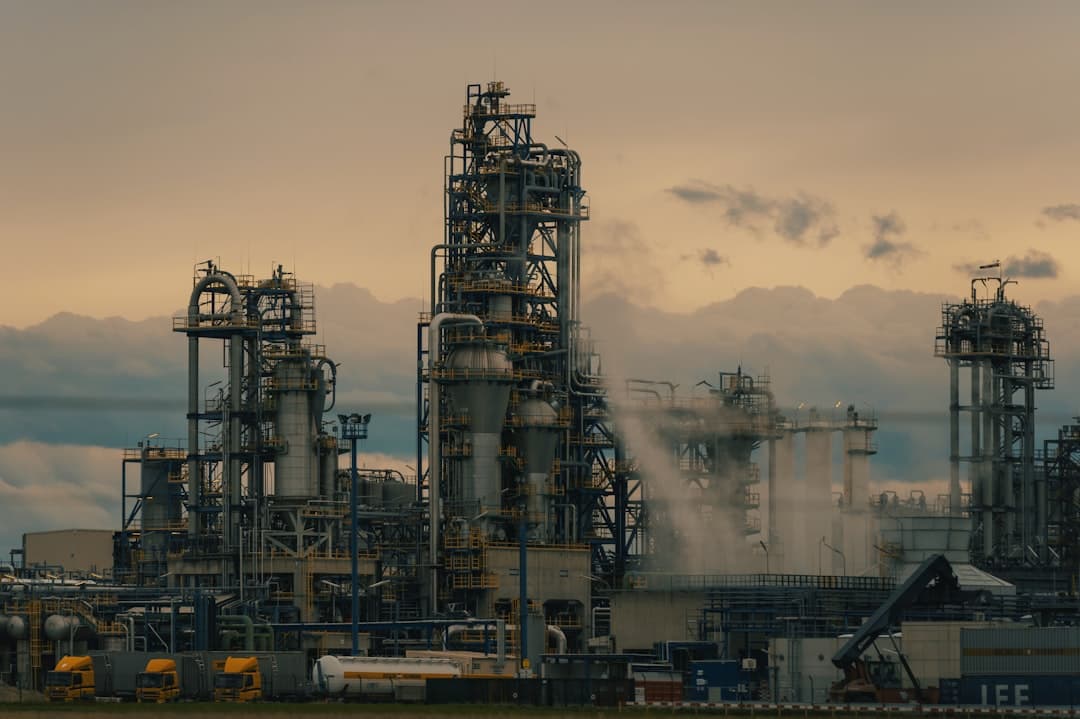
The refiners caught in the middle of that gap are not complaining. Marathon Petroleum and Valero more than doubled their per-barrel refining margins in Q2, collectively returning over $5 billion to shareholders through buybacks and dividends, according to Yahoo Finance. That's the tell. If this were purely a crude story, the majors pumping the barrels would be the ones printing outsized profits. Instead it's the companies that own the distillation towers and hydrocrackers — the physical chokepoint between a barrel of oil and a gallon of usable fuel.
Wall Street has noticed, and it's positioning for the squeeze to outlast the headlines that caused it. Citadel, Ken Griffin's hedge fund, has held talks to buy U.S. shale production assets, Reuters reported, part of a broader push by commodity traders into owning physical barrels rather than just trading paper around them. The firm was among the bidders for WildFire Energy before Magnolia Oil & Gas won that auction for $4.06 billion, and its interest mirrors a pattern among major commodity traders expanding into oil and gas production, with Vitol agreeing in July to sell its VTX Energy Partners U.S. shale venture and Gunvor in talks to buy Haynesville shale assets for more than $1 billion. Traders who make their living reading spreads are betting the crude-diesel gap is structural, not a summer glitch to be arbitraged away by October.
A crude glut, hiding underneath the fuel shortage
Here's the twist that makes the diesel story sharper rather than duller: crude supply itself looks almost comfortable. Rosneft CEO Igor Sechin told a Vladivostok energy forum this week that China has effectively taken the lead from OPEC and, without being a member of any cartel, has managed to stabilize the global oil market by cutting its oil imports by 5.5 million barrels per day this year — a swing so large that, Sechin argued, its absence could have added an additional $30 per barrel to prices. That's a market with enough crude sloshing around that its single largest buyer can walk away from 5.5 million barrels a day and barely move the needle. OPEC+, for its part, is expected to freeze output quotas rather than raise them, OilPrice.com reported, with the group likely to hold quotas steady for October 2026 at 31.01 million b/d as the US-Iran war continues to cap Middle Eastern producers' supply increases. Crude discipline is holding. Refining capacity is what's broken.
The honest counter-argument is that this is simply war math, and wars end. Strikes on refineries in Iran and Ukraine, Russia's outright diesel export ban, and the closure of Saudi Arabia's Jazan facility have all knocked out processing capacity that could, in theory, come back online once the fighting stops. But the RBN Energy analysis undercuts the "it's temporary" read: refined product prices have stayed elevated even as crude fell from its 2026 highs, a decoupling that has persisted since early summer rather than spiked and faded. West Coast refinery closures in the U.S. add a second, permanent removal of capacity layered on top of the wartime disruptions. That isn't a spike correcting itself. It's a structural rewiring of who profits from a barrel of oil, refiner instead of driller, that a ceasefire cannot fully unwind.
Europe adds its own version of the same lesson on a different fuel. Gas storage across the bloc has fallen to roughly 63 to 65 percent of capacity heading into winter, multiple trackers reported this week, with Simone Turi of MET Group warning that Europe is heading into the season with the lowest storage buffer on record and that "something will have to break." Different molecule, same message: the constraint isn't upstream supply, it's the capacity to move fuel from the ground to the tank at the moment it's needed.
If the pattern holds, the energy trade to watch this autumn isn't which producer pumps more crude. It's who owns the pipes, the towers, and the storage caverns standing between an oversupplied wellhead and an undersupplied furnace — and Ken Griffin, for one, has already made his bet.