Wednesday, June 10, 2026Vol. III · No. 161Subscribe
The Mining, Energy & Technology Wire
Oil & Gas · Analysis

Energy's New Arithmetic

From the Strait of Hormuz to data center campuses in Texas, the energy industry is rewriting its supply equations—and the answers don't add up the way they used to.

Energy's New Arithmetic
PhotographFrom the Strait of Hormuz to data center campuses in Texas, the energy industry is rewriting its supply equations—and the answers don't add up the way they used to.

Kazakhstan's oil production quota hit 1.608 million barrels per day in July , according to market data—a modest 13,000-barrel bump that would barely register in normal times. But these aren't normal times. Until the US–Israeli war against Iran, the Strait of Hormuz was open and about 25% of the world's seaborne oil trade passed through it; tanker traffic has since dropped by about 70% , according to analysis of the 2026 Hormuz crisis. The OilPrice.com article noted that customers buying oil from Kazakhstan are urging the OPEC+ producer to ramp up crude supply and deliver maximum available volumes as the strait remains effectively closed. Every barrel that can bypass the Persian Gulf suddenly matters.

The arithmetic of energy supply is being rewritten across multiple fronts this week. Oil buyers are scrambling for non-Gulf barrels. Data centers are burning through natural gas faster than utilities can build plants. And cobalt—the battery metal that was supposed to be in permanent oversupply—is now so scarce that Chinese smelters are rationing feedstock. Each story follows its own logic, but together they sketch a common theme: the energy systems we built for one world are straining to serve another.

Can Non-Gulf Producers Fill the Gap?

Not easily. Seven OPEC+ countries agreed to a collective oil production increase of 188,000 barrels per day for July 2026 during a virtual meeting held on June 7 , OPEC announced. The increase is spread across Saudi Arabia, Russia, Iraq, Kuwait, Kazakhstan, Algeria, and Oman—but the irony is hard to miss. Saudi Arabia's quota will rise to 10.291 million barrels per day in June, far above actual production; the kingdom reported actual production of 7.76 million bpd to OPEC in March , according to Al Jazeera's coverage of the announcement. The quotas are symbolic. The oil is stranded behind a naval blockade.

Kazakhstan is one of the few producers that can actually deliver incremental barrels. Energy Minister Yerlan Akkenzhenov told journalists that Kazakhstan is planning to produce around 98 million tons of oil in 2026, though production forecasts have been affected by disruptions at the Tengiz field and attacks on Caspian Pipeline Consortium infrastructure, costing around 5 million tons , Trend reported Tuesday. Still, buyers are asking for more. The minister's comment—that partners are requesting "the maximum"—captures the desperation in the market. Brent crude traded at $75.20/bbl on Tuesday, up +0.51%, while WTI stood at $71.50/bbl, gaining +0.63%, according to market data.

The broader OPEC+ strategy remains cautious. The additional voluntary adjustments announced in April 2023 may be returned in part or in full subject to evolving market conditions, and the countries reaffirmed the importance of adopting a cautious approach and retaining full flexibility to increase, pause or reverse production , the cartel said in its statement. Translation: they'll wait to see if the strait reopens before committing real barrels.

What Powers the AI Boom When the Grid Can't Keep Up?

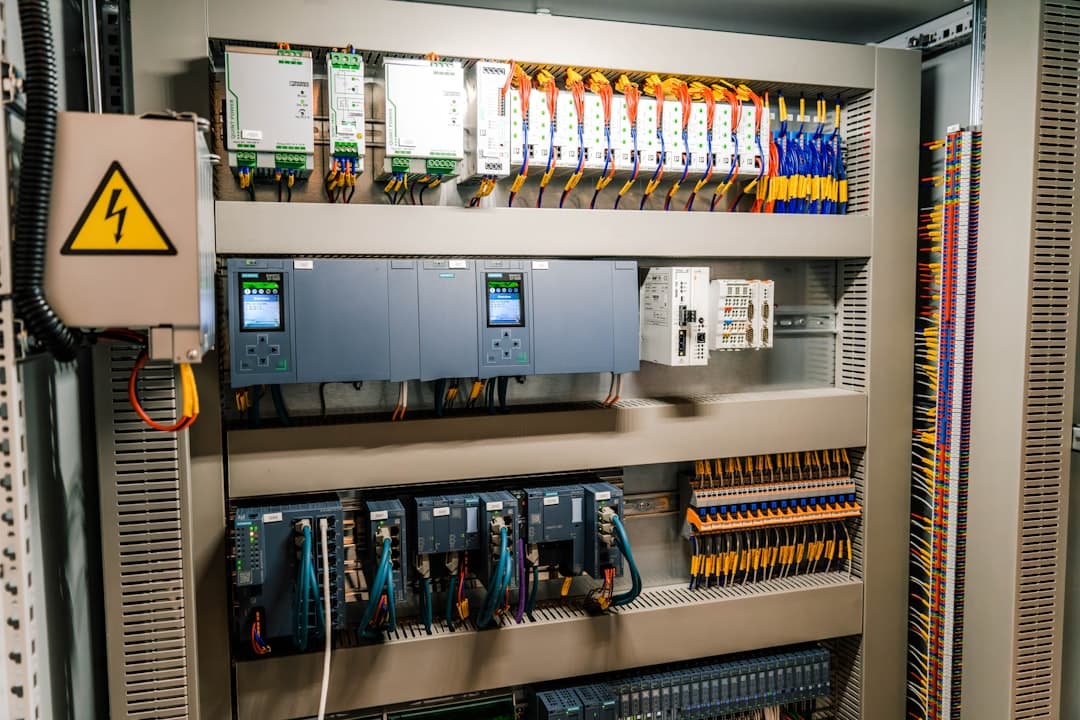
Natural gas and nuclear, in an unlikely pairing. Blue Energy and GE Vernova are developing a 2.5-GW hybrid nuclear-and-natural-gas facility in Texas, with gas operations starting as early as 2030 and nuclear coming online by 2032; the model lets developers start generating revenue from natural gas while the slower, more regulated nuclear permitting process plays out , OilPrice.com reported Monday. It's a pragmatic workaround to a brutal timeline problem: AI data centers need power now, but nuclear plants take a decade to permit and build.

The demand is staggering. U.S. data center electricity demand surged from 23 GW in 2023 to 42 GW in 2026 , according to industry tracking data, while AI racks now require 50–100 kW of power, compared to 5–10 kW for traditional racks, and U.S. power demand for AI could reach 134 GW by 2030 . Natural gas is the only fuel that can scale fast enough to meet that curve. Interconnection requests for gas generators jumped nearly 160% year over year , a Morgan Lewis analysis noted in January.

But the rush has consequences. The cost to build a new combined cycle gas turbine power plant has risen from less than $1,500 per kilowatt of generating capacity in 2023 to $2,157 last year—a 66% spike—according to BloombergNEF , TechCrunch reported in April. It now takes 23% longer to complete a new facility . Tech companies including Microsoft and Meta are building their own gas plants rather than waiting for utilities, but they're bidding against each other for turbines and driving up costs across the board.

Nuclear offers a cleaner alternative, but the economics are daunting. Nuclear eliminates operational carbon and offers unmatched capacity factors, but projects are capital-intensive , Data Center Knowledge noted in February. In January 2026, Meta entered into a 20-year power purchase agreement with Vistra, securing over 2,600 MW of zero-carbon energy from the Perry, Davis-Besse, and Beaver Valley nuclear plants . That's existing capacity, not new builds. The real test will be whether the hybrid model—gas now, nuclear later—can deliver at scale.

Natural gas futures, meanwhile, have been volatile. Henry Hub traded at $3.25/MMBtu per MMBtu on Tuesday, down -2.40%, according to market data. Data centers are placing unprecedented strain on electric grids across the country and across the world as the rapid integration of artificial intelligence into virtually every market sector unleashes an energy monster that we are woefully unprepared to feed , the OilPrice.com analysis concluded.


Why Is Cobalt Suddenly Scarce Again?

Because the Democratic Republic of Congo decided it should be. The cobalt market shifted from deep oversupply to structural tightness after the DRC, responsible for roughly three-quarters of global supply, imposed an export ban in February 2025; it was later replaced by strict quotas , according to Investing News Network's market review. Prices surged from lows of $21,502 per ton to $48,570 by October last year, and they've kept climbing. Spot prices hovered around $25.53 per pound (approximately $56,300 per metric tonne) as of late April 2026 , the Canadian Mining Report noted.

The Financial Times reported Tuesday that the DRC's curbs on cobalt have sparked a squeeze in the vital battery element , sending Chinese smelters scrambling for alternatives. On September 21, 2025, the DRC replaced a months-long export ban with a formal quota system, capping cobalt hydroxide exports at 96,600 tonnes for 2026—less than half the country's 2024 production of 211,000 tonnes , according to AZoMining's analysis. Prices for cobalt metal more than doubled in 2025, and prices for its feedstock—cobalt hydroxide—more than quadrupled , Fastmarkets reported.

The squeeze is real. Global refined cobalt production fell by around 20% in 2025, marking the first decline in five years, and the global market recorded a deficit of over 82,000 tons last year , according to Copperbelt Katanga Mining. A global cobalt shortage is expected to persist through the end of this decade as export restrictions from the DRC impact the supply chain; shipments slid last year after the government first banned exports in February and then introduced strict quotas from October , Bloomberg reported in March, citing trading house Darton Commodities.

The DRC's strategy mirrors OPEC's playbook: restrict supply, boost prices, capture more value. The DRC controls 76% of global cobalt mine production—it can restrict supply alone , Green Stocks Research noted. But the move carries risks. Lithium iron phosphate batteries surpassed nickel-based chemistries in global EV battery deployments for the first time in 2025, accounting for more than half of all EV batteries installed worldwide; since LFP contains zero cobalt, this is the dominant long-term demand-side headwind . High prices accelerate substitution. The DRC is betting that premium applications—aerospace, defense, high-performance EVs—will keep paying.

What About U.S. LNG?

It's coming, but not fast enough to matter this year. Caturus announced final investment decision on the 9.5 million tonnes per annum Commonwealth LNG export terminal in Cameron Parish, Louisiana, backed by $9.75 billion in project financing; the roughly $13 billion project marks one of the largest U.S. LNG export developments approved this year , gCaptain reported in May. The Commonwealth facility is expected to begin operations in 2030 . That's four years away.

The market is now expected to be tight in 2026 and 2027, amid curtailed output from Qatar and the UAE, with Qatar announcing it could need up to five years to repair damage to its key Ras Laffan LNG complex from Iranian missile attacks in March , OilPrice.com noted. The Commonwealth project is a bet on sustained tightness. Long-term offtake agreements have already been secured with EQT, Glencore, Mercuria, PETRONAS and Aramco Trading . The buyers are locking in supply now because they don't trust the market to stay loose.

What Changed This Week

The energy industry's supply cushions are gone. Kazakhstan is being asked to pump flat-out to offset stranded Gulf barrels. Data center developers are building their own gas plants because the grid can't keep pace with AI's appetite. Cobalt, once a glut, is now rationed by a single country's export quotas. And the largest U.S. LNG project to reach final investment decision this year won't deliver a molecule until 2030. The common thread: every supply chain is tighter, every backup plan is being tested, and every marginal barrel, megawatt, or tonne suddenly matters.

What to Watch

OPEC+ meets again on July 5 to review production quotas and market conditions. Watch whether Kazakhstan's output actually rises or whether infrastructure constraints—Tengiz disruptions, CPC attacks—keep limiting deliveries. On the power front, track natural gas storage data from the EIA; the next report drops Thursday and will show whether power burn for data centers is eating into winter cushion. For cobalt, monitor Chinese import data for June; if DRC shipments remain below quota, prices will stay firm. And keep an eye on Hormuz talks—any breakthrough would flood the market with stranded barrels and rewrite the oil arithmetic overnight.

Coverage aggregated and synthesized from leading energy-sector publications. See linked sources within the article.

Share this story

More from Stake & Paper

Was this article helpful?

ClaimWatch

Mining claims intelligence — from query to report, in minutes.

Every unpatented mining claim across all twelve BLM states. Leadfile audits, due diligence, site selection, regional prospecting, entity investigations, and AOI monitoring — delivered as complete report packages.

4.4M+
Claims Tracked
12
BLM States
7
Report Types
Request a Sample Report
Stake & Paper AM

One morning brief. The whole energy sector.

Original analysis, the day's most important wire stories, and market data — delivered before your first cup of coffee. Free.