Sunday, May 10, 2026Vol. III · No. 130Subscribe
The Mining, Energy & Technology Wire
Oil & Gas · Analysis

Oil Under Military Bases and Data Centers Facing Power Shortages: Energy's Week of Contradictions

As the Trump administration eyes drilling beneath military installations to refill depleted oil reserves, Kazakhstan's ambitious AI data center plans collide with electricity shortages—highlighting the energy paradoxes reshaping global markets amid the Iran war crisis.

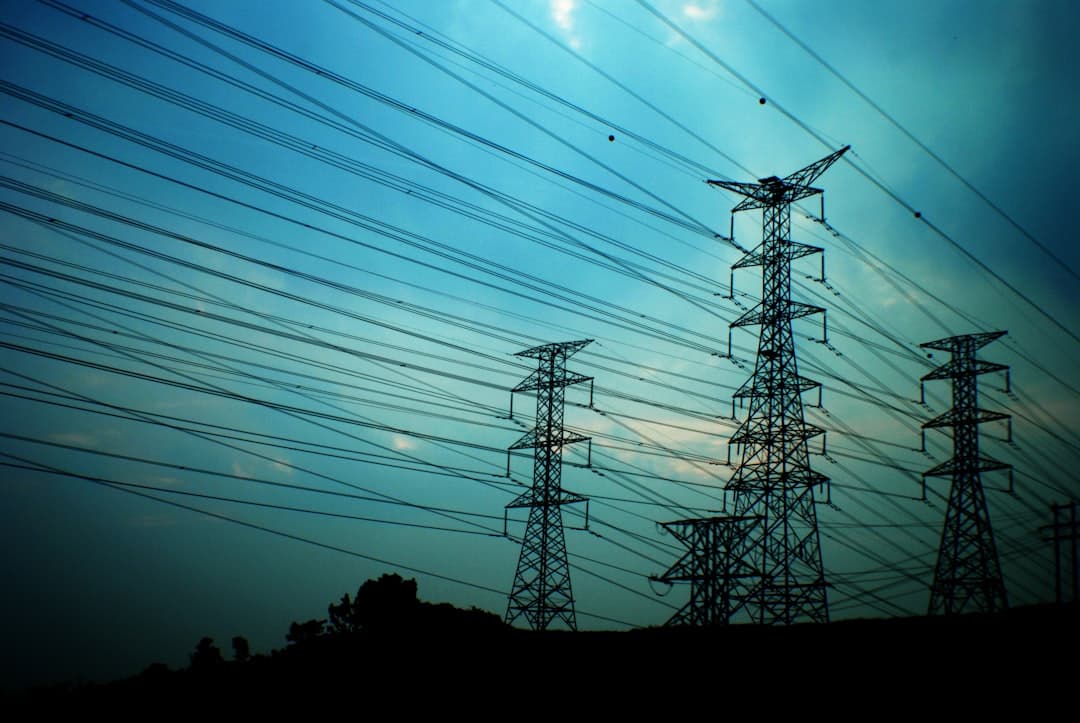
PhotographAs the Trump administration eyes drilling beneath military installations to refill depleted oil reserves, Kazakhstan's ambitious AI data center plans collide with electricity shortages—highlighting the energy paradoxes reshaping global markets amid the Iran war crisis.

The Trump administration is studying using oil under land at US military bases and other Department of War sites to help refill the nation's depleted emergency reserves , according to a person familiar with the matter who asked not to be named discussing private information . It's an unconventional solution to an urgent problem: the Strategic Petroleum Reserve is poised to reach its lowest level since 1982 after President Donald Trump ordered a 172-million-barrel release to help ease soaring energy prices in the face of the conflict with Iran .

Energy Secretary Chris Wright alluded to the possible initiative at a forum last month, saying the administration planned "to do pragmatic things" with energy resources under federal control and that "creative ways" were needed to refill the reserve, noting "We have military bases or facilities that are in the middle of oil fields, but there is no development under those resources—that's crazy. It's right there" , according to World Oil. In September 2025, the Trump administration sold the rights to drill for oil and gas under nearly 2,000 acres of land on Barksdale Air Force Base in Louisiana , Bloomberg reported, suggesting the concept isn't entirely new. Some 29.4 billion barrels of technically recoverable oil, along with 391 trillion cubic feet of natural gas, exist under federal lands, including property owned by the Department of Defense , according to a 2025 US Geological Survey analysis cited by EnergyNow.

Oil Markets Navigate Fragile Ceasefire

The military base drilling proposal comes as oil markets remain volatile despite a ceasefire. According to market data, Brent rose to $100.49 per barrel on May 8, 2026, up 0.43% from the previous day, with prices up 57.24% compared to the same time last year . WTI crude oil futures were little changed at $95 per barrel on Friday as renewed clashes between the US and Iran raised doubts about the durability of a fragile ceasefire , Trading Economics reported.

A Federal Reserve Bank of Dallas survey of oil and gas executives in April revealed that most respondents believed that US oil production would remain flat or increase this year by less than 250,000 bpd, roughly 2 percent—if that figure is correct, the output would replace less than 3 percent of the 10 million barrels of oil that are lost each day due to the Strait of Hormuz closure , according to OilPrice.com. The CEO of Diamondback Energy, Kaes Van't Hof, said at an April Columbia University energy conference, "Compared to the global problem, that's like putting a garden hose into an Olympic-size swimming pool that's been emptied" .

Kazakhstan's Data Center Ambitions Meet Power Reality

Half a world away, Kazakhstan is confronting a different energy challenge. Kazakhstan's Ministry of Artificial Intelligence and Digital Development has signed an agreement with an international consortium to start building out the government's plan to turn the Central Asian state into a data center hub, but the project's timeline appears to hinge on Kazakhstan's ability to close an existing power deficit—the ministry's memorandum of understanding with a consortium led by an entity called JMOT04 Ltd. provides for the construction of a Tier IV data center at a cost of up to $1.5 billion , OilPrice.com reported.

To ensure the data center has a reliable electricity supply, the memo also calls for the building of a gas-fired power plant with an annual generating capacity of 250 megawatts at an estimated cost upwards of $400 million, according to the same report. Within a decade, officials hope to double the country's existing power-generating capacity, which stood at about 26.8 gigawatts at the outset of 2026, but existing plans to add capacity have already hit snags, prompting concerns about production delays , Eurasianet reported.

Earlier in 2026, Kazakhstan felt compelled to cancel contracts with a Russian firm to build new and upgrade old power plants, re-awarding much of the job to Chinese companies, while Rosatom, the Russian nuclear entity, has had trouble in securing the financing needed to build Kazakhstan's first planned nuclear reactor , according to the same source.

Japan's Hybrid Strategy Gains Traction

While some nations scramble for power and others for oil, Japan is quietly winning the global hybrid vehicle race. Japanese automakers are expanding their dominance in the global hybrid vehicle market as consumers seek greener cars that retain the convenience of petrol engines—the domestic market is dominated by some of Japan's most well-known automakers, including Toyota, Honda, Mitsubishi, and Nissan, which have spent decades establishing a strong reputation for automaking and are now offering hybrid models equipped with innovative technology , OilPrice.com reported.

Hybrid vehicle sales rose by around fourfold between 2020 and 2026, from 98,010 units to 362,866 units in India alone, according to the article. The Japan hybrid electric vehicle market size reached 761.5 thousand units in 2024, with IMARC Group expecting the market to reach 5,712.0 thousand units by 2033, exhibiting a growth rate of 23.84% during 2025-2033 .

China's Energy Imports Plunge Amid Crisis

The Iran war's impact on global energy flows became clearer this week. Crude oil imports fell 20% in April to 38.5 million metric tons compared to a year earlier, hitting their lowest level since July 2022 , according to Chinese customs data reported by Asharq Al-Awsat. The disruption in the Middle East has led China to tightly manage exports of refined products such as gasoline or jet fuel to protect its domestic market—that policy drove refined oil product exports for April down to their lowest in roughly a decade at 3.1 million tons, down by about a third since March , Reuters reported.

Meanwhile, President Vladimir Putin told Slovakian Prime Minister Robert Fico at a meeting in the Kremlin on Saturday that Russia will do everything to meet Slovakia's energy demand , according to TRT World. Slovakia is among only a few countries in Europe that are still buying Russia's oil and gas—Slovakia gets Russian oil via the Soviet-built Druzhba pipeline, while natural gas from Russia flows there through the TurkStream pipeline .

Nvidia's $40 Billion AI Bet

In the technology sector, Nvidia is pouring billions of dollars at a time into companies across the AI infrastructure stack—this week alone Nvidia forged an agreement with data center operator IREN, giving it the right to invest up to $2.1 billion in the company, a day after Nvidia struck a pact with Corning, allowing it to invest up to $3.2 billion in the 175-year-old glass maker , CNBC reported. In 2026, the pace of deals has kicked into overdrive, with Nvidia already topping $40 billion in commitments , according to the same report.

The moves underscore how energy-intensive AI infrastructure has become. Huang said the scale of AI infrastructure spending is creating a unique opportunity to reinvest in American manufacturing and supply chains after decades of offshoring, stating "This is such an extraordinary opportunity because we can use these market dynamics to reinvest, revitalize American manufacturing for the first time in several generations" , CNBC reported.

The week's developments paint a picture of global energy markets in flux—where military land becomes a potential oil source, where AI ambitions collide with power grid realities, and where the world's largest oil importer tightens its belt while hybrid vehicles quietly gain ground. As one energy crisis reshapes supply chains, another builds data centers that may struggle to turn on the lights.

Coverage aggregated and synthesized from leading energy-sector publications. See linked sources within the article.

Share this story

Was this article helpful?

Discussion

Not published • Used for Gravatar

0/2000 characters

Loading comments...

ClaimWatch

Mining claims intelligence — from query to report, in minutes.

Every unpatented mining claim across all twelve BLM states. Leadfile audits, due diligence, site selection, regional prospecting, entity investigations, and AOI monitoring — delivered as complete report packages.

4.4M+
Claims Tracked
12
BLM States
7
Report Types
Request a Sample Report
Stake & Paper AM

One morning brief. The whole energy sector.

Original analysis, the day's most important wire stories, and market data — delivered before your first cup of coffee. Free.