Grid interconnections are taking four years. That single fact, buried in industry conference proceedings, explains why SoftBank just pledged €75 billion to France, why PJM's capacity prices jumped sevenfold in two years, and why Rio Tinto is teaching drill rigs to think for themselves.
Power availability—not capital—is the primary constraint on data center development , according to attendees at a recent data center investment conference. Electricity demand from data centers soared by 17% in 2025, and that of AI-focused data centers climbed even faster , the IEA reported. But the infrastructure to deliver that power is moving at geological speed. Elon Musk warned earlier this year that "very soon, maybe even later this year, we'll be producing more chips than we can turn on." He wasn't being hyperbolic. Nvidia's Rubin GPU system, coming later this year, will need around 300kW per rack—and future chips could push racks closer to 1 megawatt, enough to power 750 U.S. homes , Bloomberg reported.
The collision between AI's appetite and the grid's capacity is forcing a rethink of how energy-intensive industries operate. Data centers are hunting for power anywhere they can find it. Mining companies are automating to cut labor costs and energy waste. And governments are suddenly competing to offer what tech giants need most: gigawatts, fast.
Can You Build a Data Center Faster Than the Grid Can Grow?
Not in PJM, you can't. Wood Mackenzie analysis indicates that electric utilities within the PJM footprint collectively forecast 55 gigawatts of new large load growth by 2030 and 100 GW by 2037 —mostly from hyperscale data centers. But for the typical power plant in PJM, it takes five years from approval to enter service, and even the fastest 15 percent take two to three years , according to NRDC analysis. PJM consumers were hit with a $14.7 billion capacity charge this summer, mostly because data centers drove prices up—compared to $2.2 billion in 2023 and 2024 .
The regulatory response has been messy. FERC found PJM's tariff unjust and unreasonable in December due to a lack of clarity in the rates and conditions that apply to interconnection customers serving co-located load . Translation: the rules written for a world of steady industrial demand don't work when a single data center wants 500 megawatts behind a nuclear plant. PJM asked federal regulators in February to approve changes to its retail behind-the-meter generation rules and proposed three new transmission services for colocated loads , Utility Dive reported.
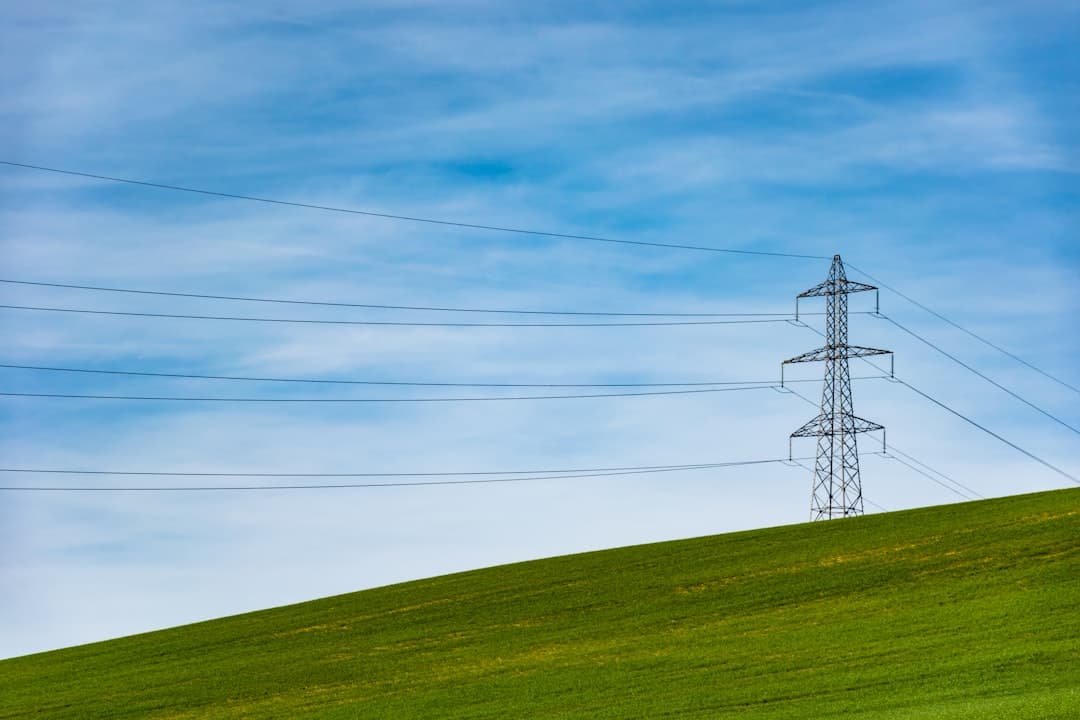
Meanwhile, developers are going around the grid entirely. Electrical grid interconnections are often taking up to four years, making Bring-Your-Own-Power (BYOP) solutions increasingly attractive despite their complexities , according to legal analysis from Ropes & Gray. Constrained by slow grid connections, data center developers are advancing a large number of projects with onsite natural gas-based power generation, largely in the United States—though many remain in early stages, highlighting the technical and financial hurdles , the IEA noted.
Why Is France Suddenly Winning the Data Center Race?
Because it has what the U.S. doesn't: "fast access to the most reliable electrical grid in Europe," according to France's economy minister. SoftBank announced plans to spend up to €75 billion to expand data center capacity in France, aiming to develop and operate up to 5 gigawatts of additional capacity , TechCrunch reported. The first phase comprises an initial €45 billion investment to deliver 3.1 GW of AI data center capacity in the Hauts-de-France region by 2031 .
The timing matters. Europe's high energy costs have become a major stumbling block in its bid to become a global AI superpower, and power-hungry data centers mean investments are particularly sensitive to the cost of energy, with Europe's prices surging amid the U.S.-Iran war , CNBC reported. Yet France is betting it can compete on reliability and speed of permitting rather than price alone. SoftBank CEO Masayoshi Son told a press briefing with French President Emmanuel Macron that the full investment is closer to $750 billion when taking the full system into account .
State-owned nuclear energy giant EDF is partnering on the buildout, providing the site of a former power plant in Bouchain, while SoftBank plans to partner with Schneider Electric to develop a large-scale industrial production cluster , according to industry reports. It's not just about data centers—it's about building the supply chain to manufacture them at speed.