Technology · Analysis
AI Agents Reshape Energy & Mining Ops
Autonomous drilling systems and AI-powered mining operations are moving from pilot projects to production scale, with ExxonMobil completing its first fully autonomous well and mining automation markets projected to reach $9.92 billion by 2030.
ExxonMobil recently drilled its first fully autonomous well in Guyana, with AI handling drilling and geosteering through the reservoir section, delivering stronger drilling and well-placement performance than conventional approaches
, according to World Oil. The milestone signals a broader shift across energy and mining operations, where artificial intelligence is moving from experimental deployments to production-scale automation that's reshaping how companies extract resources.
Over the last 12 months, artificial intelligence has transitioned from a niche luxury for Tier-1 miners to a foundational operational requirement across the global sector
, according to AzoMining. The transformation is backed by substantial capital flows:
the global AI in mining market was valued at approximately USD 35.47 billion in 2025 and is currently projected to reach USD 828.33 billion by 2034, representing a compound annual growth rate of 41.92%
, per Precedence Research data cited by AzoMining.
In oil and gas, the numbers tell a similar story.
Strategic Market Research estimates the global mining automation market will expand from approximately USD 5.94 billion in 2024 to USD 9.92 billion by 2030, reflecting a 9.54% CAGR
, according to Yahoo Finance.
AI-based mine-control platforms and predictive fleet intelligence systems now account for approximately 34.9% of market demand, representing nearly USD 2.07 billion in 2024
, the research firm reported.
Can Autonomous Systems Replace Human Operators?
The answer is more nuanced than a simple yes or no.
Most drilling technologies being applied throughout the oil and gas industry today fall under the umbrella of "advanced automation", where isolated tasks are automated while well construction workflows remain fragmented and disconnected. True drilling autonomy, however, moves beyond task-based automation toward an interconnected, closed-loop system
, according to SLB in a May 2026 analysis.
In March 2026, Halliburton expanded deployment of AI-driven drilling automation systems to improve real-time well optimization and reduce non-productive time in shale operations. In January 2026, Schlumberger upgraded its autonomous drilling platform with advanced edge analytics for deepwater and unconventional resource projects
, according to DataM Intelligence research cited by OpenPR.
The practical results are compelling.
A North Sea operator discovered that while manual drilling encountered unexpected high-pressure zones at 12,400 feet causing well control issues that required 14 days to resolve at $16.8 million total cost, an adjacent well using autonomous drilling detected identical pressure anomalies 840 feet earlier through real-time formation evaluation, automatically adjusted mud weight and drilling speed, and completed the section with zero non-productive time
, according to iFactory, an AI platform provider for oil and gas operations.
In mining, the scale of autonomous deployment has reached industrial proportions.
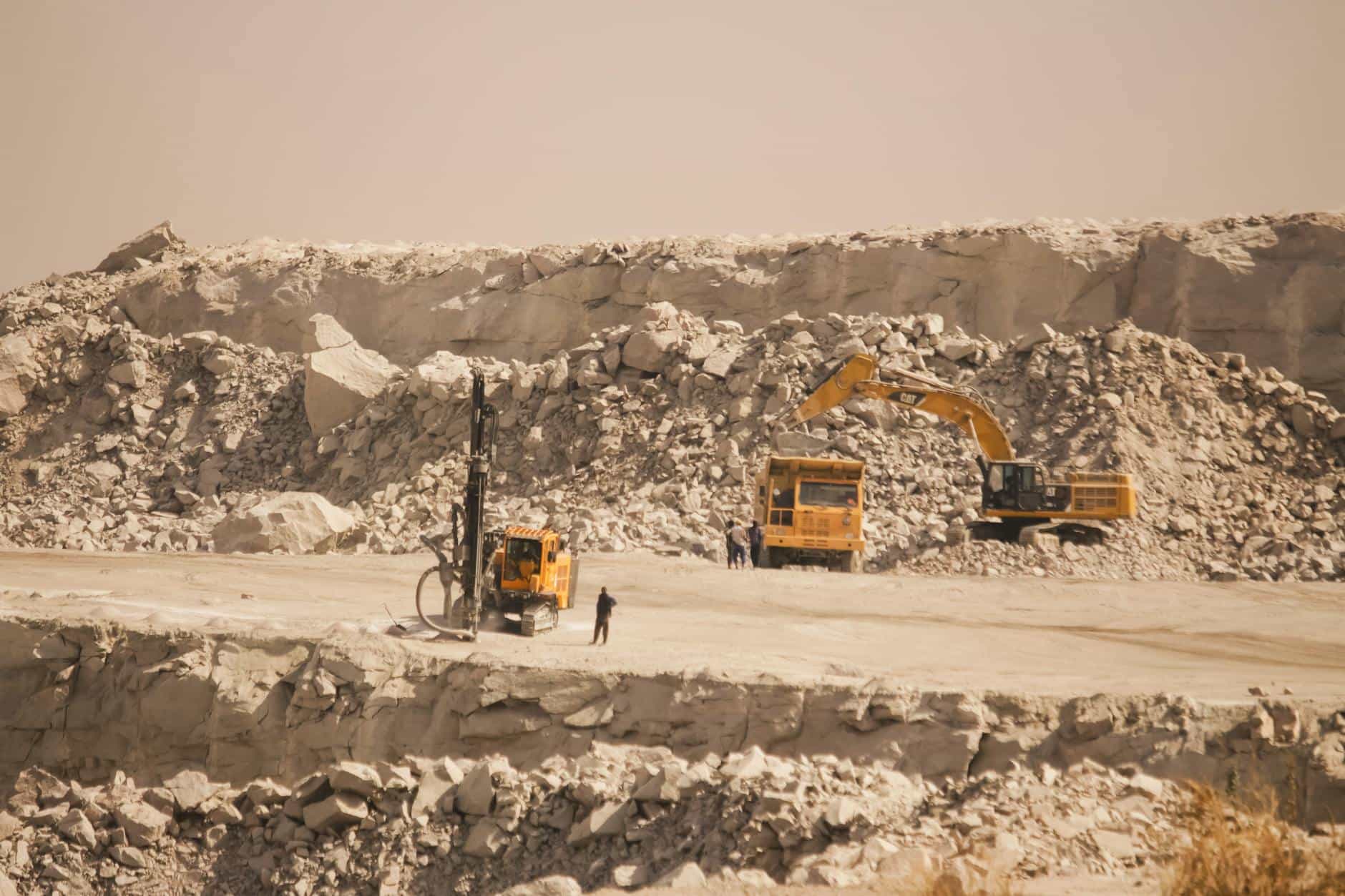
Rio Tinto has deployed advanced technologies such as autonomous haul trucks, AI-powered fleet management, machine learning for ore targeting, drone-based mapping, and renewable energy integration across its main extraction sites. Pilbara (Australia) is now home to hundreds of AI-driven haul trucks and remote-operated drilling rigs
, according to Farmonaut.
Rio Tinto reports that these autonomous trucks are up to 15% more efficient than manned vehicles
, per Mining Digital.
What Financial Returns Are Companies Seeing?
The economic case for AI automation extends beyond productivity gains to measurable cost reductions.
Several mining operators report that predictive maintenance systems are reducing maintenance-related production losses by approximately USD 84,000 annually per major mining site by identifying component-failure patterns before catastrophic shutdown events occur
, according to Strategic Market Research.
AI-enabled haul-route coordination is generating approximately USD 142,000 in monthly fuel-recovery value per automated fleet, largely by reducing idle cycles, unnecessary transport movement, and inefficient routing behavior across large extraction zones
, the research found.
As diesel and energy commodity volatility remains elevated in 2026, fuel optimization is becoming one of the strongest financial justifications for autonomous fleet adoption
, according to market data.
Mining companies focused on lithium, copper, and nickel extraction are reporting approximately 9.1% EBITDA uplift after integrating autonomous hauling, automated crushing systems, and AI-assisted ore coordination platforms into production workflows
, Strategic Market Research reported.
The technology is also enabling new operational models.
According to Microsoft's Work Trend Index, over 80% of business leaders expect AI agents to expand workforce capacity and be integrated into strategy within the next 12 to 18 months
, Microsoft reported in a blog post on agentic AI in renewable energy operations.
How Are Large Language Models Changing GIS and Exploration?
Beyond autonomous equipment, large language models are transforming how energy companies analyze geospatial data and plan infrastructure.
The combination of Spark, improved algorithms, and agent systems with NLP significantly speeds up the selection of plots for renewable energy sources, supporting sustainable investment decisions
, according to research published in Applied Sciences.
Large Language Models, specifically GPT-4 and the open-source DeepSeek-R1, are being integrated into Geographic Information System workflows to enhance the accessibility, flexibility, and efficiency of spatial analysis tasks. Systems are being designed and implemented that are capable of interpreting natural language instructions provided by users and translating them into automated GIS workflows through dynamically generated Python scripts
, according to research in ISPRS International Journal of Geo-Information.
Modern grids produce data in many forms — text, time series, images, GIS maps, etc. Multi-modal LLMs can help operators detect anomalies from SCADA or PMU data and interpret thermal images of equipment for defect detection
, according to analysis published on Medium by energy systems researchers.
In mineral exploration, the impact is equally significant.
Machine learning models integrate geological surveys, drilling data, and grade control measurements across ore blocks. This predicts ore quality and variability, informing blending strategies, stockpile management, and processing throughput to improve recovery and limit dilution
, according to Farmonaut's analysis of predictive analytics in mining.
What About Infrastructure Monitoring and Safety?
AI is also transforming how companies monitor critical infrastructure.
Smart pipeline monitoring systems provide continuous monitoring, cutting incident rates by up to 30% through predictive maintenance. Global energy demand growth, projected at 50% by 2050, underscores the need for reliable pipeline infrastructure supported by smart technologies
, according to Intel Market Research.
The smart pipeline monitoring market is projected to grow from USD 2.12 billion in 2026 to USD 3.85 billion by 2034, exhibiting a CAGR of 7.8% during the forecast period
, the research firm reported.
German technology firm LiveEO has launched a high-resolution satellite constellation designed to monitor pipelines, rail networks and other critical infrastructure assets. The constellation, named Twinspector, is built to deliver large-area, high-resolution, three-dimensional imagery tailored to the energy and transportation sectors
, according to Pipeline & Gas Journal.
In a field demonstration, a public utility in Alaska used AI-driven control on microgrids and cut diesel consumption by roughly 40% while maintaining reliability
, according to Virtual Workforce AI, demonstrating how intelligent control can simultaneously save fuel and lower emissions.
What Changed This Week
The convergence of autonomous systems, predictive analytics, and large language models is creating a new operational paradigm in energy and mining. Companies are moving beyond isolated automation projects to integrated AI platforms that connect drilling operations, fleet management, infrastructure monitoring, and geospatial analysis into unified decision-making systems. The financial case has strengthened as fuel costs remain volatile and labor shortages persist, with AI-enabled systems delivering measurable returns through reduced downtime, optimized routing, and predictive maintenance. According to market data, WTI crude traded at $108.99 per barrel on Friday, up 4.1%, while natural gas rose 3.6% to $2.89 per MMBtu, underscoring the continued importance of operational efficiency in a volatile commodity environment.
What to Watch
The drilling software market valuation is estimated to reach USD 4.17 billion in 2026 and is anticipated to grow to USD 7.29 billion by 2033 with steady CAGR of 8.3%
, according to Coherent Market Insights.
In April 2026, Halliburton acquired Sekal (from Sumitomo Corp.) to strengthen autonomous drilling and real-time drilling automation capabilities
, signaling continued M&A activity in the space. Watch for further consolidation as major service companies acquire AI capabilities, expanded deployment of battery-electric autonomous haul trucks following BHP and Rio Tinto's Pilbara trials, and integration of LLM-powered GIS systems into exploration workflows. The Asia-Pacific region, which holds approximately 40% of the AI in mining market according to AzoMining, will likely see accelerated adoption driven by China's smart coal mine investments and Australia's autonomous extraction leadership.