Two thousand tonnes. That is the low-end estimate of natural uranium that slipped out of the Democratic Republic of Congo hidden inside cobalt shipments over the past 24 years — enough, researchers say, to fuel a one-gigawatt nuclear reactor for at least a decade. It moved almost entirely undetected, and almost entirely toward China.
That finding, from a peer-reviewed study in Nature Communications built with a Financial Times and Lighthouse Reports investigation, would be alarming on its own. What makes it urgent now is timing: Congo's government just banned the very export category the uranium was riding inside. On August 6, Reuters obtained a government order showing Kinshasa had prohibited all exports of copper and cobalt concentrate, signed by Mines Minister Louis Kabamba Watum, Foreign Trade Minister Julien Paluku Kahongya and Economy Minister Daniel Mukoko Samba. The order was dated June 29 but only surfaced publicly this week. Two stories, one supply chain, and a market already reacting to both.
This is the nut of it: Congo supplies an estimated 73% of global cobalt mine output in 2025, as well as about 14% of mined copper and 10% of refined copper, and it is simultaneously tightening the exit door on raw material while regulators discover that door has been leaking radioactive cargo for a generation. Any buyer of battery metals — automakers, refiners, defense contractors — now has to price in both a policy shock and a proliferation scandal from the same source.
The ban and the number that moved
The mechanics of the export ban matter less than the psychology. Analysts note the policy will not hit most producers hard, since the bulk of Congo's copper and cobalt is already refined domestically, with the most affected likely being Kamoa-Kakula, which still exports some concentrate under exemptions. But markets don't price mechanics first — they price scarcity signals. Within hours of the Reuters report, benchmark three-month copper on the London Metal Exchange rose as much as 1.8 percent to $14,369.50 a tonne, its highest since January 29, when it touched an all-time peak of $14,527.50.
That echo is visible in Friday's tape. Copper miners, tracked by the COPX ETF, traded at $88.45, up 2.8% on the day, according to market data — a sharper move than the broader energy complex, where XLE slipped 0.5% to $57.84. Lithium names weren't far behind: LIT gained 2.3% to $74.09. The pattern is consistent with a market treating Congo's move as the latest data point in a multi-year story about resource nationalism tightening the battery-metal spigot, not a one-off.
Congo's finance officials would call that the point. State-owned cobalt company EGC chief executive Eric Kalala has framed the broader export-control campaign — export bans, then quotas, now the concentrate prohibition — as proof the country "has control over exploration and production of minerals in a sustainable way" and as a lever to pull refining investment inside its borders. Kinshasa has been building toward this for eighteen months: it halted cobalt exports in February 2025 amid low prices, then replaced that ban with strict annual quotas from October 2025 onward, a sequence credited with helping lift cobalt prices from about $21,000 per ton in early 2025 to more than $56,000 later that year.
A radioactive complication
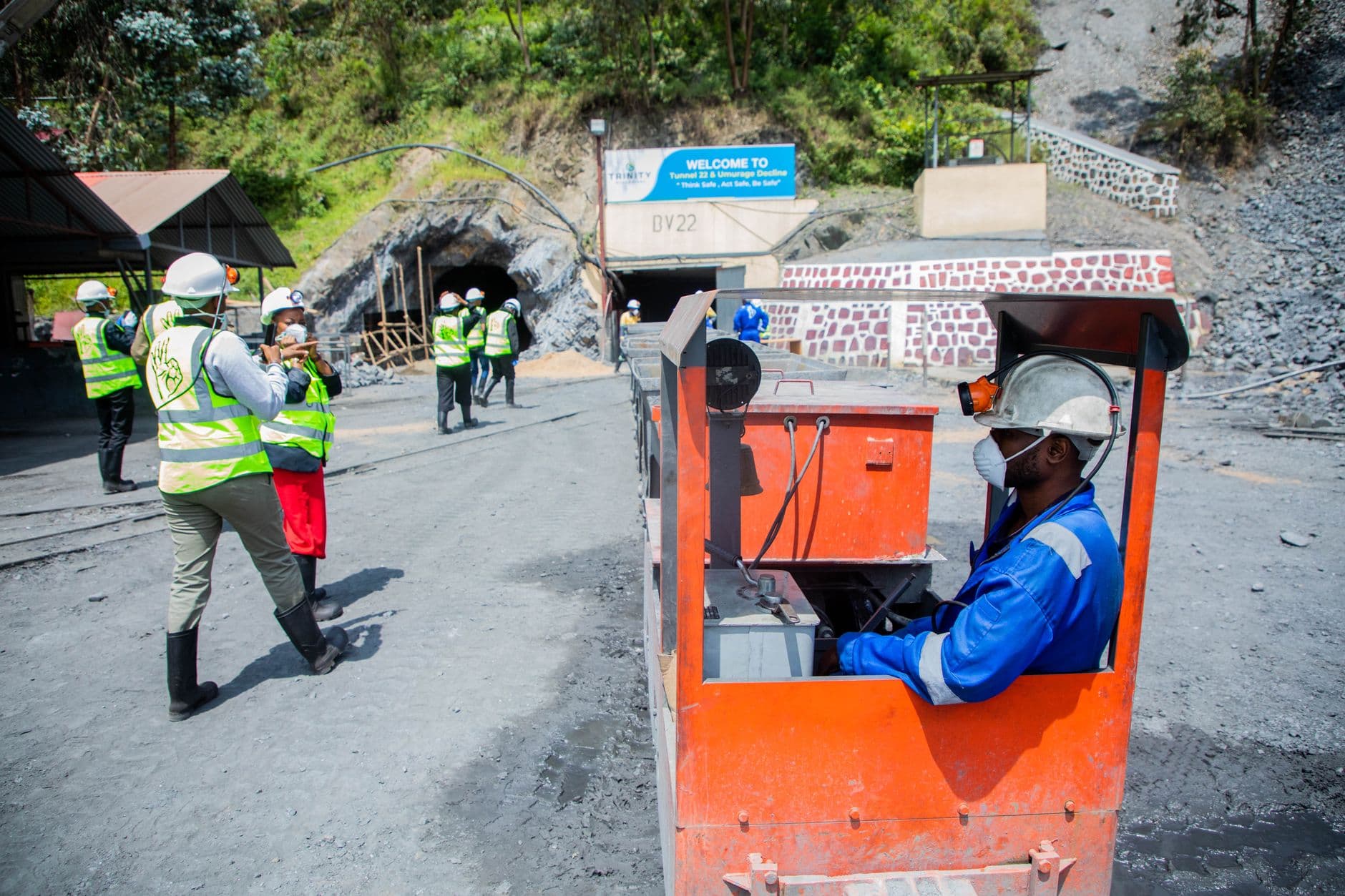
The uranium probe threatens to undercut that whole strategy. The Financial Times and Lighthouse Reports investigation, drawing on a 2009 IAEA memo, found the agency had already flagged "significant quantities" of uranium being exported as a by-product of cobalt mining seventeen years ago — and nothing structural changed. Congo's government has now opened its own inquiry: officials say they will test cobalt hydroxide exported largely to China and establish a working group to assess the findings, while consulting the IAEA about a technical support mission and assessing health and environmental risks over the next 60 days.
Kinshasa is not fully conceding the science. It has pushed back on the modeling itself, arguing the estimates were not based on direct measurements of exported material and relied instead on modelling that was not specific to individual facilities. The head of the DRC's nuclear energy agency, Steve Muanza, put the uncomfortable possibility more bluntly, saying it is "technically possible" and even "likely" that Chinese companies are extracting uranium from cobalt ore — a claim the country's dominant cobalt refiner, CMOC, flatly denies, insisting "there are no instances of uranium levels exceeding applicable limits".
Whatever the inquiry finds, the two stories now travel together. A government trying to convince the world it deserves more value from its own minerals is simultaneously explaining why radioactive material moved through that same supply chain for a quarter century without anyone official noticing. Buyers in Shenzhen and Seoul will be watching both files. So, increasingly, will regulators in Vienna.