Markets · Analysis
Hormuz Redraws the Map of Energy Trade
Qatar is shopping for American LNG, Washington is courting Russian diesel and Indonesia is keeping its gas at home. Prices stay high anyway.
A gas exporter is out buying gas. QatarEnergy is in talks with Woodside Energy to take up to 3 million metric tons a year from Woodside's Louisiana LNG plant, which is still under construction, three people with knowledge of the talks told Reuters. If the deal closes, one of them said, it could run 15 to 20 years.
The Strait of Hormuz is the reason. The US-Israeli war on Iran and Tehran's strikes this year have sharply curtailed shipping, and Reuters reports that QatarEnergy has been buying US cargoes on the spot market to supply some of its customers. The war has not only raised prices. It is rewiring who sells to whom, and the new routes are proving stubborn even as Gulf barrels start to flow again.
Qatar's American pivot
The Woodside talks are one thread of a larger pursuit. On Thursday Cheniere Energy reported a long-term agreement to supply QatarEnergy with 4 mtpa, split between Sabine Pass in Louisiana and Corpus Christi in Texas. Reuters also reported that QatarEnergy is in advanced talks with Venture Global for at least 3 million metric tons a year. Venture Global and Woodside's Louisiana project hold the most uncommitted US LNG capacity, Reuters said, so Doha is going to the sellers with the most left to sell.
They know it. Two people told Reuters that Louisiana LNG is asking for liquefaction fees above $2.50 per mmBtu and is offering shorter contracts to buyers who accept higher prices. A buyer in a hurry pays for the hurry.
Qatar is not arriving in Louisiana empty-handed. It owns 70% of the Golden Pass facility, also in Louisiana, which will export up to 18 mtpa when complete. Part of the new buying is a hedge: if the strait stays unreliable, Doha wants molecules loaded on the other side of the Atlantic.
Russia's diesel, reluctantly welcome
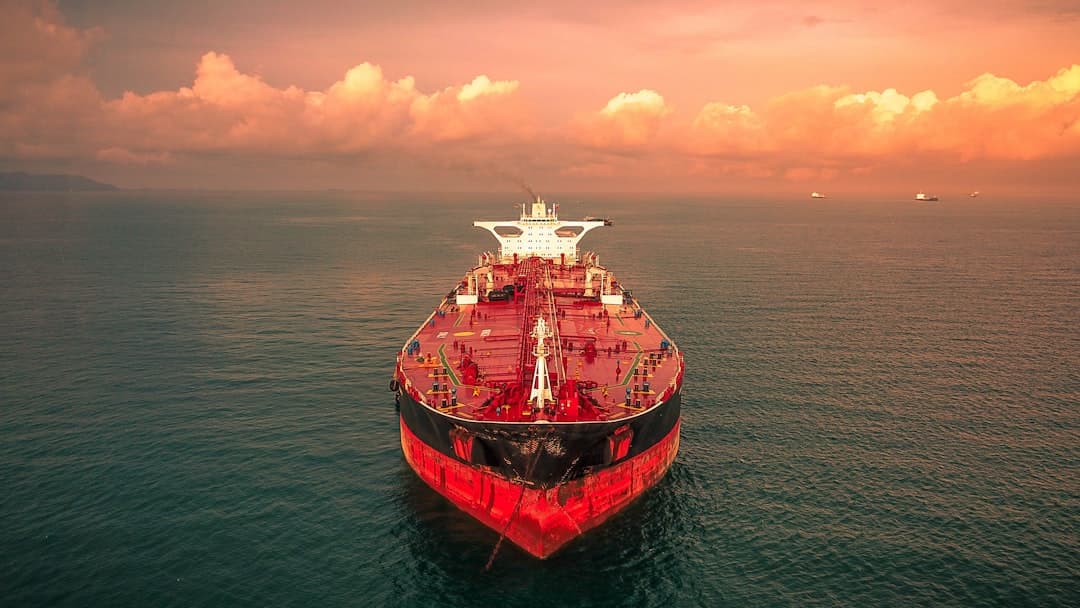
The same logic is moving diesel, with stranger bedfellows. The Malta-flagged Agioi Fanendes loaded about 40,000 metric tons, roughly 300,000 barrels, of ultra-low sulfur diesel on Thursday. It left the Baltic port of Primorsk early Friday for New York, OilPrice.com reported, with arrival expected on November 7. That is the first Russian diesel cargo bound for the US under the arrangement President Trump announced with Vladimir Putin.
Trump said on October 9 that Russia would export more than 300,000 tons of diesel immediately, 500,000 tons in November and 1 million tons after that. Kommersant reported that Moscow partially lifted its own export ban from October 10, releasing 500,000 tons in a first stage. Treasury issued a six-month waiver allowing the fuel onto the global market. An OilPrice.com commentary says the stated aim is to bring pump prices down before the November 3 midterms.
The first ship will not make it in time. OilPrice.com reports the cargo lands after November 3, and analysts say the volumes are too small to move a tight global diesel market. At least two other tankers carrying Russian diesel have signaled destinations in Turkey and Brazil, which OilPrice.com, citing Reuters, called key buyers since the EU banned Russian oil product imports in early 2023. The diplomacy is large. The barrels are not.
Why prices stay high
AAA put the average US diesel price at $6.3172 per gallon on October 23, against $3.6315 on the same day last year, OilPrice.com reported. Reuters says diesel has hit record highs, a result of the Iran war and Ukraine's strikes on Russian refineries.
American refiners are running flat out to capture the margin. The EIA said US refinery utilization averaged more than 95% of capacity from May through September, the highest for those months since 1998. Total output was the highest only since 2019, because capacity has shrunk by 4% since the earlier peak. Utilization eased in the first three weeks of October but stayed above the five-year seasonal average. The Trump administration, Reuters reports, has been coaxing refiners to make still more diesel.
Freight adds its own tax. OilPrice.com reports that crude shipping costs have reached nearly seven times last year's levels, and Goldman Sachs has warned that persistently elevated rates could push oil prices higher. Every rerouted cargo, Louisiana to Doha or Primorsk to New York, travels farther and pays more.
Gulf recovery is real but uneven. SLB reported a 13% sequential rise in its Middle East business as customers resumed drilling and production work, Oil & Gas 360 said. The same outlet noted that renewed security concerns cloud project schedules and equipment deployment. OilPrice.com observed that physical crude from Iraq and Oman is weakening against Dubai as flows return. Futures have not agreed. Oil & Gas 360 reported crude reached $115 a barrel for the first time since May, and Brent for December delivery closed just north of $116 on Friday, according to Yahoo Finance. West Texas Intermediate climbed above $103.
Wall Street felt it. The Dow fell more than 600 points, or 1.2%, Yahoo Finance reported, with higher oil weighing on sentiment ahead of next week's Fed meeting. United, Delta and American shares all fell. The Energy Select Sector SPDR (XLE) rose 2.60% on Friday.
Home first
The most telling move may be the modest one. Indonesia cut 31 million standard cubic feet a day from its pipeline gas exports to Singapore, upstream regulator SKK Migas said, to feed domestic power plants. The cut is 15 mmscfd from Natuna and 16 mmscfd from Sumatra, and it covers around 9% of Indonesia's pipeline supply to Singapore, chairman Djoko Siswanto told Reuters.
"In order to safeguard the reliability of domestic gas supplies for electricity generation, effective today, gas supplies previously destined for Singapore are being redirected for domestic use." Siswanto said.
The motive is local. Batam and several cities in the Riau Islands suffered a 16-hour blackout earlier this month, and the redirected gas is meant for Batam, Bintan and Sumatra. A government that has watched the lights go out has little appetite to export the fuel that keeps them on.
Put the three moves side by side and the pattern is plain. Qatar buys what it can no longer be sure of shipping. Washington takes fuel from a counterparty it spent years sanctioning. Jakarta keeps its own molecules. In each case the buyer pays for certainty, and in a market where certainty is scarce, that is what keeps the price high. The strait may reopen faster than these contracts expire. Fifteen- and twenty-year deals outlast any ceasefire.