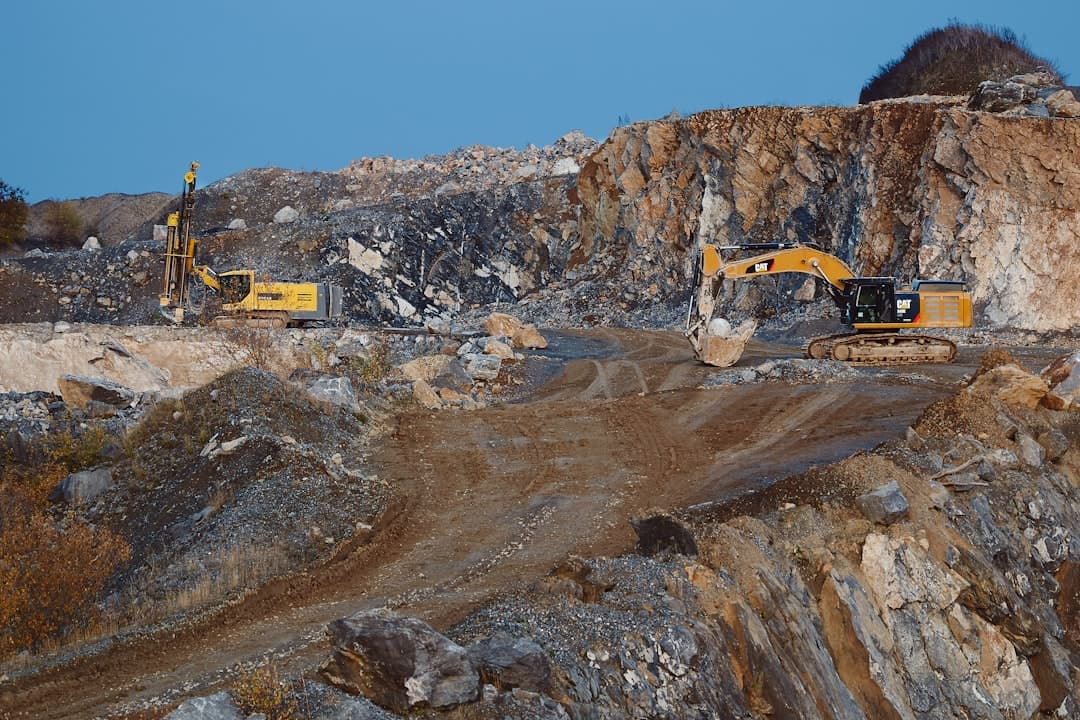
Two Australian lithium mines went dark in late 2024 when prices collapsed. This week, Mineral Resources and Core Lithium announced they're switching the lights back on, betting that a rebound in lithium prices will support renewed production . Mineral Resources will begin ramping up its Bald Hill mine in late May, with first spodumene concentrate production expected in July , while Core Lithium has restarted mining at its Finniss project in Australia's Northern Territory, with first exports planned for the December quarter .
The restarts signal more than operator optimism. They mark a turning point in a commodity cycle that crushed producers for two years. Spodumene concentrate prices, which peaked dramatically in late 2022, had fallen to approximately $1,460 per tonne by early 2024 -- a decline of roughly 75% to 80% from peak levels, according to market estimates. Now they've recovered to around $4,200 per tonne. That's enough to justify reactivation, but barely. The real story is what happens next.
Can Supply Keep Pace With the AI Boom?
Copper settled at a fresh LME closing record of $13,943 per metric ton on May 11, 2026, up 2.7% in a single session . According to market data, copper traded at $6.30 per pound on May 22. Copper is essential for data centers and the technologies underpinning the AI revolution, as well as for worldwide electrification efforts, with global demand expected to surge from 28 million tons in 2025 to 42 million tons by 2040 . Without meaningful supply expansions, S&P Global warns the market will run up against a 10 million-ton shortfall.
The problem is that supply isn't flexible. Codelco is targeting roughly $2 billion in cost reductions and additional revenue through the integration of operations across three copper mines, as the company seeks to counter the effects of stagnant production and rising debt levels . Freeport-McMoRan continues working to restore full operations at its massive Grasberg complex, with about 85% of operations expected to be restored by the second half of 2026, though full recovery across all mining zones may not happen until 2027 .
Meanwhile, demand for copper from data centers alone could reach 475,000 tons in 2026, up from 2025's 110,000 tons , JPMorgan estimates. That's a fourfold increase in twelve months -- driven by AI infrastructure that requires up to ten times the electrical load of traditional facilities.
Lithium faces a similar mismatch, though the dynamics differ. Bald Hill has a production capacity of approximately 165,000 dry metric tonnes per annum of 5.1% spodumene concentrate . That's helpful, but not transformative. The real constraint is processing capacity, not mining. China still dominates lithium conversion, and no amount of Australian spodumene changes that equation quickly.
Why Is Washington Fighting Over Rare Earths?
The Pentagon is weighing whether to scrap an $80 million conditional loan offer to rare-earths refiner ReElement Technologies Corp., touching off a clash with the White House over an agreement that was meant to help break China's chokehold on critical minerals . Officials vetting the company have raised doubts about its ability to scale its technology, as well as its long-term revenue forecasts , Bloomberg reported Wednesday.
The dispute exposes a deeper tension in U.S. critical minerals strategy. The Pentagon team has said it's got $200 billion in financing capacity over the next three years . Some industry officials warn that the Pentagon's rush to do deals has led it to back unproven companies and overlook potential conflicts of interest, saying that the goals are unrealistic and that the government approach encourages companies to exaggerate their capabilities to get funding .
The stakes are real. China produced 94% of rare earth magnets in 2024 , according to the International Energy Agency. Global appetite for dysprosium and terbium alone runs into the thousands of tons annually, while in the first quarter of 2026, Lynas produced a combined 8 tons of them . That's the only producer outside China refining heavy rare earths.
Even the most optimistic forecasts of the new Pentagon team suggest it will take at least until the end of the decade for U.S. production to ramp up . The question is whether the government's dealmaking approach -- equity stakes, price floors, purchase commitments -- can accelerate that timeline or simply subsidize failure.