Tuesday, June 30, 2026Vol. III · No. 181Subscribe
The Mining, Energy & Technology Wire
Oil & Gas · Analysis

Mapping the Grid: ArcGIS Pro 3.7 Arrives

Esri's May release brings utility network upgrades and Python automation tools that energy companies are already putting to work. The shift to .NET 10 marks the biggest platform change in years.

Mapping the Grid: ArcGIS Pro 3.7 Arrives
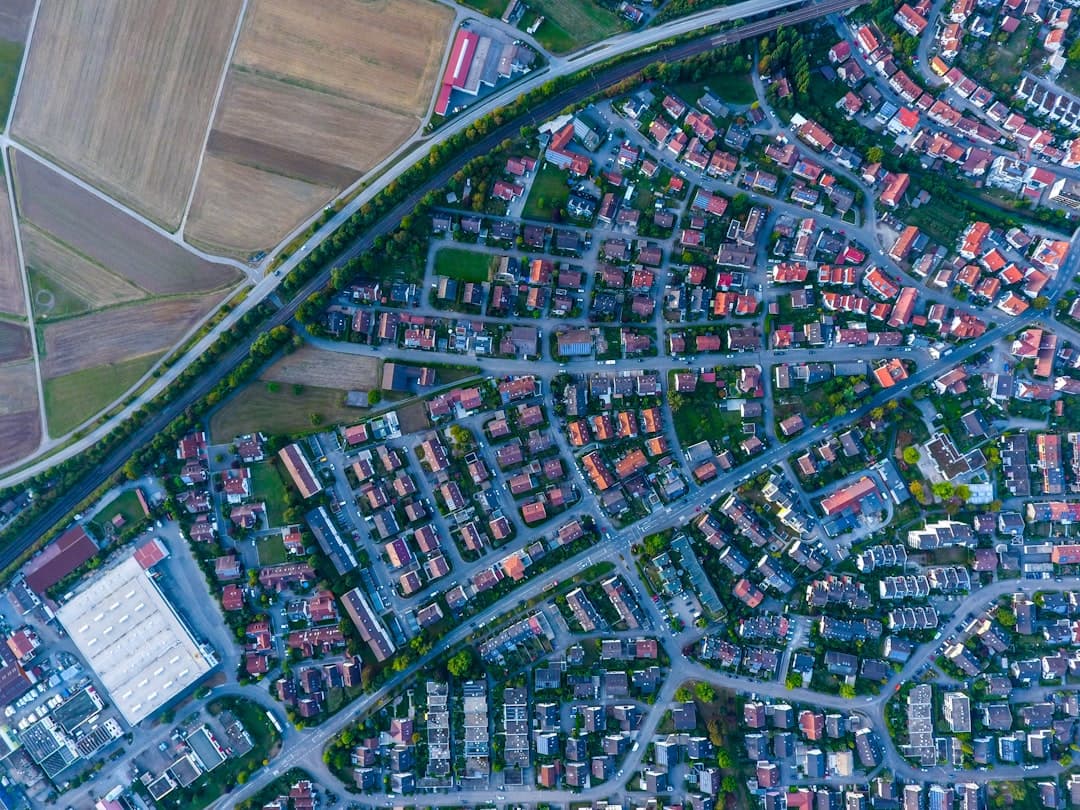
PhotographEsri's May release brings utility network upgrades and Python automation tools that energy companies are already putting to work. The shift to .NET 10 marks the biggest platform change in years.

Esri released ArcGIS Pro 3.7 on May 14, 2026, introducing capabilities that reduce the need to duplicate maps, provide earlier insight into potential performance issues, and speed up common workflows . The update arrives as energy companies face mounting pressure to digitize aging infrastructure and integrate distributed energy resources into increasingly complex networks.

The shift to .NET 10 represents the most fundamental technical change in ArcGIS Pro 3.7 , affecting both core application performance and third-party development workflows. For organizations with custom tools built on previous frameworks, that means auditing code libraries and planning migration paths. ArcGIS Pro 3.7 and ArcGIS Enterprise 12.1 together serve as the 2026 network management release , the annual platform update that utility companies rely on for long-term support and stability.

The timing matters. The World Geospatial Industry Council's Horizons 2026 event in London on June 2 brought together leadership voices from technology, infrastructure, climate, law, academia, energy, and public service , underscoring a broader shift: geospatial is no longer a supporting capability hidden behind maps and specialist workflows—it is a strategic layer that underpins decisions about infrastructure, resilience, climate risk, mobility, energy systems, AI, and public trust .

Can Utility Networks Finally Replace Paper Maps?

At BP's Whiting refinery near Chicago, the firewater system was managed on paper maps with pins until Cherie Southwick, a geospatial technology engineer at BP, brought it into the ArcGIS Utility Network to simulate water flow and pressure from input pumps to every hydrant—what once meant highlighting lines on a paper map and manually coordinating valve closures now takes a single click . The goal is extending the capability to BP's other refineries globally, according to presentations at the 2026 Energy Resources GIS Conference in Houston.

ArcGIS Pro 3.7 redesigns the Find Subnetworks pane with a focus on streamlining important workflows and providing more control over how you find and work with subnetworks in your utility network . According to Esri's utility network documentation, the 2026 Network Management Release brings improved performance for large-scale networks—energy companies managing tens of thousands of assets across service territories can now run network analysis operations faster than in previous versions .

The practical impact shows up in outage response. Duquesne Light Company in Pittsburgh lacked an effective connected system model to support its outage management system and other digital systems until it utilized ArcGIS Utility Network and Schneider Electric's ArcFM Solution XI Series products to establish a robust connection model . Teams in distribution planning, engineering, streetlight management, and metering now utilize ArcGIS Utility Network information for analytics via the Azure platform, and other departments can extract data in real time from the Azure environment—this has eliminated the manual process and the need to request data extracts .

Network tracing allows operators to model how outages propagate through interconnected systems or identify which customers would be affected by maintenance work on specific assets. The Trace and Export Subnetwork tools now provide options to include subnetwork-based flow direction and propagated values in the output JSON when running a trace or exporting a subnetwork—information designed to support integrating the network model with external systems .

What Does Python Automation Actually Look Like?

Customizable toolbars in ArcGIS Pro 3.7 enable users to cut down on tab switching and extra clicks by tailoring toolbars to include the tools and actions used most frequently—especially helpful when views are undocked from the main application and dragged to another monitor . But the real productivity gains come from scripting repetitive workflows.

Python scripting makes it possible to automate workflows in ArcGIS Pro, such as determining the number of features for all feature classes in a workspace . Energy companies use Python to batch-process field data, update network models, and generate compliance reports. Every exploration program needs a single source of truth before anything else can scale—when core layers live in multiple folders and coordinate systems, teams spend more time reconciling data than interpreting it, so start by standing up a project geodatabase or web GIS with consistent schema, metadata, coordinate systems, and versioning, then publish core layers so everyone is working from the same foundation .

Mining companies face similar challenges. Modern GIS in mining delivers a robust suite of features and workflows tailored for each stage in the mine lifecycle, supporting everything from early-stage exploration to post-closure environmental stewardship by integrating high-resolution satellite imagery, airborne gravimetry, LiDAR, and drone-derived topography for geological analysis . Field teams plan field visits, sample sites, and access routes, then load offline maps for no-service areas and use mobile forms for consistent capture of samples, outcrops, structural measurements, photos, and observations .

The ArcPy module provides programmatic access to geoprocessing tools, allowing scripts to execute spatial analysis, manage data, and automate map production. For organizations managing pipeline corridors or transmission rights-of-way spanning hundreds of miles, Python scripts can generate consistent map products across project areas without manual intervention.
Are Digital Twins Just Expensive Visualizations?

In 2026, geospatial continues to move beyond traditional 2D mapping into rich 3D and digital twin environments, with advances in reality capture technologies including LiDAR, drone imagery, mobile mapping and photogrammetry enabling organizations to create detailed, dynamic representations of the physical world . Digital twins provide a shared spatial context for planning, operations and asset management—rather than static models created for a single project, digital twins are becoming living systems that evolve over time, integrating new data to reflect real-world change .

Gaussian splats, demonstrated by Esri's Scott Noulis at the 2026 Energy Resources GIS Conference, represent the emerging frontier in three dimensions—built from drone data using ArcGIS Reality for ArcGIS Pro, the technique creates photorealistic digital twins detailed enough to inspect corroded pipe flanges remotely and capture the 3D geometry of observed hazards, and at refinery scale the capability enables turnaround planning with spatial precision .

The digital twin sector of the geospatial industry is forecast to reach roughly $25 billion by 2026, according to World Geospatial Industry Council . But market size doesn't guarantee utility. Vijay Sharma of Deloitte showed how AI, digital twins, sensors, predictive maintenance, and spatial analytics are changing how infrastructure is planned, operated, and maintained—from transport networks and flood warning systems to energy grids and city-scale digital twins, geospatial is becoming a foundation for infrastructure that can learn from its environment .

Ryan Ciesielski, Global Head of Geospatial at National Grid, offered a practical look at geospatial intelligence in critical energy infrastructure, showing how location data supports planning, operations, maintenance, resilience, and investment across large-scale energy networks—National Grid's geospatial work spans asset management, underground infrastructure, digital twins, vegetation management, drones, subsea cable risk, climate risk, and distributed energy resources .

The distinction between a useful digital twin and an expensive visualization comes down to integration. ArcGIS is designed to sit in the middle of an enterprise landscape, taking data from upstream systems like ERP, EAM, and SCADA platforms and feeding results and services to downstream systems like customer portals, field mobility apps, and analytics platforms through web services, APIs, and connectors—integrating GIS systems with upstream sources and downstream consumers has become a central focus of grid modernization and a key consideration in the migration to the ArcGIS Utility Network .

What Changed This Week

ArcGIS Pro 3.7 introduces the Analyze Map functionality, which surfaces potential performance issues as well as suggested fixes in three categories: Error (must be fixed), Warning (should be fixed), and Message (optional to fix but will improve performance) . New tools automatically extract features from scanned maps, and the ability to control layer visibility by map frame in layouts means users no longer need to duplicate a map each time a different set of layers needs to be displayed . Esri's new ArcGIS MCP server, releasing later in 2026, makes any agentic framework spatially aware—when enabled with the ArcGIS MCP Server, agents can geocode locations, solve routes, calculate distance and travel time, and find field offices within specified radii .

What to Watch

The next major ArcGIS platform update typically arrives in the fall, suggesting ArcGIS Pro 3.8 could release around November 2026 . Energy sector users should monitor Esri's developer documentation for guidance on migrating custom tools to the .NET 10 framework, particularly organizations with extensive custom development investments . Esri's 2026 User Conference runs July 13-17 in San Diego, California , where utility network sessions will showcase real-world implementations and migration strategies. The expanding hyperspectral imagery capabilities in version 3.7 represent a fast-developing area for GIS applications in energy—watch for case studies demonstrating how companies apply these tools to exploration, environmental monitoring, or emissions detection workflows .

Original reporting and analysis by the Stake & Paper editorial team. See linked sources within the article.

Share this story

More from Stake & Paper

Was this article helpful?

ClaimWatch

Mining claims intelligence — from query to report, in minutes.

Every unpatented mining claim across all twelve BLM states. Leadfile audits, due diligence, site selection, regional prospecting, entity investigations, and AOI monitoring — delivered as complete report packages.

4.4M+
Claims Tracked
12
BLM States
7
Report Types
Request a Sample Report
Stake & Paper AM

One morning brief. The whole energy sector.

Original analysis, the day's most important wire stories, and market data — delivered before your first cup of coffee. Free.