The Energy Select Sector SPDR has climbed 41.7% since last August, according to market data, a run built quietly on natural gas demand from data centers and investors rotating out of tech. This week the sector's other engine, crude, finally caught up — and not for a reason anyone wanted. XLE closed Friday at $64.06, with its 14-day RSI at 62.9, sitting well above its 50-day average of $59.20 and edging toward territory traders call overbought.
What's pushing it there isn't a bet on economic growth. It's a bet on how much worse the Middle East is about to get. Oil jumped toward its highest level since mid-July in Monday trading in Asia, nearing the $100 threshold that has loomed over this market for months, according to Goldman Sachs commentary reported by OilPrice.com. Oil prices have rallied in recent days amid the re-escalation of hostilities and jumped early on Monday in Asian trading to the highest level since mid-July, nearing the $100 per barrel threshold. September WTI futures settled Friday at $91.23/bbl, with November Brent at $95.83/bbl — both marks that predate the weekend's escalation.
That escalation had a name and a place: Jizan. Yemen's Houthi rebels have hit Saudi Aramco's refinery complex there repeatedly over the summer, a facility that processes 400,000 barrels of crude oil per day in southwestern Saudi Arabia. The Financial Times reported fresh strikes there again this weekend. Then came the sharper turn: the situation escalated further this weekend after the U.S. said it had struck three Iranian oil tankers in response to the IRGC targeting two U.S. warships with ballistic missiles.
Goldman Sachs put a number on what happens if this keeps going. Oil prices could surge to as much as $120 per barrel if attacks on shipping in the Middle East intensify, according to Goldman Sachs. Daan Struyven, the bank's co-head of global commodities research, was blunt about it on Bloomberg TV: "Events over the last few days do suggest that the risk of shipping disruptions broadening and intensifying is an important one." Goldman isn't telling clients to simply buy crude — it's steering them toward natural gas and diesel instead, on the view that supply shocks in those markets tend to cut deeper. The bank's downside case, if the strait calms down, is $80.
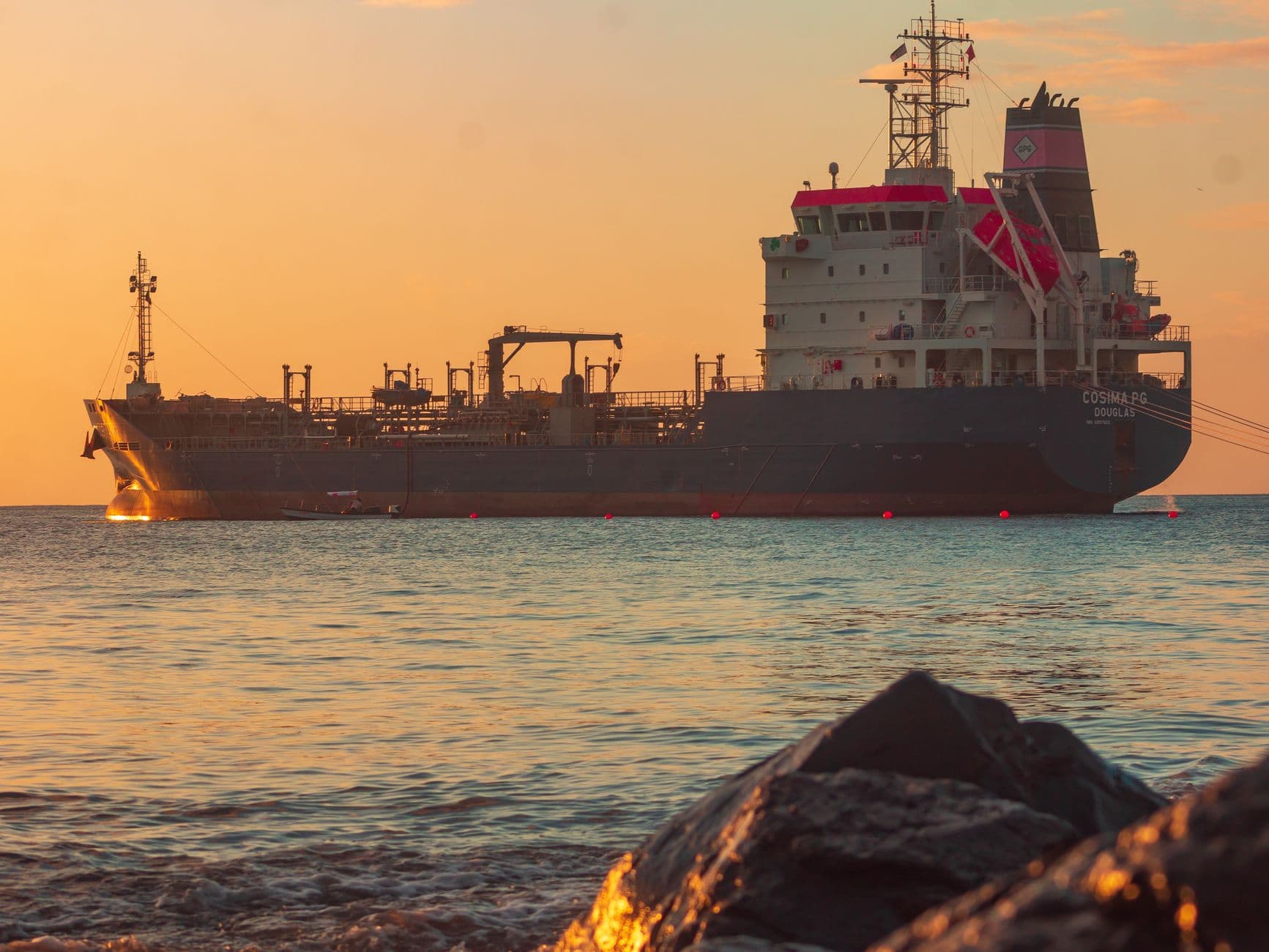
Somewhere off the Omani coast, that bet is being tested in real time. A laden Qatari LNG carrier, the Al Marrouna, was heading toward the Strait of Hormuz in what could be the first visible attempt to exit the crucial waterway since July, signaling Port Qasim in Pakistan as its next destination. Whether it actually threads the strait matters more than any single cargo — it's a test of whether Tehran's grip on the waterway is loosening or simply pausing for breath.
A parallel scarcity story, no war required
Copper is having its own moment, and it owes nothing to Hormuz. The metal just closed out its longest winning streak in over three decades. Copper just logged its 10th straight weekly gain, the longest streak since 1994, with LME prices near the January record of $14,527.50 a ton. On the supply side, the picture is thinner than the price chart suggests: global mine output fell 1.1% in the first half of 2026, with Codelco, Freeport and Chile all posting steep declines, putting the market on track for its first annual drop since 2017. Comex has followed the same script — prices topped $6.70 a pound in August, a fresh all-time high — while the physical market keeps getting squeezed: inventory that keeps draining: LME warehouse stocks fell for 42 straight days through mid-August.
Reuters columnist Andy Home has seen this movie before, and he isn't reassured by the current calm. He called the market's reaction to Congo's copper export ban proof that "Doctor Copper's panic attack is unlikely to be the last." Copper Miners closed at $90.66, still up sharply from a year ago even after slipping day-over-day — a rally that, like oil's, is being driven by what isn't arriving at the warehouse door rather than by anything demand is doing.
Layer uranium on top and a pattern comes into focus. The Global X Uranium ETF (URA) closed at $46.06, and the Financial Times reported this week that Russian-controlled mines are set to supply a larger share of an already tight nuclear fuel market by 2040 — another commodity story where the anxiety is about who controls the tap, not how thirsty anyone is.
None of these three rallies — oil, copper, uranium — is being driven by anyone buying more of the underlying good. They're being driven by traders pricing in the chance that less of it arrives. That distinction matters for anyone holding energy stocks on the strength of this year's chart: a rally built on scarcity reprices violently the moment the scarcity eases, and reprices even more violently if it doesn't. Gulf tankers, Congolese ports and LME warehouses are, this week, more important to markets than any oil major's earnings call — and none of them answer to a quarterly schedule.