Friday, July 10, 2026Vol. III · No. 191Subscribe
The Mining, Energy & Technology Wire
Technology · Analysis

The $965B Race: AI Labs Bet the Farm

Anthropic hits a near-trillion-dollar valuation while Google bleeds talent. OpenAI just launched GPT-5.6 after a government safety review. The frontier AI race is no longer about who builds the best model—it's about who survives the burn rate.

The $965B Race: AI Labs Bet the Farm
PhotographAnthropic hits a near-trillion-dollar valuation while Google bleeds talent. OpenAI just launched GPT-5.6 after a government safety review. The frontier AI race is no longer about who builds the best model—it's about who survives the burn rate.

Anthropic closed a $65 billion Series H at a $965 billion valuation on May 28 , making it the most highly valued AI startup on the planet. Three weeks later, Google DeepMind's Noam Shazeer—co-author of the 2017 "Attention Is All You Need" paper that created the transformer architecture—announced he was leaving for OpenAI, less than two years after Google paid $2.7 billion to bring him back . The next day, John Jumper, who shared the 2024 Nobel Prize in Chemistry for AlphaFold, said he was also leaving for Anthropic .

Google's shares tumbled more than 5% on Monday . The message was clear: in the race to artificial general intelligence, money alone doesn't guarantee you keep the people who know how to build it.

Can You Buy Your Way to AGI?

AI research labs now represent roughly $1.68 trillion of aggregate private valuation, and 93.6% of that sits in a single bucket: frontier generalists—OpenAI, Anthropic, xAI, and Safe Superintelligence , according to analysis from NEA published July 8. OpenAI secured $122 billion in March at an $852 billion post-money valuation . DeepSeek, the Chinese lab that shocked the industry with efficient training methods, closed its first external funding round at a $52–59 billion valuation .

The capital is staggering. The returns are theoretical. Every dollar that flows into a frontier generalist at hundreds of billions in valuation assumes their next model will deliver another step change in performance. VCs are not underwriting today's models—they are assuming that scale, plus a breakthrough no one has seen, will manifest into market creation and capture .

That assumption is being tested in real time. OpenAI publicly released GPT-5.6 on July 9, after initially making it available as a limited preview on June 26 . The delay? At the request of the U.S. government, OpenAI shipped GPT-5.6 first to a small group of trusted partners, gated behind a government safety review . The trigger was cybersecurity capability—GPT-5.6 Sol is OpenAI's most capable model yet for cyber tasks, shifting the performance-efficiency frontier for long-horizon security work including vulnerability research and exploitation .

Anthropic's Fable 5 and Mythos 5 faced the same treatment: launched June 9, disabled globally June 12 after a U.S. Commerce Department export-control directive, then restored July 1 after controls were lifted . Frontier models are now subject to the same export mechanics as military hardware.

Who's Winning the Model Wars?

The benchmark wars have become a daily sport. As of July 2026, Claude Mythos Preview leads reasoning benchmarks with a score of 71.1, followed by Claude Fable 5 at 67.0 and Claude Opus 4.8 at 63.3 . OpenAI's GPT-5.6 Sol beats Claude Mythos 5 on TerminalBench 2.1, while Luna beats Claude Opus 4.8 . Elon Musk's SpaceXAI launched Grok 4.5 on July 8, its first release since going public and acquiring the AI coding startup Cursor .

Google DeepMind delayed the release of its Gemini 3.5 Pro model to July 17, scrapping the existing 2.5 Pro architecture for a complete rebuild targeting improvements in mathematical reasoning, SVG scene generation, and image quality to compete with OpenAI's GPT-5.6 and Anthropic's Fable 5 .

But the real story isn't who topped the leaderboard this week. It's who can keep doing it. Meta shipped Muse Spark 1.1 on July 9—its most capable model yet and its first paid model, priced at $1.25 per million input tokens and $4.25 per million output tokens . Meta Superintelligence Labs released Muse Spark in April 2026 as a replacement for Llama , marking a strategic shift from purely open-weight models to a hybrid approach.

The open-versus-closed debate has moved from ideology to economics. Open-weight models are now closing the capability gap at a fraction of the compute that closed-source labs spent to open it, with training data per active parameter growing 3.1x per year since 2022 . Procurement data through May indicated more than forty Fortune 500 companies completed at least one production deployment of Llama-derived models, with the common thread being cost predictability—contracts with closed providers often included volume-based price escalators .
What Does $2.7 Billion Buy You?

Not much, if you're Google. Google brought Shazeer and fellow researcher Daniel De Freitas back to its DeepMind AI unit in August 2024 as part of a partnership with Character.AI—less than two years before Shazeer's departure . Computing resources previously dedicated to Noam Shazeer's pretraining work were reallocated to other teams before he announced his departure for OpenAI .

Before he left the first time, Shazeer is thought to have authored an anonymous memo that criticized Google for having become too bureaucratic, slow-moving, and risk-averse to succeed in AI against nimbler rivals —a critique seemingly validated when OpenAI launched ChatGPT in November 2022.

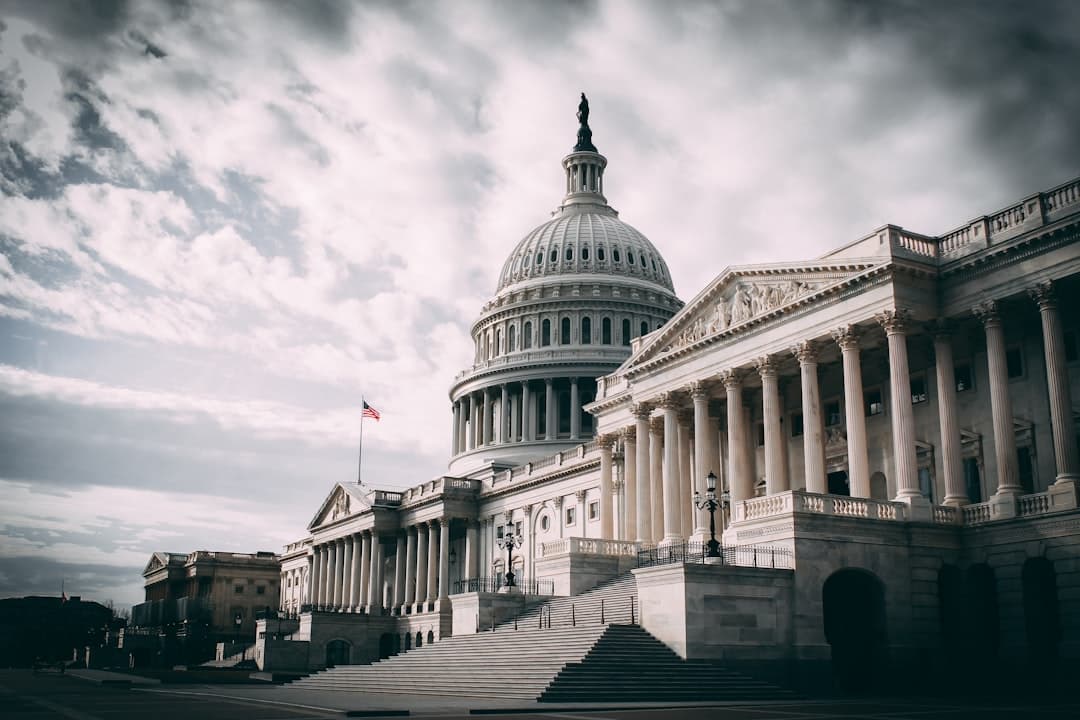
The departures reflect a convergence of financial and strategic factors: Anthropic and OpenAI are both approaching IPOs, offering pre-IPO equity that publicly traded Alphabet cannot match structurally, while inside DeepMind, the expansion of the AI Coding Strike Team has shifted resource allocation toward commercial coding applications, weakening alignment for researchers focused on longer-horizon AGI paths .

Anthropic filed a confidential S-1 with the SEC in early June, confirmed by Anthropic's own announcement and New York Times reporting . OpenAI is preparing to file confidentially for an IPO in the coming weeks, working with Goldman Sachs and Morgan Stanley, with a potential IPO as soon as September 2026 .

The IPO window matters. For top researchers, deciding where to work involves a complicated calculus: potential financial rewards, access to computing power, each company's prospects of leading the field, and whether its leadership will wield that power responsibly. On the financial front, Anthropic and OpenAI have the advantage of forthcoming IPOs, which could have greater upside than can be offered by other major players already publicly traded .

What Changed This Week

OpenAI publicly released GPT-5.6 on July 9 , ending a two-week government-gated preview that marked the first time a frontier model required Washington's pre-approval of the partner list. SpaceXAI launched Grok 4.5 on July 8, positioning it as a coding and agentic-work tool priced at $2 per million input tokens and $6 per million output tokens —undercutting Claude Opus 4.8's $5/$25 pricing. Prime Intellect, a New York startup building full-stack AI platforms, closed a $130 million Series A at a $1 billion valuation, led by Radical Ventures and joined by Nvidia Ventures, Intel Capital, and Dell Technologies . The infrastructure layer is consolidating as enterprises seek alternatives to paying per-token costs at frontier lab pricing.

What to Watch

Google's Gemini 3.5 Pro launches July 17 —a week late and rebuilt from scratch. Whether it closes the gap with GPT-5.6 and Fable 5 will signal whether Google can retain its technical edge despite the talent exodus. Anthropic and OpenAI's confidential S-1 filings set up a potential fall IPO window —the first test of whether public markets will pay frontier-lab private valuations. Grok 5 has not been released as of March 2026, with xAI's official X account now pointing to Q2 2026 as the most likely release window —though that window has passed. Watch whether xAI can ship on the monthly release cadence Musk promised, or whether the 6-trillion-parameter target proves too ambitious. And watch Washington: OpenAI said it doesn't believe government access processes should become the long-term default, as they keep the best tools from users, developers, enterprises, and global partners who need them —but the Fable 5 and GPT-5.6 precedents suggest the gating framework is here to stay.

Original reporting and analysis by the Stake & Paper editorial team. See linked sources within the article.

Share this story

More from Stake & Paper

Was this article helpful?

ClaimWatch

Mining claims intelligence — from query to report, in minutes.

Every unpatented mining claim across all twelve BLM states. Leadfile audits, due diligence, site selection, regional prospecting, entity investigations, and AOI monitoring — delivered as complete report packages.

4.4M+
Claims Tracked
12
BLM States
7
Report Types
Request a Sample Report
Stake & Paper AM

One morning brief. The whole energy sector.

Original analysis, the day's most important wire stories, and market data — delivered before your first cup of coffee. Free.