Thirty percent of the world's fertilizer trade normally passes through the Strait of Hormuz. There are no strategic stockpiles. No alternative pipelines. And Northern Hemisphere farmers are running out of time.
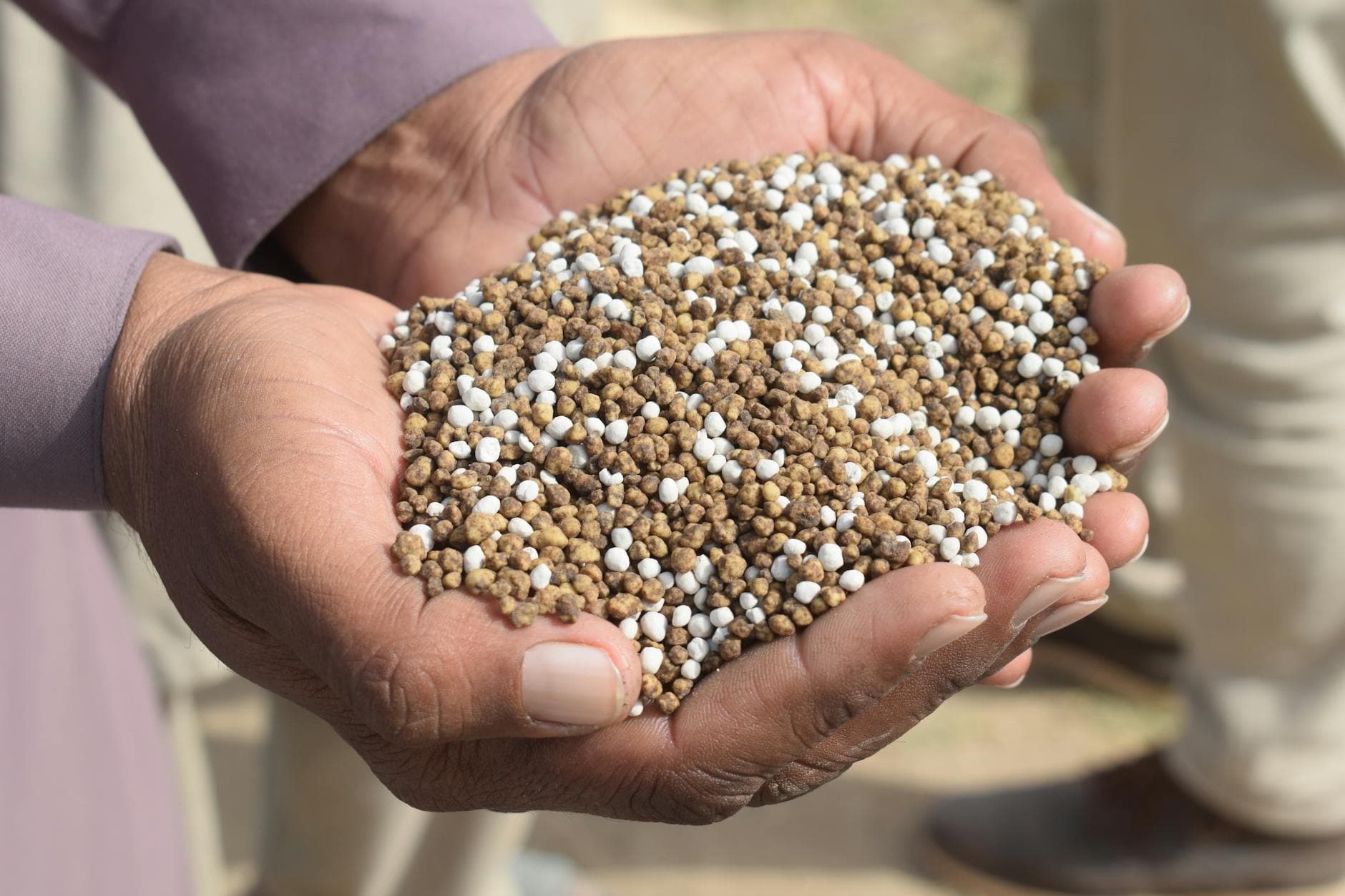
While Brent crude trades at $106.90 per barrel—well below the $150 many analysts expected three months into a total Hormuz closure—a quieter crisis is unfolding in the fields. Up to 30 percent of globally traded fertilizer products, or around 16 million tonnes annually of nitrogenous, phosphates, and sulphur products, transit through the Strait of Hormuz, with the Persian Gulf region alone providing an estimated 30–35 percent of global urea exports and 20–30 percent of ammonia exports , according to the FAO. The benchmark price of urea, the most widely traded fertilizer, is up about 30 percent in the last month , the Carnegie Endowment reported. And unlike oil, where strategic reserves and alternative suppliers can cushion the blow, the world faces an immediate fertilizer shortfall with no quick replacement, as there are no strategic fertilizer stockpiles internationally, while production elsewhere remains limited due to high energy costs and previous export restrictions .
The timing could hardly be worse. It is now the spring planting season, when countries and farmers typically purchase fertilizers for the next harvest—if they are unable to secure enough supply or if prices are too high, crop yields could decline , UNCTAD warned. A delay of even a few weeks forces farmers to reduce fertilizer use or abandon application altogether, and the impacts seen today are not limited to current prices, but are transmitted forward into the next harvests, which would tighten food supplies into the last half of 2026 and 2027 , FAO Director-General QU Dongyu told ministers in Rome earlier this month.
Can Anyone Fill the Gap?
The arithmetic is brutal. Qatar's QAFCO complex accounts for 14 percent of global urea trade . Saudi Arabia is the world's largest exporter of urea . Earlier this month, QatarEnergy announced it would stop downstream production of urea following its decision to bring liquefied natural gas production to a halt , CNBC reported. Deprived of their natural gas supplies from Qatar, fertilizer firms in India, Bangladesh, and Pakistan have had to shut down production, while Egypt, another important producer, has lost its gas imports from Israel and must turn to the ever-pricier LNG market .
The Gulf's dominance in fertilizers isn't an accident—it's geology. Natural gas is both a key feedstock and the primary energy source for producing ammonia, the building block for all nitrogen fertilizers , the International Food Policy Research Institute noted. Cheap gas made the Gulf the world's fertilizer factory. Now that advantage has become a chokepoint.
Meanwhile, China—another large exporter of fertilizers—has put restrictions on exports to protect its domestic market from shortages , Reuters reported last week. The result: Fertilizer shipments are being diverted to those wealthier countries that can pay, and price rises and food inflation are certainly on the cards for the remainder of the year , according to Adam Hanieh, director of the SOAS Middle East Institute.
Who Gets Hit Hardest?
Most vulnerable are countries heavily dependent on Persian Gulf fertilizer and natural gas—especially in Africa and South Asia . About three-quarters of India's ammonia imports come from the Gulf region, while thirty percent of Morocco's nitrogen inputs come from the Gulf , Hanieh told Democracy Now. Between February and March 2026, benchmark urea prices rose by roughly 46% month-on-month, according to the World Bank, and several Sahelian importers, already facing currency weakness and tighter access to trade finance, are encountering higher financing costs and delayed procurement at precisely the point in the agricultural calendar when fertilizer purchases are normally finalized , the Middle East Institute reported.
The disruption of the Strait of Hormuz can push 45 million more people into hunger and starvation , Jorge Moreira da Silva, executive director of the U.N. Office for Project Services, warned. That's not hyperbole. In the Lake Chad Basin and across the Liptako-Gourma region spanning Mali, Burkina Faso, and Niger, local conflicts had already constrained access to farmland and disrupted market activity, and people in the Sahel were already getting less food before the onset of the war in the Gulf .
The crisis is also reshaping global oil trade in unexpected ways. In April and May, Indian refiners raised imports from Venezuela, Brazil, Angola and Nigeria to make up the shortfall from the Middle East, preliminary data from Kpler showed. Overall, India imported 4.57 million bpd oil in April, unchanged from March, but down 15.5% from a year earlier , Reuters reported. Brazil was the fourth-largest supplier, while Venezuela ranked fifth—and Venezuela is on course to become the fourth-largest supplier in May .
Iraq, meanwhile, is scrambling for alternatives. More than 94 percent of Iraq's oil exports typically pass through the strait, and oil revenues account for roughly 90 percent of the country's federal budget—as a result of the strategic waterway's closure and attacks on Iraqi oil infrastructure by Iran-backed militias, the country's oil production at its southern fields fell by about 80 percent in March , according to the Foundation for Defense of Democracies. In April, Iraqi Prime Minister Mohammad Shia al-Sudani approved the allocation of $1.5 billion to develop infrastructure in 2026, an effort to be carried out in partnership with Chinese companies , with proposals to establish pipelines to Turkey, Syria, Jordan, and Oman.
But if these alternative routes are realised, Syria and Iraq would become new chokepoints for the Gulf's energy exports, yet both remain chronically unstable—with the complete withdrawal of US forces in April 2026, Syria faces persistent sectarian conflicts, including a resurgent Daesh, while in Iraq, political instability and the presence of aggressive rogue militias threaten the security of proposed energy routes , according to Singapore's RSIS think tank.