Wednesday, November 11, 2026Vol. III · No. 315Subscribe
The Mining, Energy & Technology Wire

The Shortage Moves From Crude to Diesel

Brent is bouncing and Gulf crude is flowing again, but the barrels that matter now are refined ones. Damaged Gulf refineries and Ukrainian drones over Russia have moved the shortage downstream.

The Shortage Moves From Crude to Diesel
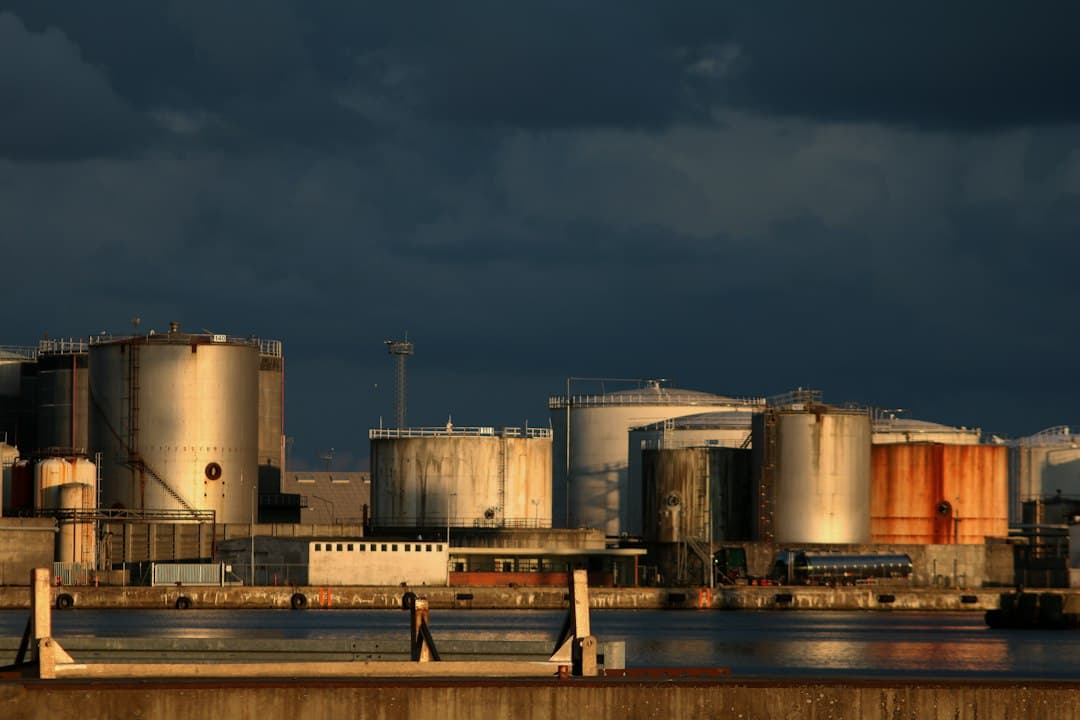
PhotographBrent is bouncing and Gulf crude is flowing again, but the barrels that matter now are refined ones. Damaged Gulf refineries and Ukrainian drones over Russia have moved the shortage downstream.Photo: Alex Waldbrand / Unsplash

Crude is mending. Diesel is not, and the market is mistaking one for the other.

Brent futures rose $1.22, or 1.3%, to $92.71 a barrel on Wednesday morning, Nov 11, recovering from two-month lows, Oil & Gas 360 reported. Kpler, cited by the same outlet, says Middle Eastern crude and condensate outages have shrunk to roughly 3.8 million barrels a day, with Saudi and Iraqi output returning to prewar levels. Energy equities have priced the relief: XLE ended October at $70.02 and closed at $63.37 on Wednesday, per market data.

The shock has not ended. It has changed address. The barrels still missing are the ones that heat homes and move trucks, and two separate campaigns of damage, one in the Gulf and one in Russia, are keeping them missing as winter demand arrives.

The Gulf ships crude and strands products

Fereidun Fesharaki, chairman emeritus of FGE NexantECA, told OilPrice.com that Middle Eastern crude exports, pipeline shipments included, have recovered to 80% to 85% of pre-war levels. Refined-product shipments sit at around 35% to 40%.

The gap has a physical cause. Newsbase, citing Columbia University's Center on Global Energy Policy, reports that attacks on around 20 GCC refineries knocked out a large slice of regional refining capacity, including about 500,000 barrels a day at Bahrain's Sitra. Saudi Aramco's 400,000 barrel-a-day Jizan refinery on the Red Sea stayed shut after Houthi strikes, Newsbase reported on October 12. Net Gulf diesel and gasoil exports averaged 390,000 barrels a day in August, far below pre-war levels.

Producers are making a rational choice. Vortexa's Xavier Tang told OilPrice.com that "Oil infrastructure such as refineries remains susceptible to drone strikes," which has led Gulf producers to prioritize crude shipments. A tanker of crude is a cheaper bet than a refinery that a drone can burn.

Russia's refineries are under fire

The second leg is Russian. Reuters, via Gcaptain, reports that renewed Ukrainian drone attacks since late October have cut Russia's oil refining capacity by about 30%, according to two industry sources. Ukraine stepped up the strikes when a ceasefire on attacks on energy facilities, announced by US President Donald Trump, failed to take hold.

Over the past week, attacks disrupted operations or caused emergencies at nine of Russia's 35 major refineries. OilPrice.com, relaying Reuters, puts their nameplate capacity at approximately 2.2 million barrels a day, against total primary capacity of roughly 6.8 million. Industry estimates put the actual cut in crude processing at up to 1.5 million barrels a day. On Monday a drone set the Kirishi refinery, Russia's second-largest, on fire, and the Leningrad region governor said one woman was killed.

Russia was meant to be part of the fix. Under an arrangement Trump announced in October, it agreed to supply diesel to the United States and international markets, starting with 300,000 metric tons. OilPrice.com says domestic shortages have reportedly returned to several Russian regions, which leaves little room to export.
Where the squeeze shows

Vitol chief executive Russell Hardy, per Newsbase, described a market "missing about 2 mb/d of products from Russia and nearly 2 mb/d from the Middle East" just as winter heating demand kicks in. The prices say the same. European diesel margins hit a record $95 a barrel on September 23, Newsbase reported. US refinery utilisation reached 98% in September, leaving little spare capacity, and US distillate stocks sit about 13% below the five-year average.

Governments can release inventories. Newsbase's analysts were blunt about the limits: "Stocks buy time; they do not rebuild hydroskimming units."

The case for the optimists

The bulls have a real argument. Saudi Arabia told OPEC it pumped 10.563 million barrels a day in October, up 26% from 8.372 million in September, Bloomberg's Javier Blas reported, per OilPrice.com. More crude should eventually mean more product, and a diplomatic deal could pull the war-risk premium out of everything.

But the supporting numbers are softer than they look. Riyadh's own data put supply to the market, net of storage, at 9.203 million barrels a day, with the rest of the October wellhead output going into storage. OPEC's secondary sources placed Saudi output at approximately 9.19 million barrels a day, which Oil & Gas 360 says highlights uncertainty over the pace of recovery. Hormuz is not secure either: the Washington Institute for Near East Policy counted 37 commercial vessels attacked in and around the strait in October, the highest monthly total since the conflict began. A fire on the East-West pipeline on November 9 was put out without interrupting operations. The next attack may not end so tidily.

Even a deal would not restore normal traffic at once. Analysts told Oil & Gas 360 that it could take mine clearance, lower insurance premiums and renewed confidence among shipowners.

More crude arriving at refineries that are burned, shut or under drone fire does not produce more diesel. The optimist's case is a crude story. The shortage is a refining story.

What follows

If this read is right, the price signal to watch is not Brent but the diesel crack and European margins. Crude can fall while heating and trucking costs stay high, and the energy complex will keep sending mixed messages. Producers with working refineries in the Atlantic Basin hold the scarce asset.

OPEC+ meets on November 29 to set 2027 output targets, after reviewing each member's maximum capacity. It will be deciding how much crude to pump. Nobody at that table can vote a damaged refinery back online.

Original reporting and analysis by the Stake & Paper editorial team. See linked sources within the article.

Share this story

More from Stake & Paper

Was this article helpful?

ClaimWatch

Mining claims intelligence — from query to report, in minutes.

Every unpatented mining claim across all twelve BLM states. Leadfile audits, due diligence, site selection, regional prospecting, entity investigations, and AOI monitoring — delivered as complete report packages.

4.4M+
Claims Tracked
12
BLM States
7
Report Types
Request a Sample Report
Stake & Paper AM

One morning brief. The whole energy sector.

Original analysis, the day's most important wire stories, and market data — delivered before your first cup of coffee. Free.