Moving a barrel of crude from Houston to Asia now costs an extra $26 — roughly a quarter of the price of the oil itself, and about $52 million per tanker load, according to Bloomberg. Moving a cargo from Houston to Asia now adds about $26 a barrel — $52 million a cargo — to the cost of supplying the world's largest crude-importing region, equal to roughly a quarter of the price of West Texas Intermediate futures. Before the war, freight was a rounding error on a crude invoice. Now it is the invoice.
That inversion is the story beneath every other oil headline this week. Seven months into the Hormuz crisis, the world has plenty of crude sitting in the ground and, at times, plenty sitting on ships. What it does not have is enough ships willing to move it at a price that still makes sense. On the industry's main benchmark route, very large crude carriers hauling 2 million barrels of crude from the Persian Gulf to China are earning upward of $1.2 million a day, and similar pressures are now spreading across the freight market globally. Trafigura's chief economist put it bluntly at a Bloomberg forum this week: "It has never been this expensive to move oil around," he said, noting that with freight now a larger share of cargo value, "it becomes a much bigger issue now when you start to think of that in terms of logistics."
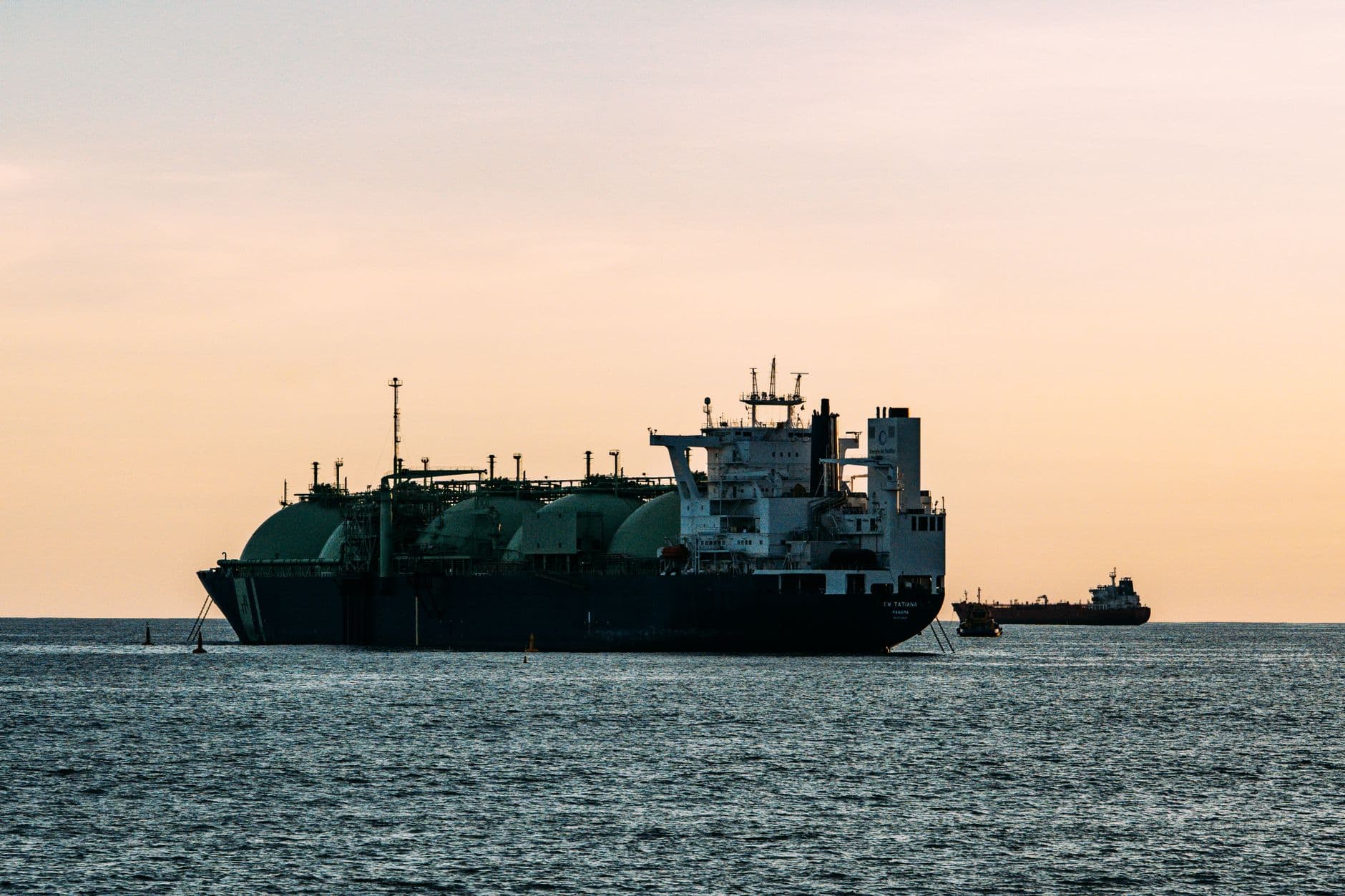
The scarcity is not abstract — it is a specific, physical shortage of vessels each the length of three football fields. The jump is being driven by a shortage of available supertankers; in some parts of the world there are barely any of the ships left for hire, and the squeeze is making faraway barrels less attractive and encouraging refiners to snap up supplies closer to home if they can find them. Long-haul routes that became lifelines earlier in the war — Gulf Coast crude to Asia, Angolan barrels to China — are now the first casualties of the freight math, with ship-tracking data showing volumes on those routes sliding as costs triple.
Saudi Arabia's pipeline problem becomes Europe's
Into that already-stretched shipping market, Saudi Aramco just dropped a fresh shock. The kingdom told at least two European refiners this week that they will receive zero contracted crude in October — not reduced volumes, none — after a drone strike on the East-West pipeline knocked out three pumping stations and shut loadings at the Red Sea port of Yanbu. Saudi Aramco told at least two oil refining customers in Europe that they will be allocated no crude next month under long-term agreements after the kingdom's key pipeline to the Red Sea was attacked, and those deliveries will not take place next month, with the decision applying to all European buyers. European term contracts are supposed to be the boring, reliable part of the oil trade. A blanket cancellation across an entire continent's customer base is not boring; it is close to unprecedented.
Poland's Orlen has already reacted, buying North Sea grades to plug the gap, according to Reuters. The disruption has prompted customers including Poland's Orlen to seek alternative crude supplies, with traders saying the refiner bought North Sea grades to replace disrupted Saudi imports. Aramco says it can partially restart the line within days and reach full capacity within six weeks, and it has begun ship-to-ship transfers off Oman's Sohar port to route Gulf barrels around the damage. But "within six weeks" is a long time to run a refinery on hope, especially when every substitute barrel now has to fight for space on an already-scarce tanker.
The canal as pressure valve — and its own bottleneck
That fight for space is showing up thousands of miles from the Gulf, at the Panama and Suez Canals, where operators desperate to avoid Hormuz altogether are bidding up transit slots to levels that would have seemed absurd a year ago. Panama Canal access costs have exploded, with auction slots reaching a record $5.3 million and waiting times rising to 17 days amid surging demand and reduced transit capacity. The escalation has been staggering in its pace: bids on daily auctions to secure slots through the Panama Canal soared to an average of above $1 million in August, up 16 times from a year ago, with September slots coming in pricier still. A route built as a shortcut has become an emergency valve — and even the valve is running out of pressure to give.
Diesel, Macron, and the case for another reserve release
The freight math is landing hardest on diesel, the fuel that keeps trucks, farms and factories running, and the one product Europe cannot simply import its way around. Europe's diesel benchmark rose to more than $200 per barrel this week, with taxes pushing retail-equivalent costs above $300, as Russia extended restrictions on diesel exports and Middle Eastern product exports stayed constrained. French President Emmanuel Macron responded Friday by calling for the G7 to reconvene. Macron is calling the G7 back to the table to discuss another release of emergency oil stocks as Europe loses Saudi crude deliveries and diesel prices push deeper into record territory, and said he will convene G7 countries in the coming weeks to coordinate stock levels, exports and production capacity and consider tapping strategic reserves. Unlike Washington's Strategic Petroleum Reserve, which holds mostly crude, Europe's stockpiles are full of refined fuel — a detail that matters because it means a release could hit pump prices faster than the crude-heavy IEA action taken back in March.
Crude itself told a calmer story Friday, if only because traders parsed a small diplomatic signal: Reuters reported oil slid after China asked Iran to rein in Houthi attacks on Saudi facilities. October WTI futures settled at $99.53/bbl, down -1.54% on the session, while November Brent finished at $103.21/bbl, off -0.85%. Gold, the market's other barometer for how nervous everyone actually is, closed at $4,377.54 an ounce, up +0.73%, and silver at $66.22. Energy stocks held up better than the crude tape suggested they should — the XLE ended Friday at $64.31, down a modest -0.26%, with its 14-day RSI still comfortably in neutral territory near 56.
None of this resolves into a single number the way a barrel count does. But the shape of the problem is now unmistakable. Iran's war shut a strait; the market's response has been to reroute around it. That rerouting has quietly become the more binding constraint — a shortage not of oil, but of the steel hulls needed to carry it, and the canal slots needed to shortcut it. The Gulf's chokepoint made headlines. The one squeezing the market now sits in a Panama Canal auction booth, and it doesn't care how much crude is sitting offshore waiting for a ride.