Wednesday, May 20, 2026Vol. III · No. 140Subscribe
The Mining, Energy & Technology Wire
Mining · Analysis

Who Owns the Ground Beneath the Boom?

A 153-year-old mining law governs 245 million acres of public land. One Atlanta firm says it can audit 4.38 million claims in seconds. A look at ClaimWatch and GroundControl.

Who Owns the Ground Beneath the Boom?
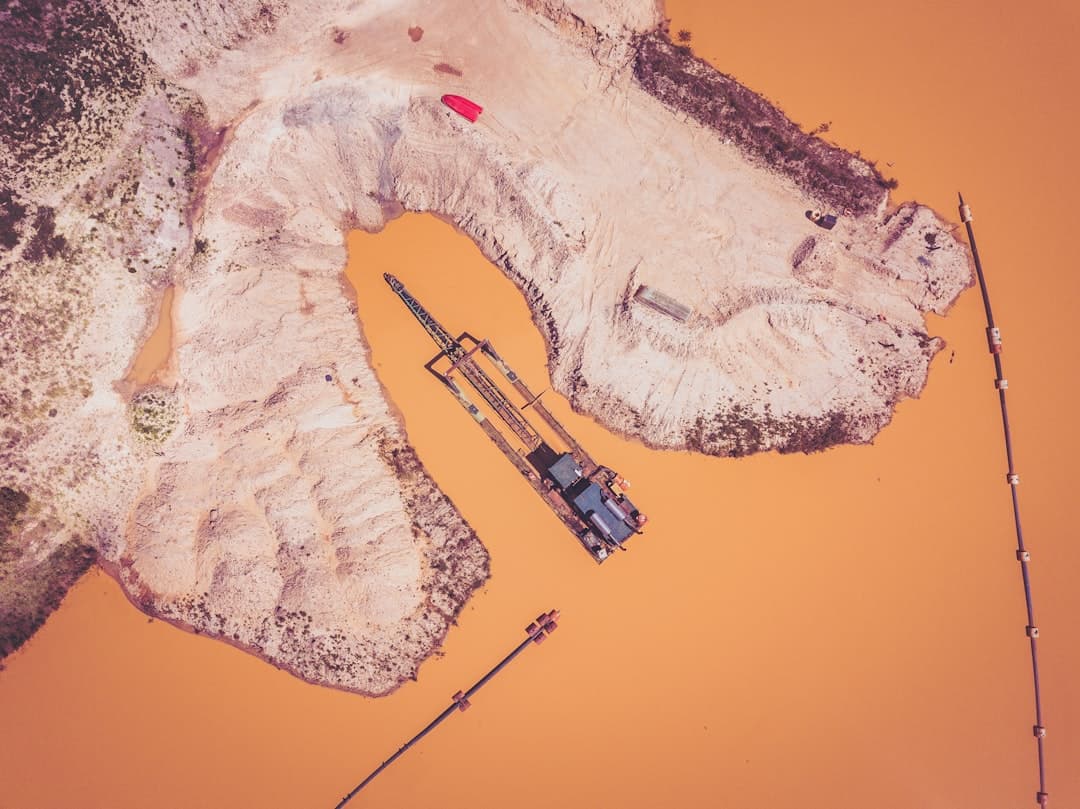
PhotographA 153-year-old mining law governs 245 million acres of public land. One Atlanta firm says it can audit 4.38 million claims in seconds. A look at ClaimWatch and GroundControl.

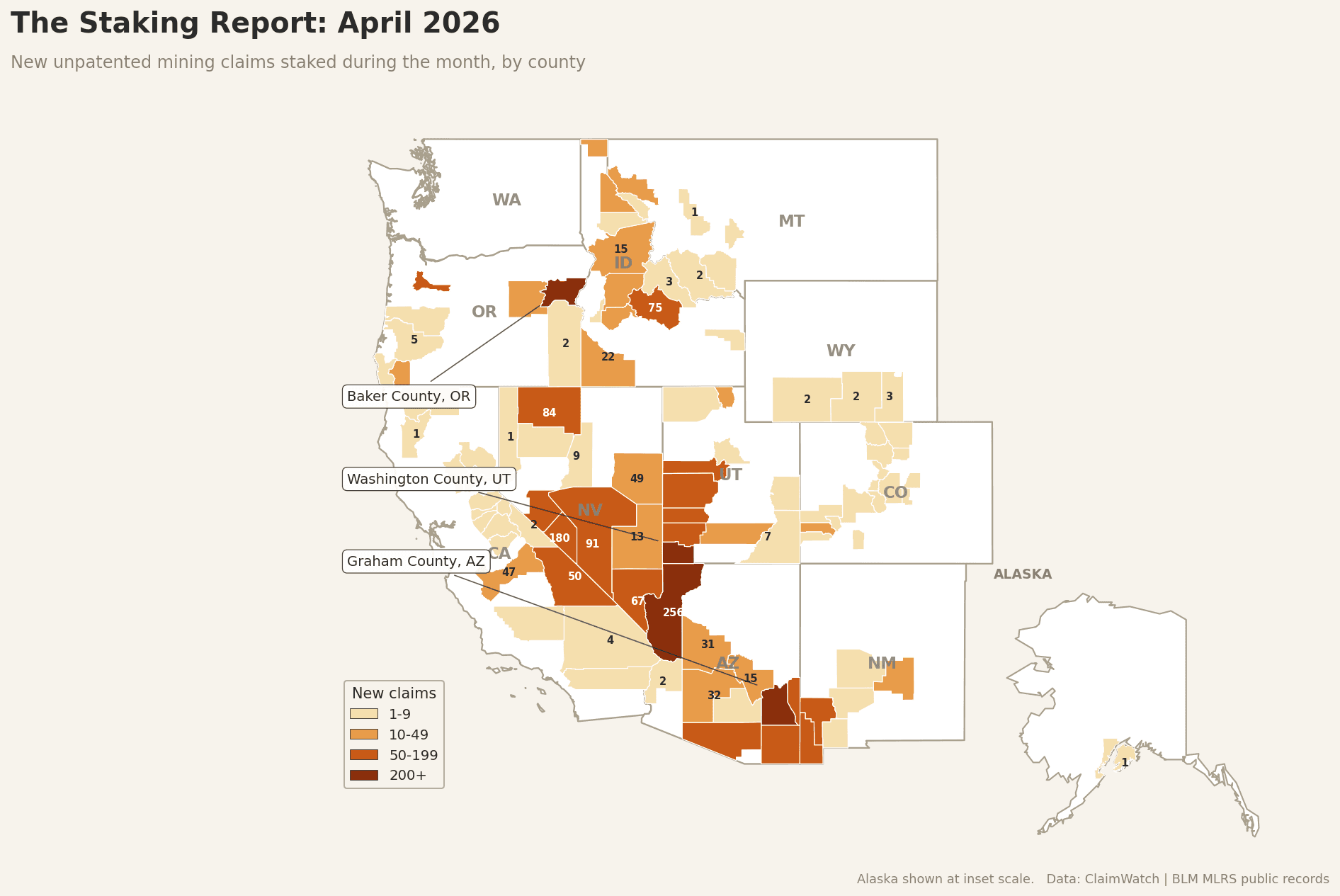
Four point three eight million. That is the number of unpatented mining claims scattered across twelve western states in the Bureau of Land Management's records -- roughly one claim for every 56 acres of BLM-managed land. Behind each claim sits a paper trail of location notices, maintenance fee receipts, and transfer documents, most of it governed by the General Mining Law of 1872, a statute written when Ulysses S. Grant occupied the White House. Gold just topped $5,400 an ounce. Lithium carbonate prices have doubled since mid-2025. The Pentagon has committed over $550 million to MP Materials alone to break China's grip on rare earth processing. The land rush is back, and the paperwork has not caught up.

Into this gap steps ChoraQuest, LLC, an Atlanta-based research firm led by Mike Sandoz, a Registered Landman and AAPL member with more than two decades in oil, gas, and mining. The firm operates ClaimWatch, a desktop intelligence platform that, the company says, can audit a mining claim's entire BLM filing history in roughly seven seconds. For context, a landman performing the same examination manually would need four to eight weeks for a comparable portfolio, according to ChoraQuest. The firm also sells GroundControl, a seniority analysis tool that the company claims is unique in the industry. Whether these tools deliver on their promises matters because the critical minerals race is generating the kind of staking activity -- up 18% between 2020 and 2025 by one estimate -- that makes title disputes inevitable.

Why Does a 153-Year-Old Law Still Matter?

The Mining Law of 1872 allows citizens to stake mineral claims on federal land without paying royalties. Congress has been debating reform for decades. In 2025, Senator Ben Ray Lujan introduced the Mining Waste, Fraud, and Abuse Prevention Act, which would impose a federal minerals royalty. The Critical Mineral Dominance Act (H.R. 4090) would require the Interior Department to identify federal land where hardrock minerals may be present. Neither bill has passed.

What has changed is scale. The One Big Beautiful Bill appropriated $7.5 billion toward securing critical minerals. The Defense Logistics Agency is building a $1 billion stockpile of cobalt, antimony, tantalum, and scandium. Guided weapons systems alone require 18 different critical minerals, combat aircraft 15, and warships 14, according to the Chicago Council on Global Affairs. BLM records show 555,864 active unpatented mining claims across the 12 western states. The BLM recently raised its maintenance fee from $165 to $200 per claim.

More claims, more money at stake, more potential for conflict. A staker who locates a claim on ground already held by a senior claimant risks losing everything. Under BLM rules, the earlier-dated claim is senior. Period.

Can Software Replace Boots on the Ground?

ChoraQuest's answer is ClaimWatch, a desktop application backed by a spatial database. The data foundation, verified by the company against its live system as of May 2026, includes 4.38 million unpatented mining claims (555,864 active), 55.7 million BLM filing events, 18.2 million non-mining cases, and 4.85 million historical land disposition records stretching back to 1879. Seven report types range from leadfile examinations to entity investigations that cross-reference 147,550 distinct claimant entities by address, name variants, and transfer chains, the company says.

ChoraQuest is vocal about what it calls a "no-hallucination architecture." Every numeric fact in a ClaimWatch report comes from a database query, the firm says, with large language models used only to synthesize narrative around verified data. A quality scoring system flags content that violates this rule. It is a notable design choice in a sector where bad data can trigger litigation.

Then there is GroundControl, which ChoraQuest positions as the answer to seniority disputes. The tool checks every claim in a portfolio against two layers: all recorded mining claim polygons in an area, and excluded-lands polygons including patented, fee, state, and withdrawn land. Each claim receives one of four classifications -- Valid, Reduced, Fully Overstaked, or Invalid -- based on location dates and spatial overlaps. Deliverables include an executive summary, claim-by-claim findings, discovery monument analysis, acreage accounting, and publication-ready maps. "No one else has this capability," the firm's website states, a claim this reporter could not independently verify.
What About the AY2013 Problem?

One of ClaimWatch's more unusual features addresses an obscure but consequential legislative accident. In the 2012 Consolidated Appropriations Act, Congress accidentally dropped pre-1993 lode claims from the maintenance fee statute for Assessment Year 2013. Most claimants were unaware they needed separate FLPMA Section 314(a) filings. Congress patched the error in March 2013, but the fix was prospective -- no retroactive cure. ChoraQuest says ClaimWatch has flagged 68,756 exposed claims, and warns that claim jumpers are actively searching BLM records to find them. The statutory gap is well-documented in case law, including Silver Buckle Mines v. United States (2017).

The firm's claim staking automation rounds out the offering. ChoraQuest says it can produce complete staking packages -- location certificates, corner cards with GPS coordinates, maps, and filing-ready documents -- in 24 to 48 hours. "The package for claim 500 takes the same time to generate as the package for claim 1," the company states.

Does the Market Need This?

Probably yes, though with caveats. The BLM's Mineral and Land Records System is public, but it is not friendly. Navigating serial register pages, cross-referencing case numbers, and mapping claim boundaries across multiple townships requires expertise that most exploration teams either lack or pay dearly for. Title-level analysis of BLM claims occupies a narrow niche that broader mining GIS platforms do not address.

The competitive question is whether ChoraQuest's head start gives it a durable advantage or merely a temporary one. The raw data is public. The firm's value, as it describes it, lies in years of structuring, normalizing, and enriching that data into a queryable analytical layer. A competitor with sufficient resources could theoretically replicate the effort. Whether anyone would is another matter.

Gold's record run above $5,000 an ounce has renewed interest in mineral exploration across the American West. Lithium demand, driven by electric vehicles and energy storage projected to grow 55% in 2026, is pushing juniors into Nevada, Utah, and Oregon. The Pentagon now requires supply chain documentation extending to the mine level for all rare earth components in defense systems. All of this creates demand for faster, more reliable claim intelligence.

What to Watch

Three developments are worth tracking. First, whether Congress advances Mining Law reform -- the Lujan bill or the Critical Mineral Dominance Act -- which would reshape the claim-filing process itself. Second, whether the BLM modernizes its own data systems, potentially reducing the informational advantage firms like ChoraQuest have built by structuring public records. Third, whether the AY2013 gap year exposure generates litigation at scale, which would validate or deflate one of ClaimWatch's most distinctive features.

ChoraQuest is a small firm making large claims about its capabilities. The tools appear to address real pain points in an industry where due diligence is expensive, slow, and error-prone. But technology platforms in niche markets live or die on adoption, and mining has never been quick to embrace new tools. The data foundation is impressive on paper. The question is whether the industry will trust software to do what landmen have done with boots, binders, and county courthouses for a century and a half.


Disclosure: Stake & Paper is published by ChoraQuest, LLC, which also operates ClaimWatch and GroundControl.

Coverage aggregated and synthesized from leading energy-sector publications. See linked sources within the article.

Share this story

More from Stake & Paper

Was this article helpful?

ClaimWatch

Mining claims intelligence — from query to report, in minutes.

Every unpatented mining claim across all twelve BLM states. Leadfile audits, due diligence, site selection, regional prospecting, entity investigations, and AOI monitoring — delivered as complete report packages.

4.4M+
Claims Tracked
12
BLM States
7
Report Types
Request a Sample Report
Stake & Paper AM

One morning brief. The whole energy sector.

Original analysis, the day's most important wire stories, and market data — delivered before your first cup of coffee. Free.