2026 is the year when Agentic AI will move into real operational environments and be responsible for managing and reporting complex systems to businesses. That shift from suggestion to action is rewriting the economics of energy extraction. Mining operations can reduce unplanned downtime by up to 30-50%, cut maintenance costs by 18-40%, and make data-driven decisions that improve productivity through predictive analytics, according to AI Superior. In Oman, the use of LOGIX automation and remote operations delivered a 15% improvement in the rate of penetration, which saved several days per well , Halliburton reported.
The technology is no longer confined to research labs. In 2026, AI will move from being an add on to becoming a more central part of decision-making, risk management, and sustainable performance , Global Mining Review noted. Master Drilling targets commissioning of a complete autonomous drilling system before the end of 2026, representing a measurable development milestone for the industry , according to Discovery Alert. The robotic drilling market is projected to grow from USD 1.27 billion in 2026 to USD 3.67 billion by 2034, exhibiting a CAGR of 14.2% , Intel Market Research found—roughly triple the size in eight years.
Can Machines Really Drill Without Humans?
The answer depends on what you mean by "without." Much of what is currently described as autonomy is, in reality, an advanced form of automation , Schlumberger cautioned in a recent analysis. Automation focuses on isolated tasks, such as holding inclination or managing tool face orientation. If it were a highly automated, but not truly autonomous workflow, then each individual system would be optimizing its own tasks in isolation.
True autonomy requires integration. The vision for autonomy in the well construction phase of oil and gas lies in a fully self-steering bottomhole assembly (BHA) that drills every section of a wellbore. Such an autonomous BHA can: constantly analyze its position, formation characteristics, and conditions; consistently track its trajectory to optimize steering and well placement; proactively manage energy to protect the drillstring and optimize drilling performance.
The successful deployment of automated drilling systems offshore Guyana demonstrates how AI transforming drilling technologies can achieve unprecedented operational efficiency , Discovery Alert reported in March. Closed-loop automated drilling systems operate on fundamentally different principles than conventional drilling operations. In contrast, closed-loop systems integrate these processes into a unified workflow where data acquisition, interpretation, and response occur simultaneously.
The difference shows up in the numbers. A North Sea operator discovered this when manual drilling encountered unexpected high-pressure zones at 12,400 feet, causing well control issues that required 14 days to resolve at $16.8 million total cost, while an adjacent well using autonomous drilling system detected identical pressure anomalies 840 feet earlier through real-time formation evaluation, automatically adjusted mud weight and drilling speed, and completed the section with zero NPT , according to iFactory.
What About the Mines?
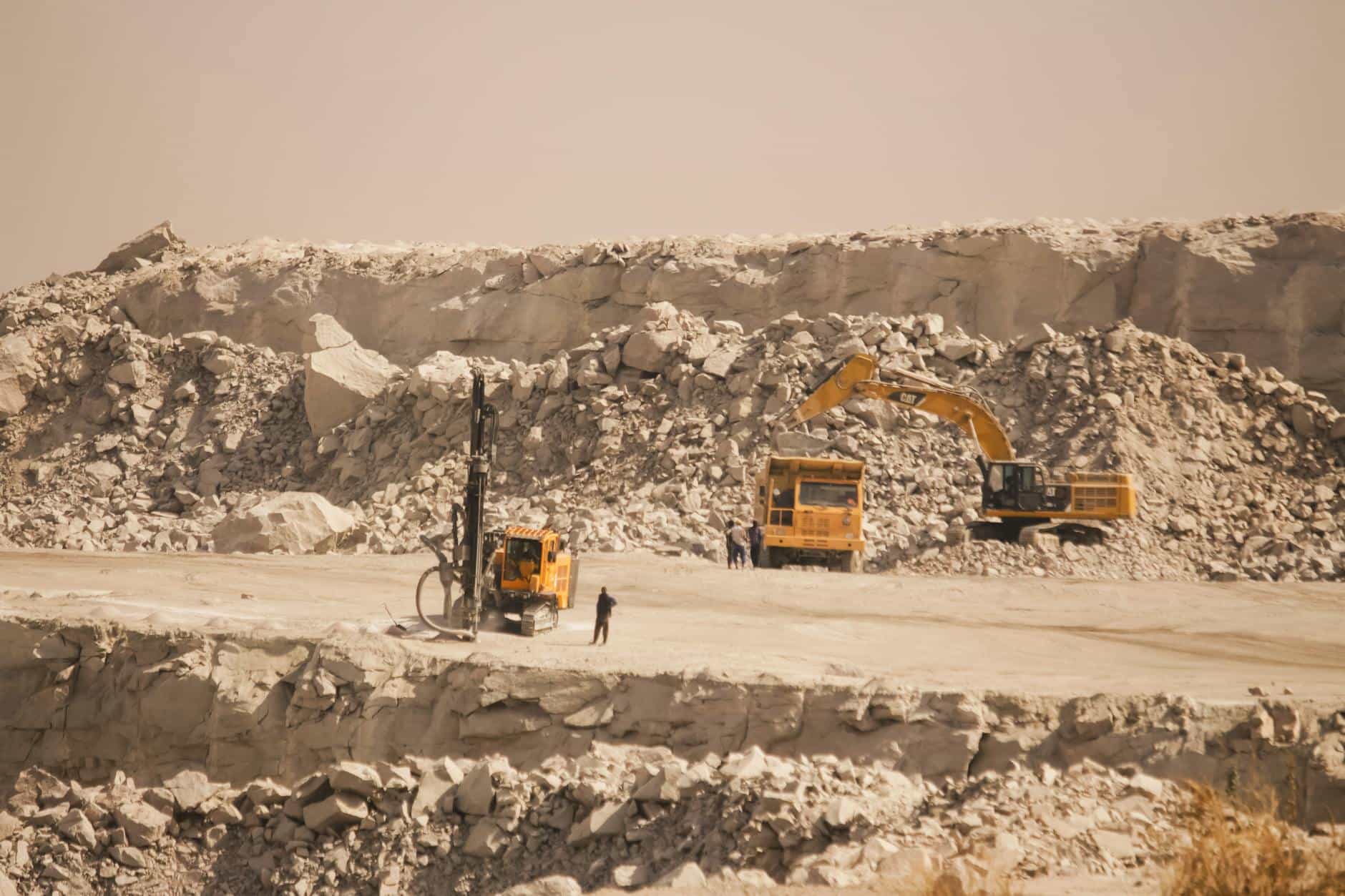
Underground, the transformation runs deeper. In 2026, an automated mine is defined as a mining facility that leverages integrated technologies—such as digital twin modeling, autonomous vehicles, AI-guided drill rigs, remote operations centers (ROCs), and distributed sensor networks—to execute extraction, processing, and transport with minimal human presence on site.
Fortescue uses AI to automate mining operations, optimize scheduling, and manage autonomous mining fleets. KoBold Metals applies AI to analyze geological data and accelerate discovery of critical minerals for clean energy , according to Omdena's analysis of leading AI mining companies. AI is used in mining for predictive maintenance of equipment, AI-driven mineral exploration, autonomous haulage and drilling, real-time safety monitoring, energy optimization, and environmental impact tracking such as water and emissions monitoring.
The exploration phase is changing fastest. Predictive analytics accelerates mineral exploration by analysing geological, geochemical, and geophysical data to pinpoint promising deposits. This reduces costly trial-and-error drilling and increases the chances of discovery. By interpreting complex datasets, companies can identify high-potential sites faster and more accurately, thereby reducing exploration costs and timelines , Infosys BPM found.
Machine learning models integrating grade control, drilling, and block surveys predict ore variability across mines. This drives smarter blending and stockpiling, improving yield and minimizing dilution , Farmonaut reported.