NextEra Energy is in talks to combine with Dominion Energy in a deal that could create a $400 billion power company, according to a Financial Times report on Friday, with an announcement possible as soon as next week.
The tie-up would combine two of the largest U.S. electricity providers at a time when hyperscalers and AI firms are racing to secure long-term power supplies for increasingly energy-intensive data centers.
NextEra has an enterprise value of roughly $303 billion, including about $100 billion in net debt, while Dominion's enterprise value stands near $111 billion, including approximately $50 billion in debt, according to FactSet data cited by the Financial Times.
Buying Dominion would expand NextEra's reach into the largest electric grid, PJM Interconnection, which extends from Washington to Chicago and encompasses Northern Virginia, which has the country's biggest concentration of data centers.
The report highlights how NextEra Chief Executive John Ketchum has shifted the company's strategy from a renewable-heavy approach toward an "all forms of energy" model that includes natural gas and nuclear power to meet rapidly rising electricity demand from data centers.
A transaction could be announced as soon as Monday, said a person familiar with the matter, though talks could still end without one.
Can Renewables Keep Pace With AI's Power Hunger?
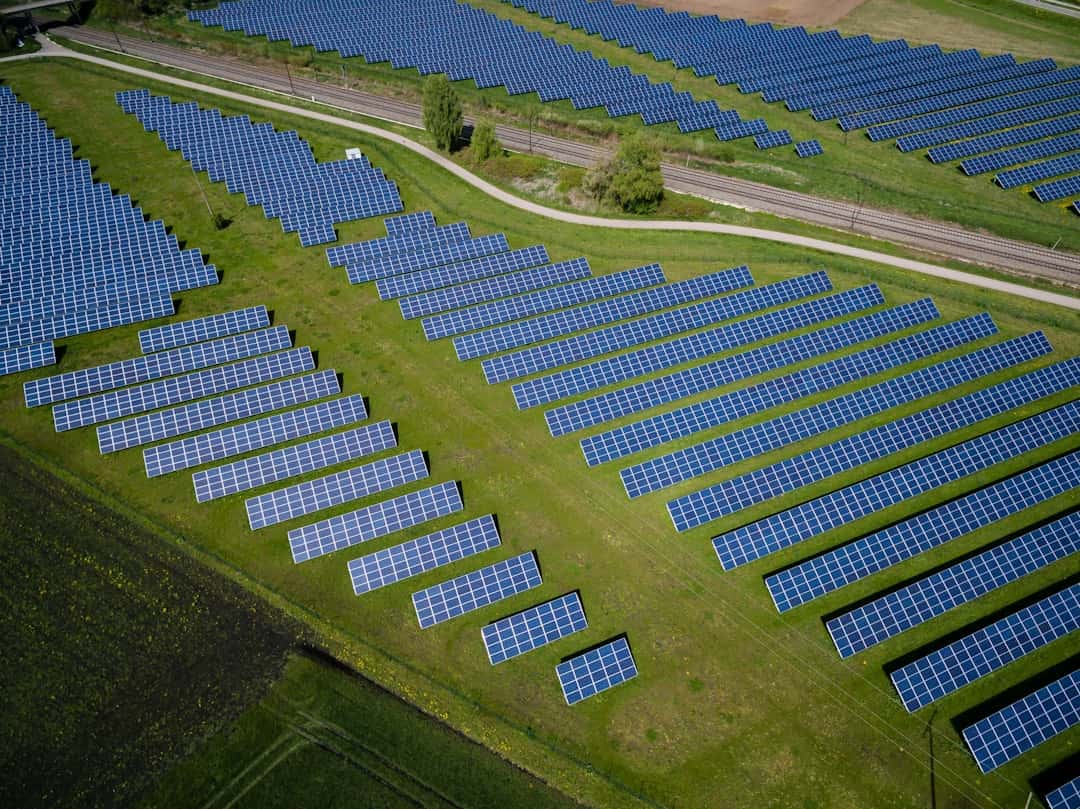
The merger talks come as the U.S. renewable energy sector posts record growth despite political headwinds. U.S. power plant developers and operators plan to add 86 gigawatts of new utility-scale electric generating capacity to the U.S. power grid in 2026, a record if realized, with solar power making up 51% of the planned capacity additions, followed by battery storage at 28% and wind at 14%.
Developers are forecast to add a record 43.4GW of new utility-scale solar PV capacity to the US power system in 2026, a 60% year-on-year increase over 2025 and more than 12GW above 2024, the current record for capacity additions, according to the EIA.
More than half of the new utility-scale solar capacity is planned for four states: Texas (40%), Arizona (6%), California (6%), and Michigan (5%).
Battery storage is surging alongside solar. Developers plan to add 24 GW of utility-scale battery storage to the grid this year, compared with a record 15 GW added in 2025, with U.S. battery storage capacity having grown exponentially over the last five years with more than 40 GW added to the grid during this period.
A new report from the International Renewable Energy Agency makes the case that renewables can now deliver around-the-clock power. In high-quality solar and wind resource regions, co-located hybrid systems can already deliver round-the-clock electricity at costs competitive with - and in many cases below - those of new fossil-fuel generation.
The United Arab Emirates' Al Dhafra complex, which pairs solar PV with battery storage, already illustrates what this means in practice: delivering a firm 1 gigawatt of clean electricity at around USD 70 per MWh.
Will Texas Become America's Solar Superpower?
Texas is emerging as the epicenter of America's solar boom. Solar generation is expected to reach 78 billion kilowatthours in 2026 in the electricity grid operated by the Electric Reliability Council of Texas (ERCOT) compared with 60 BkWh for coal, with solar's share of the generation mix having increased from 4% to 12% from 2021 to 2025, while coal's share decreased from 19% to 13%.
Industrial Info Resources is tracking 37 utility-scale solar projects, valued at $12.8 billion, that are set to be completed in Texas in 2026, with the top project being the 837-MW Tehuacana Creek 1 Solar Farm in Navarro County, about 65 miles southwest of Dallas.
Among the projects expected to come online in Texas this year is the combination solar and battery energy storage system project Tehuacana Creek 1 Solar and BESS, which at 837 megawatts is expected to be the largest solar photovoltaic project that will come online in 2026.
The shift is happening faster than many expected. Although solar is expected to exceed coal generation on an annual basis for the first time in 2026, solar exceeded coal in ERCOT on a monthly basis for the first time in March 2025, when solar generation totaled 4.33 BkWh exceeding coal's 4.16 BkWh, with solar generation continuing to exceed that of coal until August of that year.