Mining · Analysis
Rare Earths Dominate as Mines Race China
Pentagon launches rare earth offensive while Trump leaves Beijing empty-handed. Lithium projects face tariff headwinds as copper hits fresh records and graphite mine breaks ground in Quebec.
Stake & Paper Editorial TeamMay 16, 2026
A group of former Wall Streeters working from an office a few blocks from the White House is at the forefront of the Pentagon's plan to crack China's critical-minerals stranglehold, aiming to create an independent source for rare earth elements and magnets used in everything from microwave ovens to missiles and prevent a repeat of last year when President Donald Trump was forced to back down in his trade war after China cut off supplies
, according to Bloomberg.
The Pentagon group is known internally as "Deal Team Six" in a half-joking reference to the Navy's elite special missions unit, Seal Team Six, and it's racing to put together creative deals with billions of dollars in equity stakes, long-term price floors, purchase commitments, loans and other financial tools
, Bloomberg reported. The effort comes as
US President Donald Trump left Beijing on Friday without securing a breakthrough agreement on rare earths despite labelling the visit as a "success"
, according to Mining.com.
China is the world's rare-earths powerhouse, dominating around 85 percent of processing and more than 90 percent of magnet production
, Foreign Policy reported.
The restrictions — first imposed in April 2025 in retaliation for US President Donald Trump's "Liberation Day" tariffs — have evolved into one of the most consequential legacies of the Sino-American trade dispute, disrupting industries ranging from defense and aerospace to semiconductors and electric vehicles, and while overall Chinese rare earth exports have largely recovered over the past year, shipments of key heavy rare earths remain sharply constrained with exports of yttrium, dysprosium and terbium still down roughly 50% compared to the 12 months preceding the controls
, Mining.com reported.
Can Washington Break Beijing's Chokehold?
For two of the most important elements, dysprosium and terbium, countries outside of China will still meet less than a fifth of demand by 2035
, according to data from McKinsey cited by Bloomberg.
Investments totaling $6.3 billion were announced last year for projects outside China, with more than 60% coming from the US government, and a further $2.8 billion followed in the first quarter of 2026
, according to Benchmark Mineral Intelligence.
The Pentagon's investments and effort "represent the scale of [the] challenge: a billion dollars direct investment, nearly, and then commitments to buying rare earths, billions of dollars in the National Defense stockpiles, $5 billion from Congress within the industrial base fund to go ahead and invest in mineral deals"
, according to Mike Cadenazzi, assistant defense secretary for industrial base policy, speaking at a conference in March.
The Trump administration has been waging a sweeping and swift campaign to strengthen U.S. supply chain security in critical minerals and rare earths, both at home and abroad, pumping billions of dollars into the sector, unveiling plans for a massive new critical minerals stockpile called "Project Vault," taking equity stakes in a raft of firms, inking dozens of mineral deals worldwide, and pitching a global minerals trading bloc
, Foreign Policy reported.
Why Are Lithium Costs Climbing?
Lithium Americas says US tariffs on steel, inflation linked to the conflict in Iran and shipping disruptions around the Strait of Hormuz could add $80 million to $120 million to construction costs at its Thacker Pass lithium project in Nevada, with most of the impact expected this year, and the figures came amid its first-quarter results on Thursday as the company nears detailed engineering completion and procurement surpasses 70%
, Mining.com reported.
Once complete, Thacker Pass is expected to produce 40,000 tonnes of lithium carbonate annually, enough for roughly 800,000 electric vehicles and well above output from Albemarle's Silver Peak mine, currently the only operating lithium brine mine in the US
, according to Mining.com.
Lithium Americas said more than 75% of structural steel for the project, sourced from the United Arab Emirates, is either in transit or already at site after shipments were rerouted through Saudi Arabia's Port of Jeddah to avoid regional disruptions
, the Canadian Mining Journal reported.
Meanwhile in Argentina,
Lithium Argentina announced that the expansion of the Cauchari-Olaroz lithium brine operation under Argentina's Large Investment Incentive Regime has obtained the approval of the Evaluation Committee, with the expansion targeting production capacity for an additional 45,000 tonnes per annum of lithium carbonate equivalent, building on Cauchari-Olaroz's Stage 1 operating capacity of 40,000 tpa, and the approval was announced by Luis Caputo, the Minister of Economy, following completion of the final technical evaluation under the RIGI review process, with the formal resolution expected in June 2026
.
The RIGI approval provides Cauchari-Olaroz's Stage 2 with 30 years of foreign exchange regulation, fiscal and customs stability, among other benefits, including an investment commitment of a minimum of $200-million in accountable assets, with at least $80-million deployed within the first two years from approval
, Mining Weekly reported.
What's Driving Copper to Record Highs?
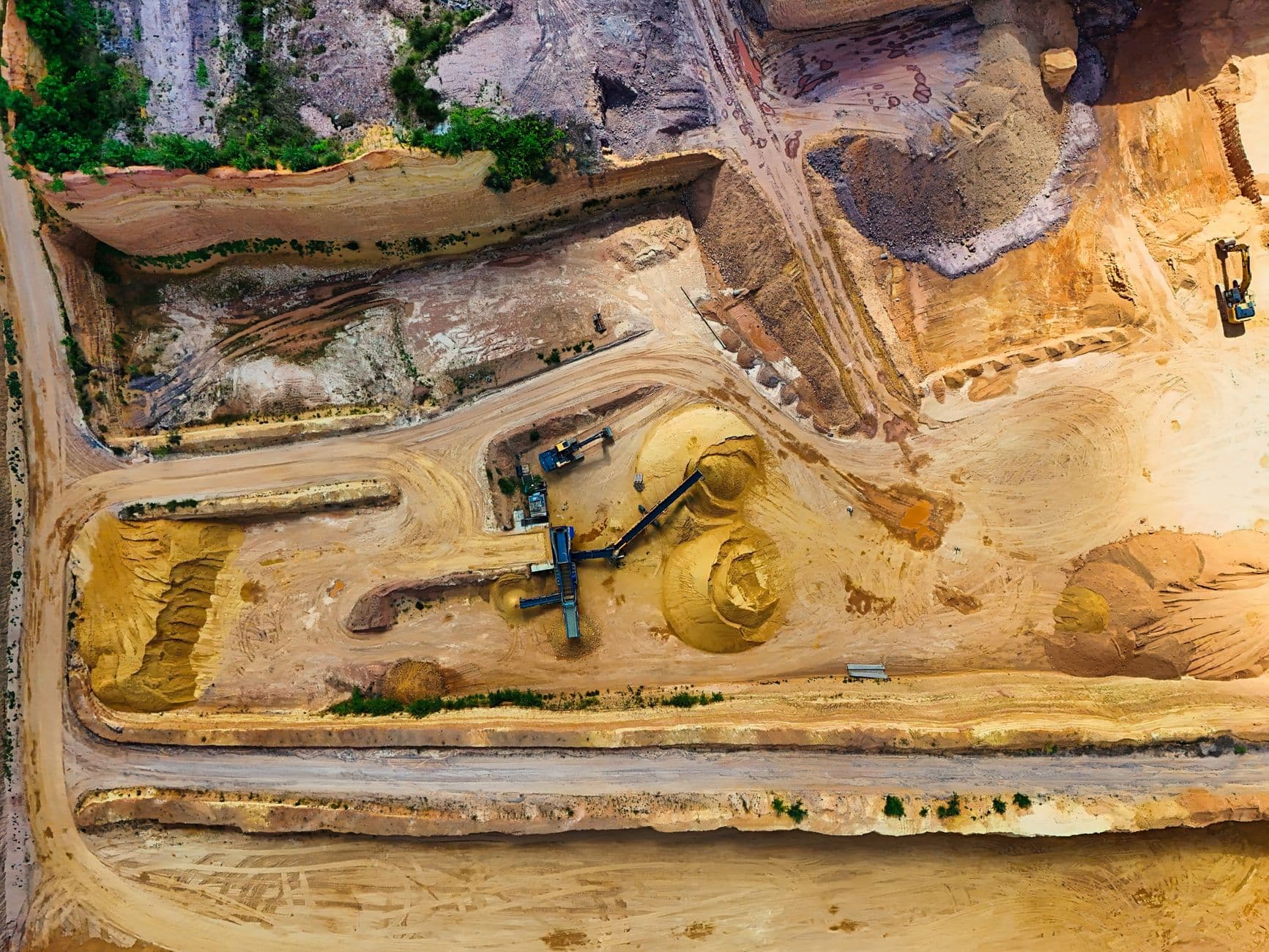
Copper futures climbed to around $6.6 per pound on Wednesday, reaching fresh all-time highs on the back of stronger Chinese demand and growing supply concerns, with recent data suggesting resilient industrial activity in China despite geopolitical headwinds, while consumption remained robust across power grids, renewable energy, and artificial intelligence-related infrastructure
, according to Trading Economics.
Copper prices have surged to record highs this year, briefly exceeding USD 14 500 per tonne (intraday) in January 2026, having only passed USD 12 000 per tonne for the first time in December 2025
, the International Energy Agency reported.
The metal has posted a strong rally this month, supported by a bullish long-term outlook tied to artificial intelligence-driven infrastructure buildouts, grid modernization, and the broader global energy transition, with ongoing strength in AI-related equities reinforcing expectations for sustained investment in data center expansion, further underpinning copper demand prospects, while on the supply side, China's export restrictions on sulfuric acid and disruptions to sulfur production in the Middle East could tighten global supply conditions and provide a structural tailwind for prices
, Trading Economics reported.
The annual TC/RC benchmark, which is based on an agreement between Chilean miner Antofagasta and major Chinese smelters, settled at USD 0 per tonne in January 2026, the lowest level ever agreed in annual negotiations, while spot TC/RCs have been negative since 2024 and fallen to all-time lows
, according to the IEA.
Some smelters remain profitable for now largely due to revenues from selling by-products, such as gold, silver and sulphuric acid, and with prices for these by-products recently at record highs, smelters that have access to by-product-rich concentrate, and are equipped to maximise recoveries, are still generating robust profits, offsetting losses from low TC/RCs
, the IEA reported.
Can Canada Challenge China on Graphite?
Nouveau Monde Graphite Inc. expects to formally green-light plans this week to build one of North America's few graphite projects, as countries seek to weaken China's dominance over the critical mineral, with a previously announced financing package of about $645 million in gross proceeds backed by shareholders Wednesday, and the money is to be used to develop a graphite mine in Saint-Michel-des-Saints, Quebec, about 100 miles north of Montreal, and to build a concentrator nearby
, Mining.com reported.
A construction team is already on site and more than 50% of the project's capital expenses are secured through contracts, with costs estimated at about $474 million, and commissioning is projected by the end of 2028
, according to Mining.com.
The Canadian government stepped in last fall to provide investors with more certainty by ensuring the purchase of 30,000 metric tons of graphite concentrate per year, or slightly less than a third of the mine concentrator's output, at a fixed price to support the venture
, Mining.com reported.
BloombergNEF foresees a technical deficit of graphite globally by 2032 as demand for lithium-ion batteries soars, noting that "China is the world's dominant graphite supplier, a position it maintains through 2050 in BNEF's outlook despite other countries' efforts to localize production"
, according to a report cited by Mining.com.
What Changed This Week
The Pentagon's "Deal Team Six" emerged as Washington's answer to China's rare earth dominance, deploying billions in creative financing just as Trump's Beijing summit failed to secure supply guarantees. Lithium projects from Nevada to Argentina advanced despite mounting cost pressures from tariffs and Middle East disruptions, while copper touched record highs above $6.60 per pound on AI infrastructure demand and Chinese buying. Canada greenlit its first major graphite mine with $645 million in backing, positioning Quebec as a Western alternative to Chinese supply chains.
What to Watch
The formal resolution for Argentina's RIGI approval of Lithium Argentina's Cauchari-Olaroz expansion is expected in June 2026
.
The US-China rare earth trade truce runs until this fall, with uncertainty over whether it will be extended, though US Trade Representative Jamieson Greer said "there's certainly a willingness on both sides" to continue if it works out well for each country, adding that though the U.S. has seen rare earths from China come up to "better levels, sometimes it's slow"
, according to CNBC.
Lithium Americas still expects Phase 1 spending this year to total between $1.3 billion and $1.6 billion as construction accelerates toward a late-2027 startup
, Mining.com reported.
Lithium Argentina's Stage 2 development plan technical and economic plans are advancing, with definitive development plan results expected in mid-2026
.