Monday, May 25, 2026Vol. III · No. 145Subscribe
The Mining, Energy & Technology Wire
Mining · Analysis

AI Drills Deep: Mining's Automation Surge

Machine learning systems are now running production operations at major Australian mines, while AI-powered exploration platforms expand across the Asia-Pacific—marking a shift from pilot projects to industrial-scale deployment.

AI Drills Deep: Mining's Automation Surge
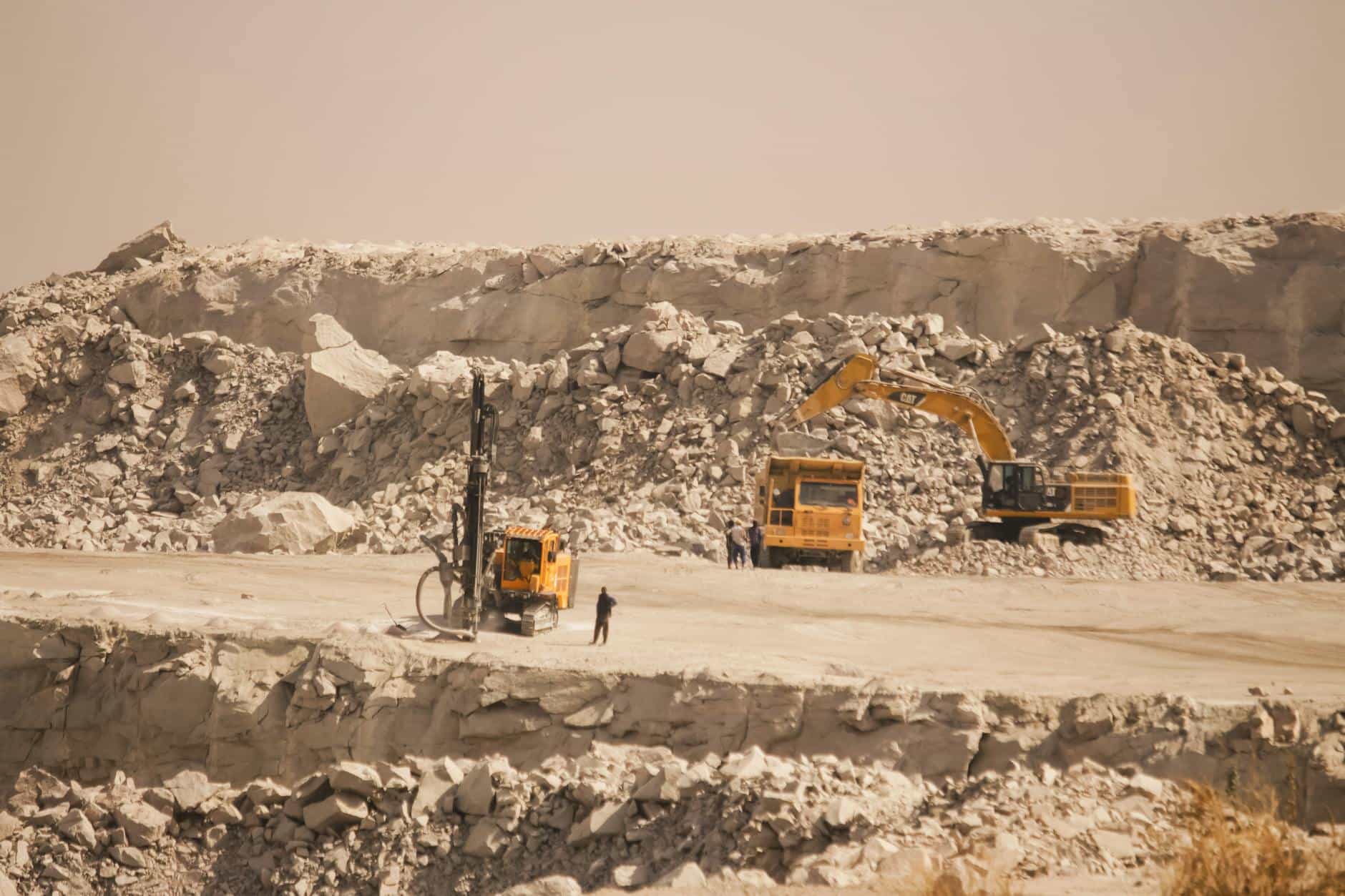
PhotographMachine learning systems are now running production operations at major Australian mines, while AI-powered exploration platforms expand across the Asia-Pacific—marking a shift from pilot projects to industrial-scale deployment.

Fourteen million hours of operational data. That's what it took to train the machine learning system now classifying load and dump events across Australian mines operated by Glencore, NRW Holdings, and Macmahon. The system, built by MaxMine using more than 14 million hours of labelled operational data, has been fully operational for six months , according to International Mining. The scale signals something fundamental: AI in mining has crossed from experimental to essential.

The system has reduced workloads for site teams by cutting missed or incorrect loads and improving production tracking accuracy, particularly in more complex operating scenarios , MaxMine reported. But the real story isn't efficiency gains at three Australian operations. It's that the industry's data problem—the one that killed 60% of AI projects before they reached production, per Gartner—may finally be yielding to brute-force solutions built on massive, ground-truthed datasets.

Can AI Actually Find What's Left to Find?

The exploration challenge is getting harder. Traditional exploration methods, while proven over decades, face mounting pressure from economic constraints and the urgent need to discover critical mineral deposits , according to industry analysis. Enter computational discovery.

Botswana Minerals reported that an AI-assisted exploration study discovered 36 copper anomalies within two of its eight northern Botswana licences, organised into six exploration corridors , Mining Technology reported this week. The company isn't alone in betting on algorithms over boots on the ground. MinersAI, a computational discovery partner for the global resources sector, announced its official expansion into the Asia-Pacific region, opening its headquarters in Perth, Western Australia , per International Mining.

The Perth move matters. Western Australia sits at the center of global critical minerals supply chains, and MinersAI's expansion suggests the computational approach has moved beyond North American and European markets. A recent report found that the adoption of artificial intelligence in mineral exploration is gaining strong momentum, with 77 per cent of respondents reporting some level of use of AI tools in their exploration operations , according to the 2025 Mineral Exploration Tech Report conducted by Ipsos for VRIFY Technology.

Yet momentum doesn't equal results. The application of machine learning in mineral exploration has garnered significant attention and investment, yet greenfield mineral deposit discovery rates remain unchanged, stemming from challenges such as low data quality outside existing mines, inconsistent sampling, limited interdisciplinary collaboration, and the unique complexity of geoscientific problems , research published in January 2026 noted. The gap between hype and discovery persists.

What Happens When Drills Run Themselves?

Autonomous drilling technology is no longer waiting for 2030. Master Drilling targets commissioning of a complete autonomous drilling system before the end of 2026, representing a measurable development milestone for the industry , according to industry reports. The South African mining services company isn't making empty promises— Master Drilling reported record revenue of $292 million in 2025 alongside a billion-dollar order book for 2026, with operating profit increasing by 57.2% to $46.5 million .

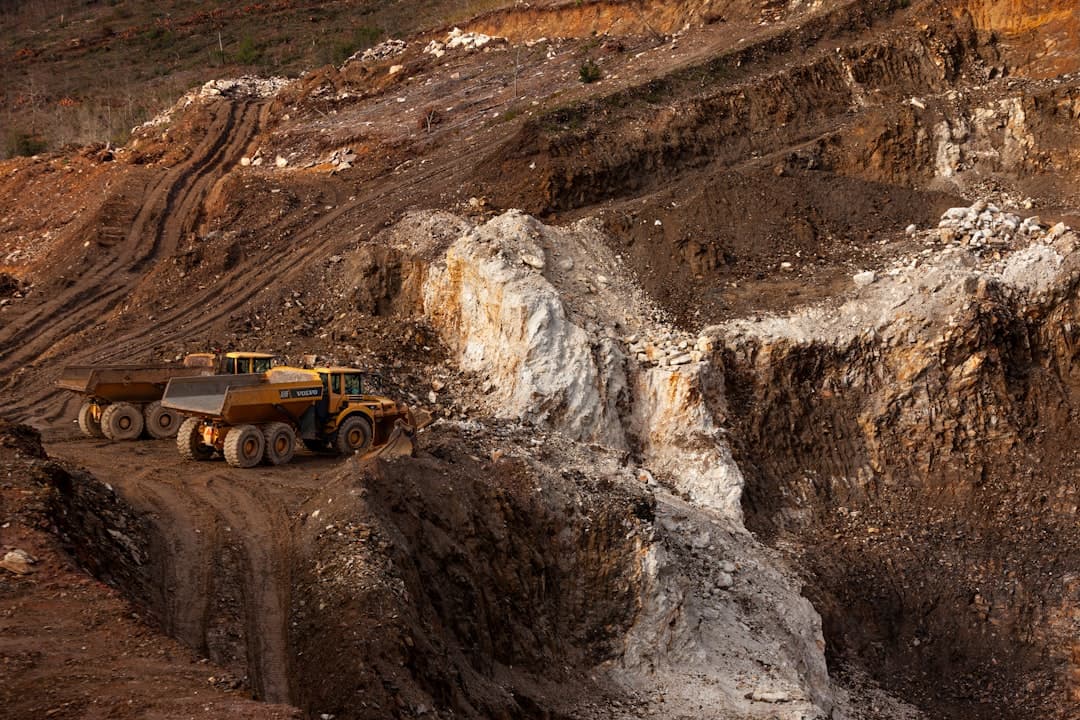
Hardware is arriving on site. Sandvik Mining completed delivery of a DR410i rotary drill rig to Mariana Minerals' Copper One operation in Utah, with the equipment arriving on-site during the first quarter of 2026 and commissioning of the AutoMine surface drilling system currently underway , the Canadian Mining Journal reported.

The economics are compelling, but the deployment reality remains modest. Despite the compelling business case, the current state of autonomous deployment in mining is far more modest than industry rhetoric might suggest, with approximately 3% of mobile mining equipment operating autonomously as of recent industry assessments . That 3% figure—roughly 97% of mining equipment still requires human operators—underscores the gap between conference presentations and pit-floor reality.
Does AI Need More Power, or Smarter Grids?

Here's the paradox: the AI systems optimizing mining operations are themselves straining the infrastructure that powers them. Aggregate electricity consumption by the six leading firms is projected to increase from roughly 118 TWh in 2024 to between 239 TWh and 295 TWh by 2030, equivalent to about 1% of global power demand , according to research using large language models to analyze corporate and policy data.

The bottleneck isn't generation—it's coordination. Stanford research reveals advanced economy grids operate at 30% utilization, leaving vast capacity idle due to outdated coordination systems, with a 1% improvement in system flexibility potentially unlocking 100 GW in the US alone, equivalent to $500 billion in avoided infrastructure , the World Economic Forum reported in March.

FERC is planning to hold a conference in July to spotlight how AI-driven solutions and grid-enhancing technologies can optimize power delivery and reduce costs , according to E&E News. The irony is thick: AI created the power crisis, and now AI is being deployed to solve it. A field demonstration in collaboration with major corporate partners showed a software-only approach—Emerald Conductor—that transforms AI data centers into flexible grid resources, achieving a 25% reduction in cluster power usage for three hours during peak grid events while maintaining AI quality of service guarantees , research from a Phoenix trial showed.

For mining operations in remote locations, the grid problem compounds. Autonomous haul trucks and AI-guided drill rigs require reliable power in places where grid infrastructure barely exists. The solution may involve on-site generation, microgrids, and the same predictive analytics being applied to ore bodies now being turned on energy systems.

What Changed This Week

Three deployments moved from pilot to production: MaxMine's load classification system hit six months of continuous operation across major Australian miners, MinersAI planted its flag in Perth to serve Asia-Pacific exploration, and Sandvik commissioned autonomous drilling hardware in Utah. The pattern is clear—2026 is the year AI in mining stops being a conference topic and starts being a line item in operational budgets. The data quality problem that killed most AI projects is being solved not through better algorithms, but through industrial-scale data collection: 14 million hours of labeled operations for a single classification task.

What to Watch

Master Drilling's autonomous system commissioning before year-end will test whether underground drilling can truly run without human intervention. FERC's July conference on AI-driven grid optimization will reveal whether regulators can move fast enough to match the pace of data center deployment. And the 77% of exploration companies now using AI tools will either start finding deposits at higher rates—or the industry will confront the uncomfortable reality that computational power can't overcome geological scarcity. The Global Resources Innovation Expo in Perth (May 5-7) will showcase whether Australia's critical minerals ambitions can be matched by the automation needed to extract them profitably.

Coverage aggregated and synthesized from leading energy-sector publications. See linked sources within the article.

Share this story

More from Stake & Paper

Was this article helpful?

ClaimWatch

Mining claims intelligence — from query to report, in minutes.

Every unpatented mining claim across all twelve BLM states. Leadfile audits, due diligence, site selection, regional prospecting, entity investigations, and AOI monitoring — delivered as complete report packages.

4.4M+
Claims Tracked
12
BLM States
7
Report Types
Request a Sample Report
Stake & Paper AM

One morning brief. The whole energy sector.

Original analysis, the day's most important wire stories, and market data — delivered before your first cup of coffee. Free.