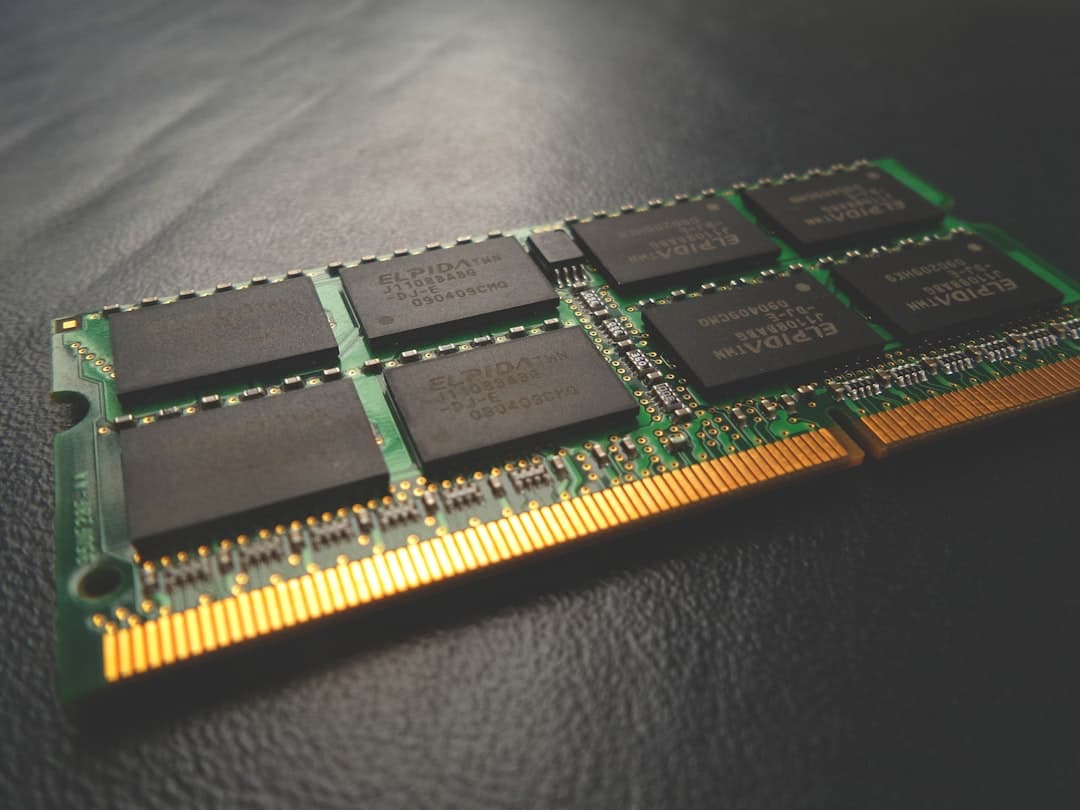
SK Hynix posted a 72% operating margin in the first quarter—higher than Nvidia's 65% , according to market data. That single number captures the power shift underway in AI infrastructure: the companies making memory chips now command better margins than the ones designing the processors. More than half the cost of today's AI GPU goes to three HBM makers —SK Hynix, Samsung, and Micron—and all three suppliers' 2026 HBM capacity is sold out , per industry reports.
The AI hardware stack is buckling under its own momentum. Capital expenditure from five large technology companies surged to more than $400 billion in 2025 and is set to increase by a further 75% in 2026, driven by data center investments, according to the IEA . But money alone cannot conjure fabrication capacity, turbine production lines, or electrical substations. TSMC's three advanced-packaging backend fabs are sold out through 2027 with lead times of 52 to 78 weeks , Silicon Analysts reported. The scramble for natural gas power plants has caused a shortage of gas turbines, with prices for the equipment expected to be up 195% over 2019 levels by year-end, and waitlists stretching into the early 2030s , according to a BloombergNEF analysis cited by TechCrunch.
Can Memory Makers Keep Pace?
Only three companies produce HBM at scale—SK Hynix held 62% of the market as of Q2 2025, Micron 21%, and Samsung 17% , industry data shows. HBM uses 3D die stacking with up to 12 thinned DRAM dies connected by through-silicon vias, costs about 3x more per bit to produce than conventional memory, and accounts for over half the cost of a packaged AI GPU; building a memory fab costs upwards of $15 billion and takes years , according to supply chain analysis.
The constraint is not wafer production but back-end assembly. CoWoS packaging has become as difficult and capital-intensive as wafer fabrication itself, in part because the newest variant must manage warpage and preserve signal integrity across enormous interposers; capacity cannot expand overnight, even as TSMC scales CoWoS output roughly tenfold from late 2023 toward 120,000 to 130,000 wafers per month by the end of 2026 , according to industry reports. Major tech giants are offering to fund new production lines for SK Hynix or even purchase expensive lithography tools for the manufacturer, suggesting that global memory supply constraints may be intensifying , Reuters reported in May.
SK Group chairman Chey Tae-won told reporters at Computex that SK Hynix will double its memory wafer capacity within five years, while repeating his forecast that the AI-driven shortage will run until 2030; he declined to put an exact dollar figure on the expansion but confirmed 2026 spending would climb well above the roughly $20 billion spent in 2025 , Bloomberg reported. Chey put the lead time for a greenfield fab at more than five years, placing fresh output near the tail end of the shortage window he's predicting .
Where Will the Power Come From?
Chevron announced Monday it will fuel a massive Microsoft data center in West Texas with natural gas under a 20-year agreement; the data center, called Project Kilby, is expected to consume nearly 2.7 gigawatts of electricity—equivalent to the power needed to run about 2 million homes—with most electricity coming from large gas turbines supplied by Chevron's partner, GE Vernova , CNBC reported. The power is dedicated to the data center and will not be connected to the electric grid .
The Chevron deal exemplifies a broader shift. Facing pressure from policymakers to supply their own power and multi-year delays getting permission to connect to the grid, data center projects increasingly plan to build their own on-site generation capacity, mostly powered by natural gas; a recent Bloomberg New Energy Finance analysis finds 100 GW of on-site gas-burning capacity are planned to power data centers across America—equivalent to 18% of the total existing capacity of all U.S. power plants , according to Energy Innovation analysis.
Planned natural gas capacity increased from 11.1 percent in 2024 to 18.1 percent in 2026; notably, planned non-renewable additions surged by 71 percent from 2025–2026, while renewable growth flattened to just 2 percent over the same period , the American Action Forum reported. Natural Gas Intel noted that data centers needed to power artificial intelligence are emerging as the natural gas market's next major structural demand driver after LNG exports, creating a new debate over who should pay for the electric infrastructure needed to serve them .
The economics are brutal. The cost to build a combined cycle gas turbine power plant has spiked 66% in the last two years, rising from less than $1,500 per kilowatt of generating capacity in 2023 to $2,157 last year, according to BloombergNEF; what's more, it now takes 23% longer to complete a new facility , TechCrunch reported.