Oil & Gas · Analysis
Refiners Bank the Crack Spread Windfall
Valero, Phillips 66 and HF Sinclair booked refining margins that dwarf last year's, while crude itself stayed expensive. The profit is in the spread, and the spread depends on Hormuz.
Valero Energy earned $39.24 in refining margin on every barrel it ran in the third quarter of 2026, against $13.14 in the third quarter of 2025. After operating costs, adjusted refining operating income came to $32.09 a barrel, up from $5.86 a year earlier, according to the company's SEC filing.
That gap between what a barrel of crude costs and what its products sell for is the whole story of this earnings season. Crude is hardly cheap. Reuters reported that Brent traded at $115.55 a barrel and US West Texas Intermediate at $102.34 after the EIA report on October 28. Refiners are making fortunes anyway, because gasoline and especially diesel have become scarcer than the oil they are made from. A Hormuz reopening would hit the spread first and the crude price second.
Three ledgers, one pattern
Valero reported third-quarter net income of $6.8 billion, or $23.89 per share, compared with $1.1 billion a year earlier. Its Refining segment posted operating income of $8.8 billion, against $1.6 billion. Even its renewable diesel unit, a perennial drag, earned $353 million after an operating loss of $28 million in the 2025 quarter.
Phillips 66 reported adjusted earnings of $5.6 billion, or $14.08 per share, in a release dated October 28, 2026. Reuters, via BOE Report, said that beat the $11.73 analysts had expected, according to LSEG data. Its refining segment earned $6.06 billion on an adjusted basis, up from $430 million a year earlier, and its realized margin rose to $38 a barrel from $12.15. The company's own explanation was brief: its refining margins were "primarily driven by an increase in market crack spreads."
HF Sinclair shows the effect most sharply. Net income attributable to stockholders was $2,015 million, or $11.38 per diluted share, compared with $403 million a year earlier. Refining Adjusted EBITDA was $2,582 million, against $661 million. Its adjusted refinery gross margin reached $54.22 per produced barrel sold, a 183% increase from $19.16 in the third quarter of 2025. The company credited tight transportation-fuel supply, elevated crack spreads and benefits from small refinery RINs waivers granted by the EPA.
Oil & Gas 360 reported that Valero and HF Sinclair also posted record quarterly profits.
Volume helped, but price did the work
Throughput did not drive these numbers. HF Sinclair's crude charge averaged 614,060 barrels a day, below the 639,050 of a year earlier, reflecting a planned turnaround at its El Dorado refinery. It earned far more on fewer barrels.
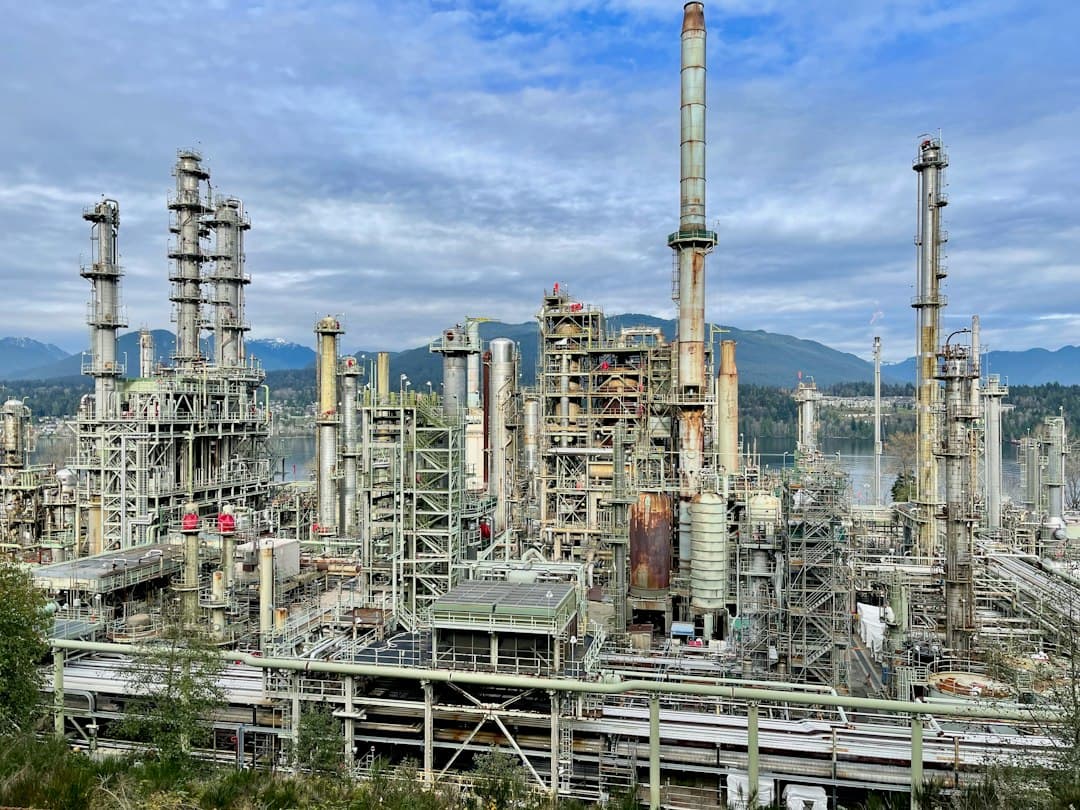
The big refiners were running flat out regardless. Phillips 66 ran at 98% crude capacity utilization with a record distillate yield of 41%, tilting its output toward the product in shortest supply. Valero's chief executive, Lane Riggs, said: "Our refineries operated at near-record utilization rates, providing a reliable supply of critical transportation fuels during the quarter." Reuters noted that US refiners have emerged as key beneficiaries of disruptions in Russia, China and the Middle East, with utilization averaging more than 95% of capacity from May through September.
Diesel is the pressure point. Bloomberg News, in a story carried by Transport Topics on September 1, 2026, reported that US diesel crack spreads rose above $106 a barrel, which it called an "all-time record." The spread first breached $100 in August. Bloomberg attributed the squeeze to constraints that have bitten since the US and Israel first attacked Iran in late February, with Ukrainian drone strikes on Russian refineries and a Russian fuel export ban adding to it. With higher exports, domestic diesel supplies had fallen to the lowest seasonal levels on record.
Weekly data shows no relief. US crude inventories fell by 1.9 million barrels to 410.6 million barrels in the week ended October 23, Reuters reported, when analysts had expected a 15,000-barrel rise. Distillate stockpiles fell by 1.5 million barrels to 102.8 million barrels, a larger draw than the 0.9 million-barrel drop forecast. Refinery utilization slipped by 0.6 percentage points to 92.8%, with crude runs down 123,000 barrels a day. That is the first visible sign of the plants tiring, though not of the shortage ending.
What the cash is for
The refiners are spending the windfall. Phillips 66 returned $2.8 billion to shareholders through dividends and buybacks and cut net debt by $3.8 billion to $12.7 billion. Lashier said the company "remains steadfast in its disciplined approach to capital allocation." It also reached a final investment decision on the Western Gateway Pipeline, with an expected in-service date in 2029. HF Sinclair returned $572 million and declared a quarterly dividend of $0.525 per share. Valero ended the quarter with $9.8 billion in cash against $8.6 billion of total debt, with a payout ratio of 52 percent.
Equity markets are not treating the windfall as a one-off. XLE closed at $68.45 on Wednesday, up 11.30% so far in October.
The exposure
Oil & Gas 360 wrote that exceptionally strong margins may not persist if international refinery operations recover, fuel exports normalize or geopolitical tensions ease. investingLive was blunter: any diplomatic breakthrough with Iran that reopens Hormuz could narrow refining margins quickly. Before the war the strait carried a large slice of the world's oil and fuel, and the International Energy Agency has already agreed to accelerate emergency stock releases and prioritise diesel.
The risk runs the other way too. Oil & Gas 360 reported that Yemen's Houthi movement claimed a missile strike on Saudi Arabia's Ras Tanura refinery, which has capacity of approximately 550,000 barrels per day. Saudi authorities had not immediately confirmed it. More lost capacity abroad would widen the spread further.
Either way, refiners are being paid for scarcity, and diplomats can end scarcity faster than a refinery can finish a turnaround.