Sunday, May 31, 2026Vol. III · No. 151Subscribe
The Mining, Energy & Technology Wire
Mining · Analysis

Satellites See What Geologists Can't

Radar constellations now detect millimeter-scale ground shifts at oil fields. Hyperspectral sensors map minerals through forest canopy. The race to monitor Earth from orbit just went into overdrive.

Satellites See What Geologists Can't
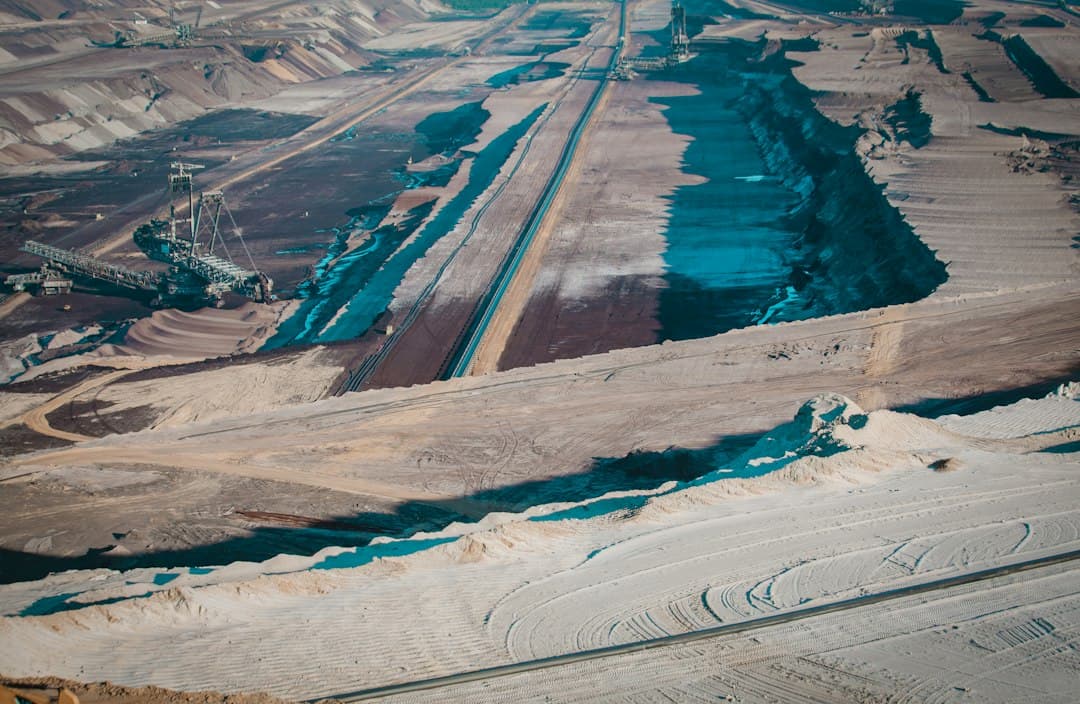
PhotographRadar constellations now detect millimeter-scale ground shifts at oil fields. Hyperspectral sensors map minerals through forest canopy. The race to monitor Earth from orbit just went into overdrive.

Nine satellites in three months. That's the pace Japanese startup Synspective maintained through spring 2026, launching its StriX radar constellation at a clip that would have seemed reckless a decade ago. The company deployed its ninth synthetic aperture radar satellite on May 22, lifting off from New Zealand's Mahia Peninsula , according to Synspective. The radar satellites detect ground movement down to the millimeter, even through cloud and darkness, with the expanding constellation aiming to deliver analysis to customers in less than one hour , industry publication African Mining Market reported.

The speed matters because the stakes have changed. Minerals like nickel, cobalt, copper, and manganese are core elements in manufacturing electric vehicles, batteries, computer chips, and solar panels , the EU Space Programme Agency noted. Finding them faster -- and monitoring extraction sites more closely -- has become a strategic imperative. Space-based sensors are no longer nice-to-have research tools. They're operational infrastructure.

Can Satellites Really Replace Boots on the Ground?

Not entirely. But they're getting close. Mining companies can now screen vast areas for mineral potential in days, slashing traditional discovery timelines and costs by up to 80-85% , according to Farmonaut, a satellite analytics provider. Hyperspectral imaging can identify more than fifty gold-related minerals from space in 2026, XRTech Group reported.

The technology works by capturing hundreds of narrow spectral bands -- essentially taking a photograph in hundreds of different colors simultaneously. Every mineral leaves its mark in the hyperspectral data, letting analysts spot deposits even when hidden under thin vegetation or soil , Farmonaut explained. Analysts can detect and map rock alteration and primary ore mineral signatures between trees, in dirt road tracks, on footpaths, and in upturned agricultural soils, identifying different minerals and their quantities from space , according to the Exploration Mapping Group.

Europe's Copernicus program has the potential to make mineral mapping and field work planning faster, safer, and more cost-efficient; Norwegian mining firm Kuniko partnered with Poland-based startup TerraEye to develop a remote sensing solution using Sentinel-2 imagery combined with other satellite data to detect spectral signatures of mineral deposits and identify vegetation stress patterns near legacy mining zones , the EU Space Programme Agency reported. Norway's harsh winters allow only a short seasonal window for on-site work -- satellite data extends that window to year-round.

What Happens When the Ground Moves?

Oil and gas operators have a different problem: the ground beneath their wells and pipelines won't stay still. InSAR data showed surface uplift up to 10 centimeters at a West Texas enhanced oil recovery field between January 2007 and March 2011 , researchers documented in a study of CO2 injection monitoring. That's enough movement to threaten infrastructure integrity.

Millimeter-accurate InSAR platforms identify subtle shifts in ground stability across multiple locations, eliminating the need for manual field inspections , according to geospatial intelligence firm Rezatec. Satellite visibility across tailings dams, waste storage facilities, and environmentally sensitive zones can detect structural changes, ground movement, and compliance risks early -- before escalation into regulatory or financial events , Arlula noted.

French mining group Eramet, the largest producer of high-grade manganese ore worldwide, collaborated with Italian remote sensing specialist Tre Altamira to improve space-based subsidence monitoring at active and legacy sites using Copernicus Sentinel-1 radar data and advanced InSAR techniques , the EU agency reported. The alternative -- deploying ground sensors across hundreds of square kilometers of remote terrain -- would cost orders of magnitude more.
How Fast Can a Constellation Scale?

Fast enough to change the economics. EarthDaily Analytics launched six satellites aboard a SpaceX Falcon 9 rideshare mission on May 3, 2026, with telemetry confirming successful deployment, stable performance, solar array deployment, and power-positive status , the company announced. Each satellite carries 16 imaging systems across 22 spectral bands, operating as part of a single coordinated measurement platform , according to EarthDaily.

The constellation's design reflects a shift in thinking. CEO Don Osborne said most Earth observation systems were built to capture images, but EarthDaily was built to measure change, moving toward delivering a consistent daily understanding of the planet that customers can rely on to act with confidence , The Debrief reported. The constellation will image at enterprise scale with roughly one hundred terabytes per day acquired across tens of thousands of acquisitions , according to the company's engineering documentation.

That volume requires automation. Satellite bus and payload control, onboard data management, downlink, ground systems, and global image acquisition coordination must function as a highly automated integrated system , EarthDaily engineers wrote in SpaceNews. Manual processing wouldn't scale.

Small satellite constellations are reshaping revisit frequency and coverage; instead of waiting days or weeks for imagery, users now receive multiple observations per day for the same location, enabling daily global monitoring that supports agriculture, climate tracking, and security applications , according to industry analysis from Satpalda.

What Changed This Week

Synspective deployed its ninth SAR satellite on May 22 as part of the "Viva La StriX" mission, enhancing persistent Earth observation capabilities, with testing and commissioning to follow before entering service . The remote sensing satellite market is set to reach $24.77 billion by 2030, corresponding to a compound annual growth rate of 10.7% , The Business Research Company projected this week. PhotoSat is developing property-scale hyperspectral exploration targeting scheduled for release in 2026, applying deep-learning models to higher-resolution datasets for detailed mineral identification at the property scale , Canadian Mining Journal reported. The tools are maturing faster than the regulatory frameworks meant to govern them.

What to Watch

EarthDaily's constellation enters commercial operations in September 2026, with the remaining satellites scheduled for launch in Q4. Synspective aims to complete its 30-satellite constellation by 2028, with enhanced revisit times that could enable sub-hourly monitoring of critical sites. Watch for NASA's Commercial Satellite Data Acquisition program announcements -- the agency executed eight new agreements in January 2026 with commercial SAR and optical providers, signaling growing government reliance on commercial space infrastructure. And keep an eye on hyperspectral sensor development: the race to map critical minerals from orbit is just beginning, with implications for everything from lithium supply chains to rare earth geopolitics.

Coverage aggregated and synthesized from leading energy-sector publications. See linked sources within the article.

Share this story

More from Stake & Paper

Was this article helpful?

ClaimWatch

Mining claims intelligence — from query to report, in minutes.

Every unpatented mining claim across all twelve BLM states. Leadfile audits, due diligence, site selection, regional prospecting, entity investigations, and AOI monitoring — delivered as complete report packages.

4.4M+
Claims Tracked
12
BLM States
7
Report Types
Request a Sample Report
Stake & Paper AM

One morning brief. The whole energy sector.

Original analysis, the day's most important wire stories, and market data — delivered before your first cup of coffee. Free.