Hyperspectral satellites can now spot lithium deposits hidden beneath vegetation from 550 kilometers up. Mining companies using satellite-enabled mineral exploration are slashing traditional discovery timelines and costs by up to 80-85%, according to Farmonaut , which has deployed AI-driven analytics to screen vast areas for mineral potential in days rather than months. The shift from boots-on-the-ground surveys to orbital prospecting marks a fundamental change in how the energy and mining sectors find resources—and monitor the consequences of extracting them.
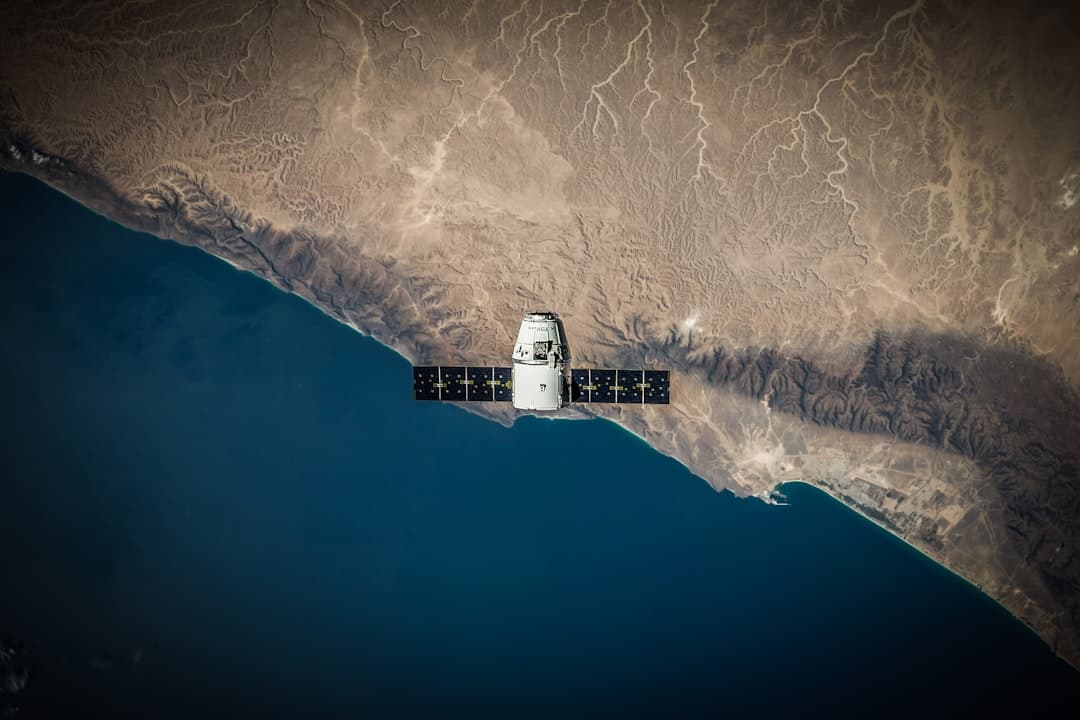
Pixxel's Firefly constellation, featuring six satellites designed for high-resolution hyperspectral imaging, launched successfully in 2025 and is now operating in orbit . Each satellite captures 135+ spectral bands at a 5-meter resolution across a 40-kilometer swath , enabling detection of changes invisible to conventional imaging systems. As of mid-2026, Pixxel's 5-meter ground sample distance at 135+ spectral bands represents the strongest offering in commercial hyperspectral imaging , according to industry analysis. The company counts Rio Tinto among its partners.
Can Satellites Replace Geologists?
Not entirely—but they're changing the job description. Unlike conventional multispectral sensors that capture a handful of broad bands, hyperspectral satellites record hundreds of narrow, contiguous spectral bands spanning from the visible to the shortwave infrared, allowing extraction of detailed chemical and physical information from land, crops, forests, and mining prospects .
Every mineral—lithium, copper, gold, rare earths—leaves its mark in the hyperspectral data, letting analysts spot deposits even when hidden under a thin layer of vegetation or soil , Farmonaut reports. Fleet Space Technologies has added gravity geophysical surveys to its ExoSphere mineral exploration solution, which has already attracted Rio Tinto, Barrick Gold, and other global mining companies using this subsurface imaging technology to discover buried deposits of cobalt, copper, lithium, nickel, and other critical metals .
The European Space Agency is backing the trend. Kuniko partnered with Poland-based EO analytics startup TerraEye to develop a remote sensing solution for prioritizing exploration targets using Copernicus Sentinel-2 imagery . Norway's harsh winters allow only a short seasonal window for on-site work, and each field campaign comes with high financial costs and potential risks , making satellite data particularly valuable for Arctic exploration.
What About the Ground Beneath Active Operations?
Interferometric Synthetic Aperture Radar—InSAR—has become essential for tracking ground deformation at oil fields and mine sites. InSAR is a satellite-based remote sensing technique that detects ground surface movement with millimeter-level accuracy across areas spanning hundreds of square kilometers by analyzing phase differences between radar images acquired at different times .
French mining group Eramet collaborated with Italian remote sensing specialist Tre Altamira to improve space-based subsidence monitoring at active and legacy sites, using Copernicus Sentinel-1 radar data and advanced InSAR techniques . Eramet is the largest producer of high-grade manganese ore worldwide, with global operations that provide essential critical metals needed for electrification and green energy .
For oil and gas operators, the stakes are equally high. Research at China's Fengcheng oil field revealed ground surface maximum cumulative uplift of 40 cm over four years, with annual average deformation rates ranging from -80 to 120 mm/year , demonstrating InSAR's capacity to track reservoir pressure changes from fluid injection. InSAR is used to track enhanced recovery, underground gas storage, and wastewater injection to support safety, environmental protection, and regulatory compliance in oil and gas operations .
SAR data are the most effective method for tracking land subsidence and structural damage, with land managers using SAR images to prepare subsidence risk assessments helpful for monitoring geohazards in mines and planning construction in cities , according to the European Space Agency. Sentinel-1D data became available to users through the Copernicus Data Space Ecosystem starting April 17, 2026, with the satellite positioned on an orbit that revisits the Sentinel-1C ground track with a one-day offset .