Tungsten prices have reportedly climbed as much as 500% by early 2026, according to United States Tungsten Corp. The metal's highest melting point of any pure element makes it irreplaceable in armor-piercing munitions, semiconductor manufacturing, and precision tooling—and the United States, which stopped commercial tungsten mining in 2015, now relies heavily on imports—37% of which come directly from China , creating what defense analysts call a strategic chokepoint.
The U.S. is burning through weapons stockpiles in Iran, and replacing them will require large amounts of tungsten , NBC News reported last week. Meanwhile, Washington has established January 1, 2027, as the deadline to cease procuring tungsten from China, Russia, Iran, and North Korea for defense applications . That leaves eight months to build an alternative supply chain that took China decades to construct.
Can the West Catch Up in Time?
The arithmetic is unforgiving. As for how long it will take the West to catch up with China's tungsten industry, "you'll be making a decent-sized dent in a decade," one analyst told NBC News. "You won't be totally self-sufficient in under 20. And to be honest, 20 will slip into 30 quite easily."
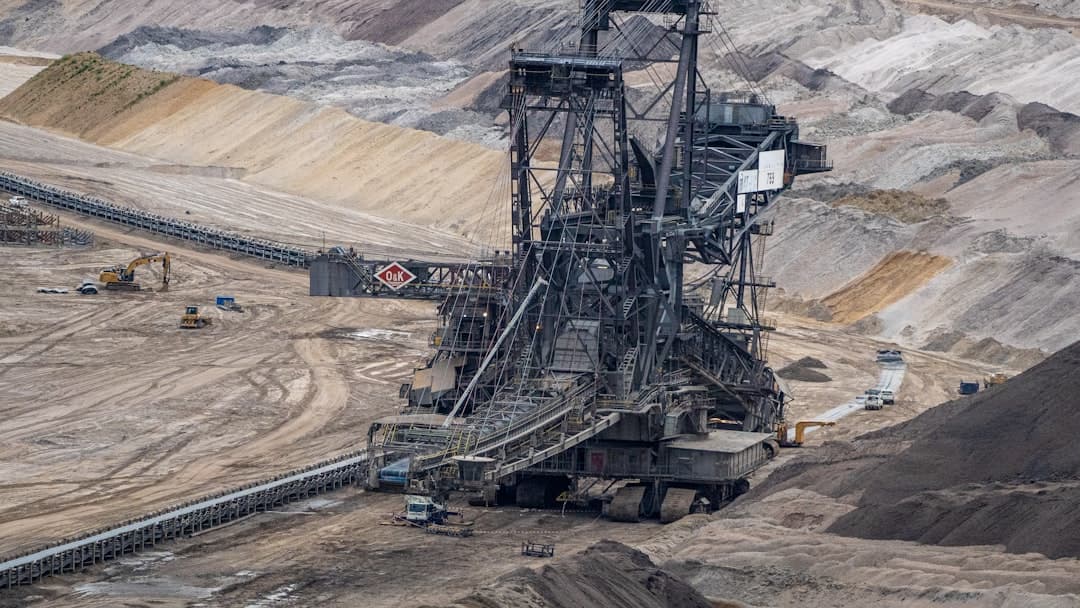
South Korea offers a test case. Almonty Industries' Sangdong mine is expected to be operational by the first quarter of 2026, running 16 hours a day and producing an estimated 1.2 million tons of tungsten ore per year , CBS News reported after touring the facility. The mine, mothballed in the 1990s when Chinese price dumping made it uneconomical, is being revived with U.S. government support. China controls at least 80% of the world's current tungsten supplies, according to Almonty, with Russia and North Korea both holding a smaller but significant share of the assets .
Europe is moving more cautiously. The European Union has shortlisted tungsten, rare earths and gallium for its first coordinated stockpile of critical minerals. The EU first announced plans for a coordinated stockpile initiative in late 2025. Ten member states are now participating in planning groups led by Italy, France and Germany , Mining.com reported.
The Trump administration has backed multiple initiatives. The administration has backed a deal for the New York-based mining investment group Cove Capital to build a $1.1 billion tungsten mining and processing plant in the Central Asian country of Kazakhstan, whose investors reportedly include Trump's sons Donald Trump Jr. and Eric Trump , according to NBC News. The White House has launched a $12 billion stockpile of critical minerals in February .
Why Copper's Deficit Looks Worse Than Tungsten's
While tungsten grabs defense headlines, copper's supply crisis threatens a broader swath of the economy. The "accelerating pace of electrification" is projected to swell copper demand to 42 million metric tons by 2040, a 50% increase from current levels , according to a January study by S&P Global. The emerging supply deficit constitutes a "systemic risk for global industries, technological advancement and economic growth," the study found .
The International Copper Study Group (ICSG) has officially abandoned its projected surplus for 2025, now forecasting a 150,000-metric-ton deficit for 2026—pointing to the market's first structural shortage since 2009 , according to Mining Visuals. J.P. Morgan's models push the anticipated shortfall to a staggering 330,000 metric tons .
The deficit stems from cascading mine disruptions. Indonesia's Grasberg Mine had a fatal mudslide in September, which led to a 35% reduction in 2026 production forecasts with operations projected to return to normal by 2027 , CNBC reported. Grasberg in Indonesia, the world's second largest copper mine, remains underutilized after a fatal mudslide triggered a force majeure in September , J.P. Morgan noted. Chile's El Teniente mine faces similar problems— production will be depressed for the next five years as a result of an accident .
China is tightening the screws. China has announced it will halt exports of sulfuric acid — a key input for certain copper mining processes — from May to protect its domestic supply. This could create further tightness in the copper market, given that ~15% of global copper production is directly reliant on sulfuric acid availability , according to J.P. Morgan.
Treatment charges reached -$66.40 per tonne in Q1 2026, meaning smelters now pay miners for concentrate access rather than receiving payment for processing services , Discovery Alert reported—an inversion that signals severe supply stress.