Crude oil is getting cheaper. Moving it has never cost more.
October WTI futures settled at $95.90 a barrel, down -3.65%, while November Brent slipped to $100.52/bbl, off -2.61%, according to market data. The Energy Select Sector SPDR, by contrast, closed at $64.31 (-0.26%), still sitting well above where it started the year. Buried in that gap between falling crude and a sector fund holding up is a business most traders never think about: the ships that carry the oil, not the oil itself. That business is where the money has gone.
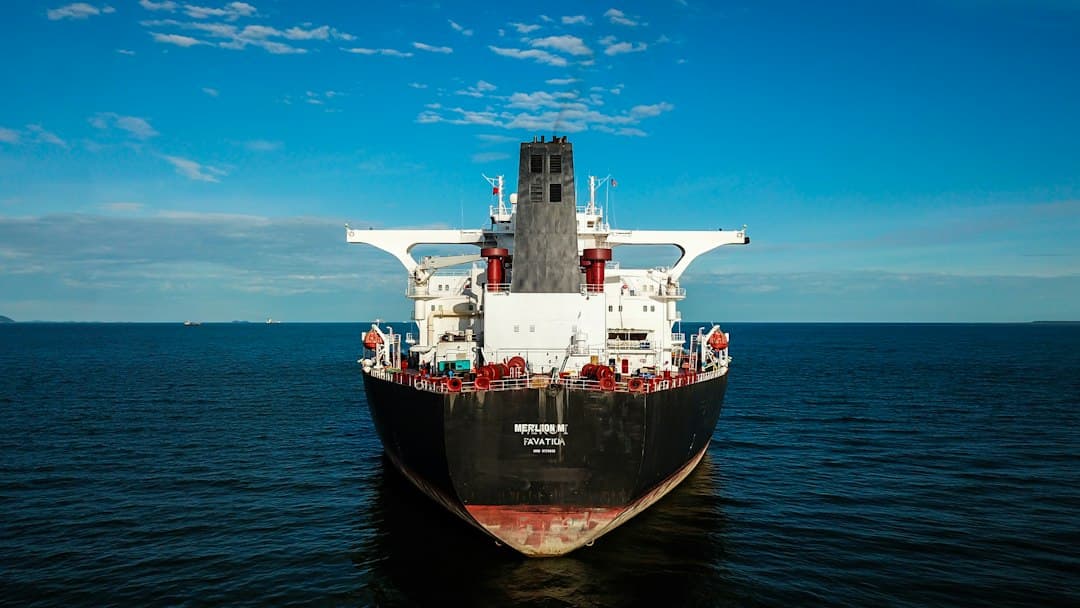
Trafigura wants outside investors to have a piece of it. The commodity trader announced on 21 September 2026 in Geneva that it had created Volare Shipping Ltd., a standalone company to own and run its fleet of Very Large Crude Carriers — the supertankers that haul Gulf crude to Asia. The fleet starts with six VLCCs on the water and eight more on order, commercially managed by Trafigura's shipping arm. Volare plans a private placement ahead of the listing, Trafigura said, with shares expected to begin trading on Euronext Growth Oslo under the ticker "VLCC" on or about 5 October 2026, Trafigura said, and the trading house will remain Volare's majority owner. Reuters, which first reported the plan, said the combined fleet will run to 14 supertankers once the newbuilds arrive, per Marinelink, by October 2028.
The timing is not subtle. Trafigura, which manages roughly 500 vessels across shipping segments including around 250 tankers, has historically chartered much of its tonnage from independent owners — a structure that leaves a trading house exposed every time freight spikes, Reuters noted. This year, freight has done more than spike. The Baltic Exchange's TD3C assessment, covering a 270,000 dwt VLCC sailing from Ras Tanura to Ningbo, stood at $1.099m per day as of 1600 on 15 September, Seatrade-maritime reported — up from $1.034m the previous Monday, when the assessment crossed into seven figures for the first time in its history. Splash247, which has tracked the theoretical drift of Gulf fixtures through the conflict, cautions that headline numbers like these need to be read carefully as actual transits dwindle. Real fixtures still back up the story: the 2016-built Kuwait Prosperity was reported chartered by Total Singapore for a September 22 cargo out of the Arabian Gulf at a rate implying more than a million dollars a day, according to Seatrade-maritime.
The broader tanker market is riding the same wave. Clarksons' ClarkSea Index, a cross-sector gauge of vessel earnings, climbed another 14% in the week to Friday to $64,569 a day, Splash247 reported, propelled by record crude-tanker earnings — a level that leaves the shipping boom of 2007-08, when the old record stood at $50,714 a day in December 2007, some 27% behind. Clarksons put average VLCC earnings last week at a record $643,000 a day, up 40% in a single week, with suezmaxes near $375,000 and aframaxes around $184,000. "The tanker market is benefiting from the current situation," Poten & Partners wrote in its latest weekly report: "The tanker market is benefiting from the current situation. The escalating conflict has created more risks, uncertainties and dislocations in the market and spiked freight rates to unprecedented levels."
Asset prices have followed freight rates upward. Seatrade-maritime cited Veson Nautical's Matthew Freeman describing five-year-old VLCCs as the most overvalued asset his firm tracks, running 133% above their 15-year median. Broker assessments circulating on 21 September put the 2011-built Sea Leopard at $135m, against a newbuilding benchmark of $131m as recently as the end of August, according to Seatrade-maritime. Trafigura's own buildup traces back to 2024, when the trader ordered its first two 319,000 dwt VLCCs at Jiangsu New Hantong, Splash247 reported, later expanding that contract to at least ten ships with deliveries stretching to 2030. The yard delivered the first of them, named Vive Ut Vivas, on June 26, roughly 40 days ahead of schedule, Splash247 reported.
Andrea Olivi, Trafigura's global head of shipping and now chair of Volare's board, framed the listing as a bet on staying power rather than a peak-cycle cash-out: "Long-term fundamentals in crude oil transportation remain supportive, and a dedicated, listed company gives Volare Shipping investors direct exposure to the sector." Volare's chief executive, Alexandre Duff, was more direct about what the money buys. "Once the remaining newbuild vessels are delivered, we will own 14 modern VLCCs." he said, adding that "The contemplated private placement will fully fund our current newbuilding programme, while our proven operational expertise positions Volare Shipping to deliver attractive long-term value for all shareholders." Olivi told Reuters the fleet's deployment will follow the money rather than internal need: "The aim is to maximise earnings of these vessels, so they will be deployed accordingly, whether internal or external cargoes, although the majority of our VLCCs historically have been deployed on third party business."
Oslo has become the address for this trade. Capital Tankers, backed by Evangelos Marinakis, listed a 30-ship crude fleet on Euronext Growth and raised about $300m in fresh equity, Splash247 reported, while Tor Olav Trøim has built out his own VLCC venture through the same exchange. Trafigura is simply the latest name to decide that if the market wants to price the boom, it should be allowed to buy a ticket.
The wager is that Hormuz risk outlives the newbuild queue. If it does, Volare's shareholders collect the freight. If it does not, they will own fourteen very large, very young ships built for a market that has stopped paying up.