Markets · Analysis
When Cheap Solar Becomes a Problem
China's solar giants are bleeding billions and pivoting to batteries. India's grid can't handle its own renewables. And recycling still costs more than dumping panels in a hole.
Six of China's largest solar manufacturers lost $2.8 billion in the first half of 2025. Not revenue -- profit. The same companies that spent a decade printing money on the global energy transition are now hemorrhaging cash, victims of their own success.
In the first half of 2025, six leading Chinese solar manufacturers reported combined losses of €2.42 billion ($2.8 billion), reversing years of record profits, according to financial information provider Wind.
The culprit is overcapacity on a scale that defies easy comparison.
In 2025, China's manufacturing capacity reached 1,200 GW, which was nearly double the global installation demand of 650 GW.
That surplus has crushed panel prices and turned what was once a lucrative export business into a brutal price war. Beijing calls it "involution" -- a polite term for an industry eating itself alive. The response? A $7 billion consolidation fund designed to buy out and shutter up to one-third of the industry's production capacity, according to industry reports.
But the biggest players aren't waiting for a bailout. They're pivoting.
Can Batteries Save China's Solar Giants?
LONGi has entered the storage space with a target of 6 GWh shipments in 2026, while JinkoSolar has reported strong growth in its storage business.
Zhong Baoshen, chairman of Longi Green Energy Technology Co., said on an earnings call that "we hope that within about five years, the scale of our energy storage business will be comparable to that of our solar business"
-- a striking admission from a company posting its fifth consecutive quarterly loss.
The pivot makes strategic sense.
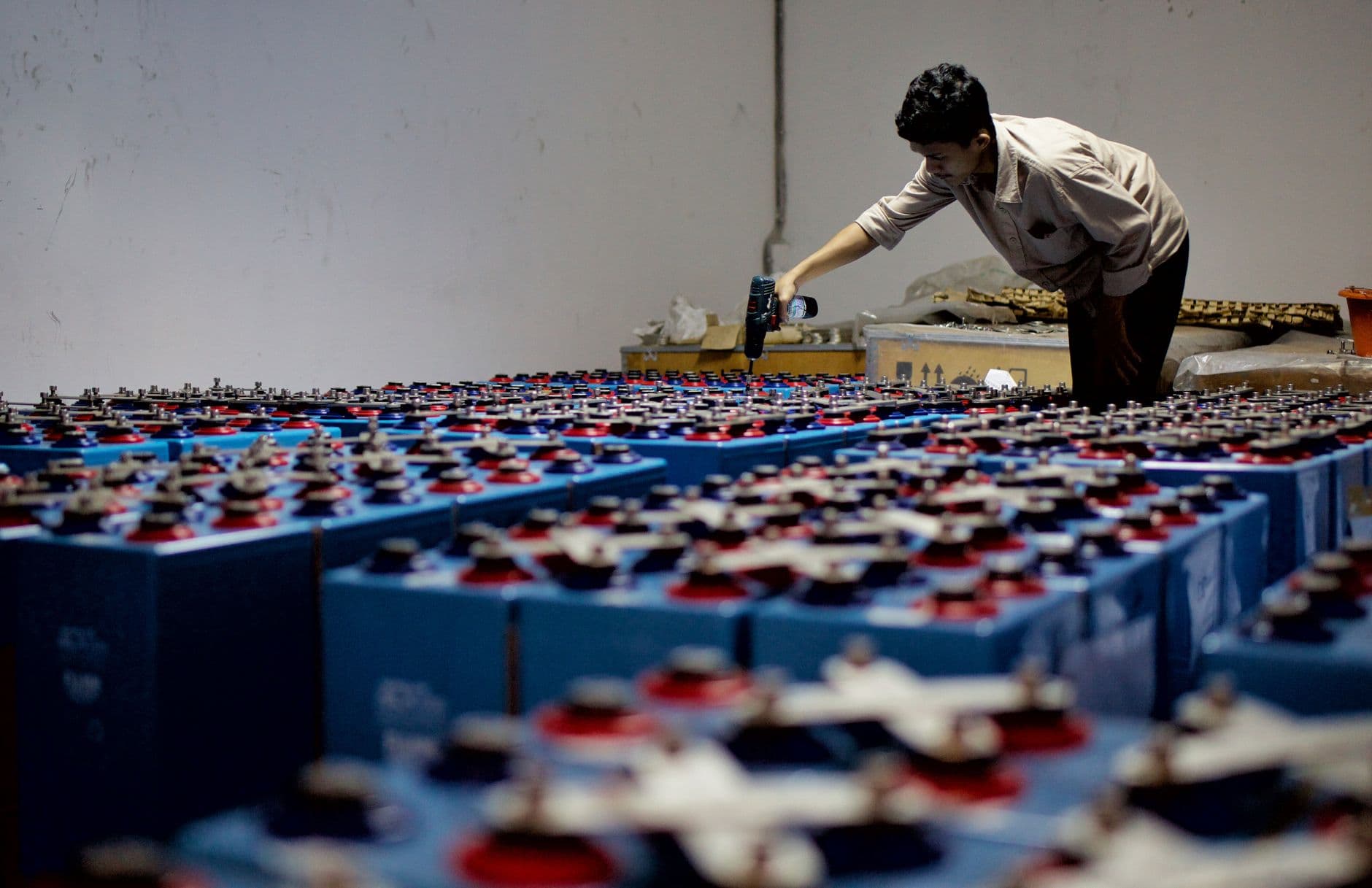
Global shipments of grid-scale batteries, a sector also dominated by Chinese firms like CATL and BYD, nearly doubled in the first quarter of 2026, and China's total energy storage battery exports reached 27.3 GWh in Q1 2026.
China's leading battery makers have unveiled plans to add more than 600 gigawatt-hours of new production capacity for the energy storage system market in just the first two months of 2026 -- roughly 10 times the 58 gigawatt-hours of total capacity installed across the US in 2025.
The timing is opportune. Brazil is preparing its first battery storage auction for later this year, with
the federal government targeting 2 GW (~8 GWh) of capacity and mobilizing over USD 2 billion in procurement.
India's renewable energy boom has created urgent demand for grid-scale storage. And Europe, desperate to diversify away from fossil fuels, is scrambling for alternatives. Chinese manufacturers are positioning themselves to capture that demand before anyone else can scale.
Why Is India Curtailing the Renewables It Just Built?
India hit a symbolic milestone in 2025:
50% of installed capacity from non-fossil sources, ahead of its 2030 target.
But installed capacity and actual generation tell very different stories.
Coal continues to account for roughly 75% of actual generation.
The problem isn't a lack of ambition. It's physics.
New regulations, due to take effect in April 2027, sharply increase penalties when renewable power producers fail to deliver electricity matching their commitments to the grid, and industry groups estimate the tougher regime could cut revenue by about 11 per cent for solar projects and as much as 48 per cent for wind farms.
The rules are designed to improve grid stability, but they've rattled investors.
Investors warned about the impact of lower returns, policy unpredictability and financial stress from tighter grid rules, while arguing that regulatory tightening was advancing faster than improvements in transmission infrastructure and battery storage capacity.
Blueleaf plans to deploy about $3 billion in India, including around $1 billion in equity over the next three years, but expects grid-related constraints to delay the equity deployment by a further two to three years,
Reuters reported. That's not a vote of confidence -- it's a two-to-three-year delay on a billion dollars because the grid can't handle what's already being built.
The deeper issue is coal plant inflexibility.
The inability of many thermal plants to operate below 55% Minimum Technical Load (MTL) limited their ability to reduce output, forcing authorities to curtail renewable energy generation to maintain grid stability, and most renewable energy curtailment occurred during high solar generation periods.
India's largest power producer, NTPC, has pushed back on operating below 55% load,
citing poor coal quality and operational constraints, which can affect plant efficiency and stability.
The result: billions invested in solar and wind capacity that can't always deliver power to the grid, even when the sun is shining and the wind is blowing.
What Happens When the Panels Start Piling Up?
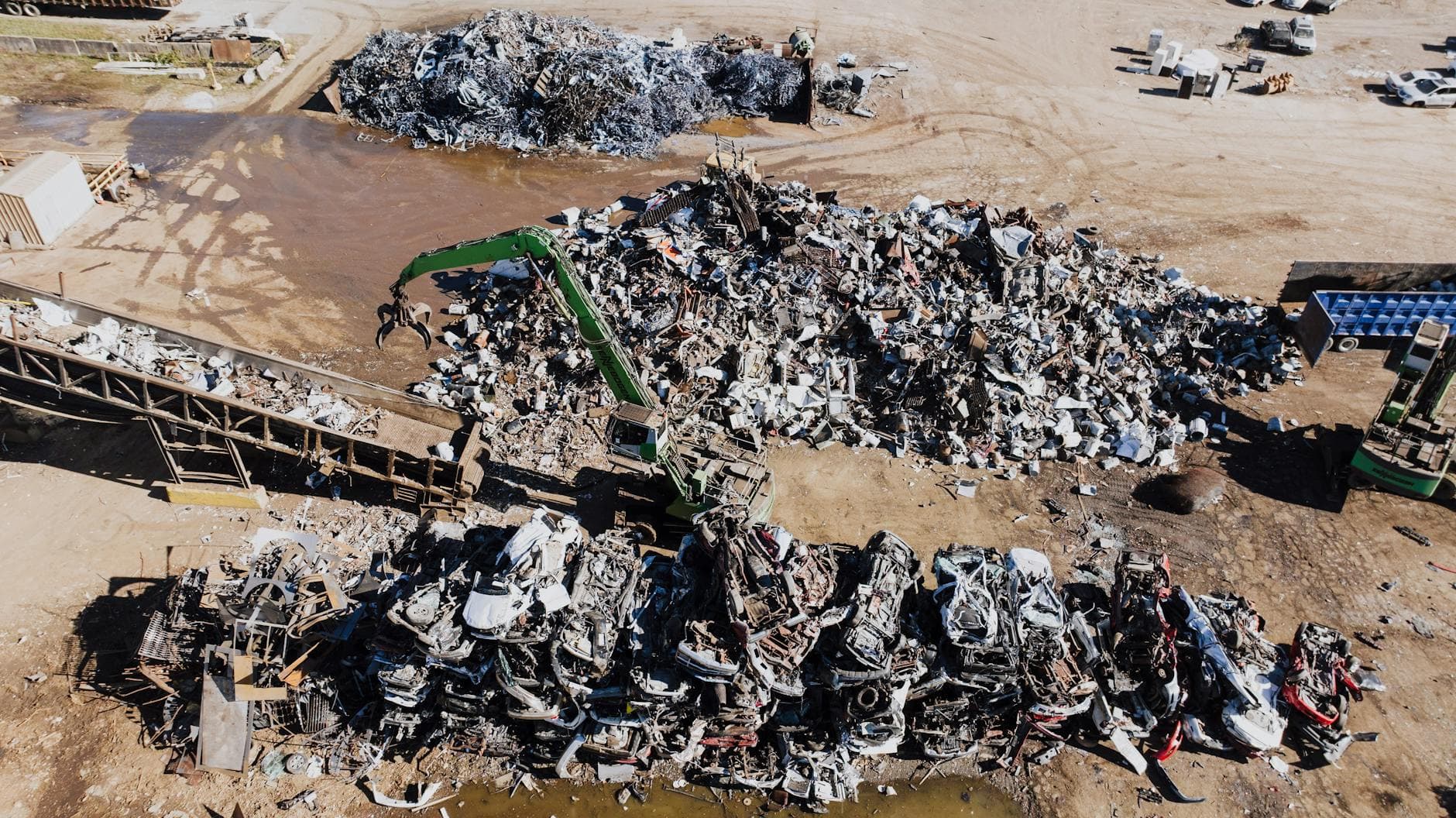
Solar panels last 25 to 30 years. The first wave of mass installations is approaching end-of-life. By the 2030s, the waste will arrive in volume.
Australia projects solar panel waste volumes to nearly double from 59,340 tonnes in 2026 to over 91,000 tonnes in 2030.
Recycling them is technically feasible.
Glass, aluminum frames, copper wiring, and silicon cells are recovered, and recycling costs $15-$45 per panel as of 2026.
The problem is economics.
It costs about $15–$45 to recycle a silicon PV module in the US but only $1–$5 to dump it in a landfill,
according to the National Renewable Energy Laboratory.
Recycling costs $20 to $30 per panel and recovers materials worth only $3 to $12, leaving a net cost $8 to $27—up to 13 times the cost of landfilling.
Without mandatory extended producer responsibility, the economics of recycling crystalline silicon modules – which make up roughly 95% of the global installed base – cannot justify the cost gap over landfill on material recovery alone,
PV Magazine reported.
New Jersey passed mandatory recycling legislation in January 2026 but deliberately stopped short of EPR, shifting cost responsibility away from producers.
The EPA has been working to reclassify end-of-life solar panels as universal waste under RCRA – a measure that would streamline handling and transport – but finalization has been delayed beyond the originally expected June 2025 target.
The industry is in a holding pattern, waiting for regulation to make recycling economically viable before the waste surge hits.
Can the UK Build Reactors Without Building Them in the UK?
Britain's plan to build three small modular reactors at Wylfa hit a political snag this week.
Rolls-Royce SMR chose South Korea's Doosan Enerbility for key design and early production work, intensifying concerns over whether the government's ambition for 70 per cent British-built supply chain content across the reactor fleet can be achieved.
The move follows the April signing of a contract with Great British Energy for Rolls-Royce SMR to build three small modular reactors in North Wales, under a wider government plan to invest £2.6bn in the technology during this parliament, and the UK's National Wealth Fund is also committing up to £599mn to support the reactor developer.
Liam Byrne, chair of parliament's business and trade committee, says he is writing to ministers to seek clarification on how the outsourcing decision fits with the government's 70 per cent British-made target, and UK Steel director-general Gareth Stace calls the move disappointing, arguing that a nuclear expansion backed by public funding should strengthen domestic industry, jobs and supply chain resilience rather than send economic value overseas.
The irony is sharp. The UK is pouring public money into a technology meant to secure energy independence, then outsourcing the core manufacturing to South Korea.
Both companies will manage pre-production work, early supplier engagement, design finalisation, and manufacturing readiness for core nuclear island elements, including the reactor pressure vessel body,
Nuclear Engineering International reported. Those are the high-value components -- the engine, not the chassis.
What Changed This Week
China's solar overcapacity crisis deepened as manufacturers reported another quarter of losses and accelerated their pivot into battery storage. India's renewable energy investors are delaying billions in equity deployment, citing grid constraints that regulators are tightening faster than infrastructure can adapt. The UK's small modular reactor program exposed the gap between energy sovereignty rhetoric and the reality of global supply chains. And the solar recycling industry remains stuck in regulatory limbo, waiting for mandates that would make end-of-life economics work before the waste arrives in volume.
What to Watch
Brazil's battery storage auction, now expected in the second half of 2026, will test whether Chinese manufacturers can capture Latin America's grid-scale storage market. India's April 2027 grid penalty deadline will determine whether renewable developers can adapt -- or whether billions in planned investment gets delayed further. The EPA's long-awaited decision on reclassifying solar panels as universal waste could finally provide regulatory clarity for U.S. recyclers. And Rolls-Royce SMR's supply chain decisions will reveal whether the UK's 70% domestic content target was ever realistic, or just political theater.