Renewables · Analysis
When Clean Energy Meets the Grid
U.S. solar is set to surge 60% this year while China's panel makers pivot to batteries. But in India, new grid rules threaten to slash wind revenues by nearly half—exposing the friction between renewable ambition and grid reality.
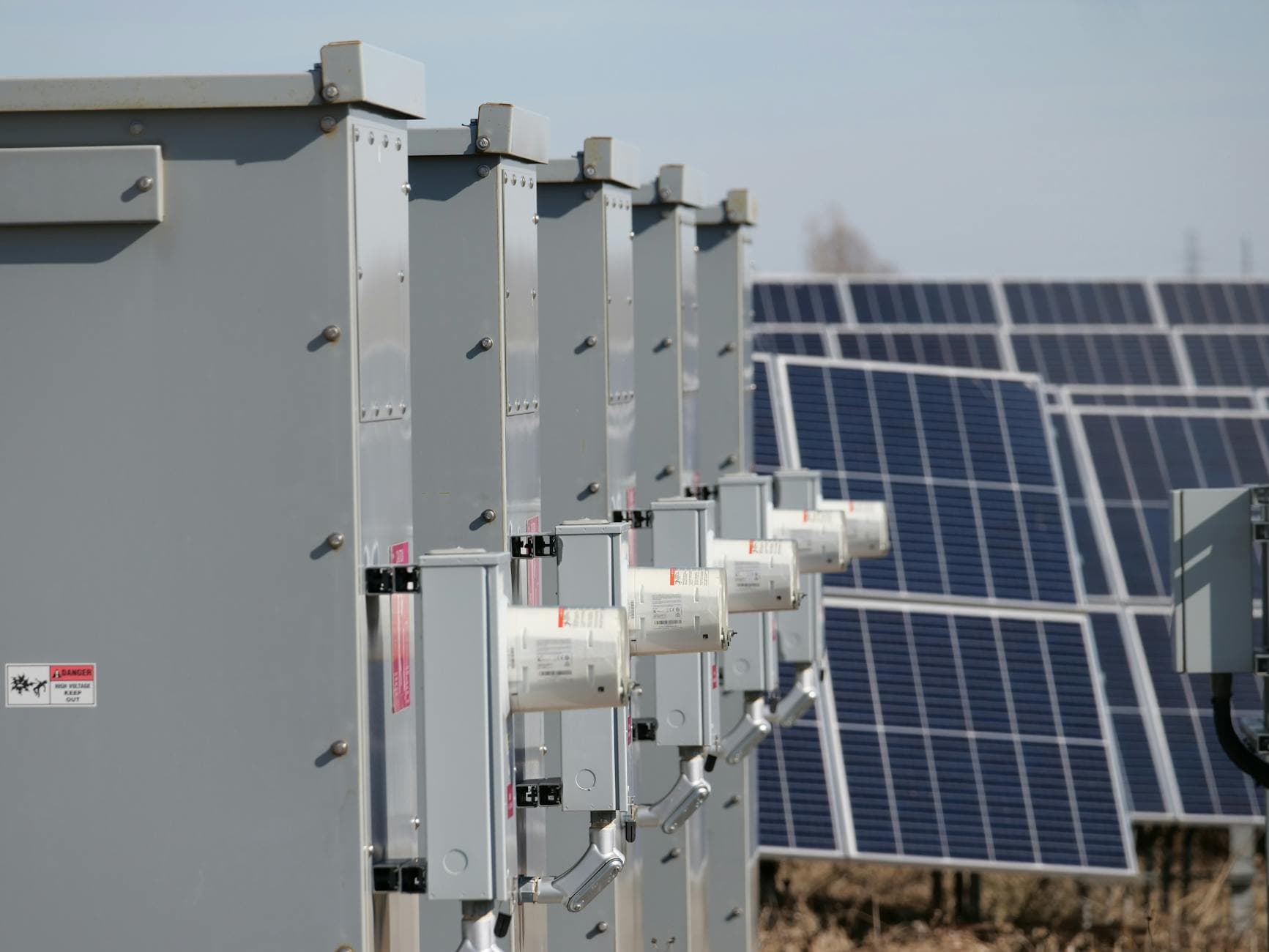
Developers plan to add 43.4 GW of new utility-scale solar capacity in 2026, a 60% increase in capacity additions from last year
, the U.S. Energy Information Administration reported in February. That would shatter the 2024 record of 30.8 GW. Texas alone will account for 40% of the new installations—enough to power roughly 8 million homes. Yet halfway around the world,
industry groups estimate India's tougher grid regime could cut revenue by about 11% for solar projects and as much as 48% for wind farms
, Reuters found. The contrast is stark: one market accelerating, another threatening to choke off the very capital it needs.
The divergence reveals a deeper tension. Renewables are no longer a niche technology. They are the dominant source of new power capacity in most major economies. But integrating intermittent generation at scale requires more than panels and turbines. It demands grid discipline, storage, and regulatory frameworks that can keep pace with physics. This week, three stories—one American, one Chinese, one Indian—illustrate where that balance is holding, and where it is breaking.
Can the U.S. Grid Absorb This Much Solar?
Developers plan to add 24 GW of utility-scale battery storage to the grid this year, compared with a record 15 GW added in 2025
, the EIA noted. Battery deployments are rising even faster than solar, driven by the same force: data centers.
Persistent corporate demand has been central to this unlikely growth, with the rapid expansion of data centers emerging as a pillar of sustained demand
, according to a January analysis by law firm Beveridge & Diamond. AI and cloud computing need reliable, quickly deployable power, and solar-plus-storage delivers it without the permitting delays of new gas plants.
The U.S. added 27.2 GW of new utility-scale solar capacity in 2025, remaining the dominant source of new capacity added to the grid for the fifth consecutive year, with solar and energy storage representing 79% of new capacity installed in the first year of the Trump Administration
, the Solar Energy Industries Association and Wood Mackenzie reported in April. That happened despite the repeal of residential tax credits and new permitting restrictions. The industry's resilience surprised even its own executives. OilPrice.com noted that
solar energy additions were the single largest form of new energy capacity installations for the 28th straight month
as of December 2025.
Storage is the key.
Projects in three states make up the bulk of planned battery storage capacity in 2026, accounting for about 80% of the new U.S. battery storage capacity: 53%, or 12.9 GW, in Texas; 14%, or 3.4 GW, in California; and 13%, or 3.2 GW, in Arizona
, the EIA said. These batteries smooth out solar's intermittency, allowing developers to offer firm capacity contracts that utilities and corporate buyers will actually sign. Without them, much of this solar boom would stall.
Why Are Chinese Solar Giants Betting on Batteries?
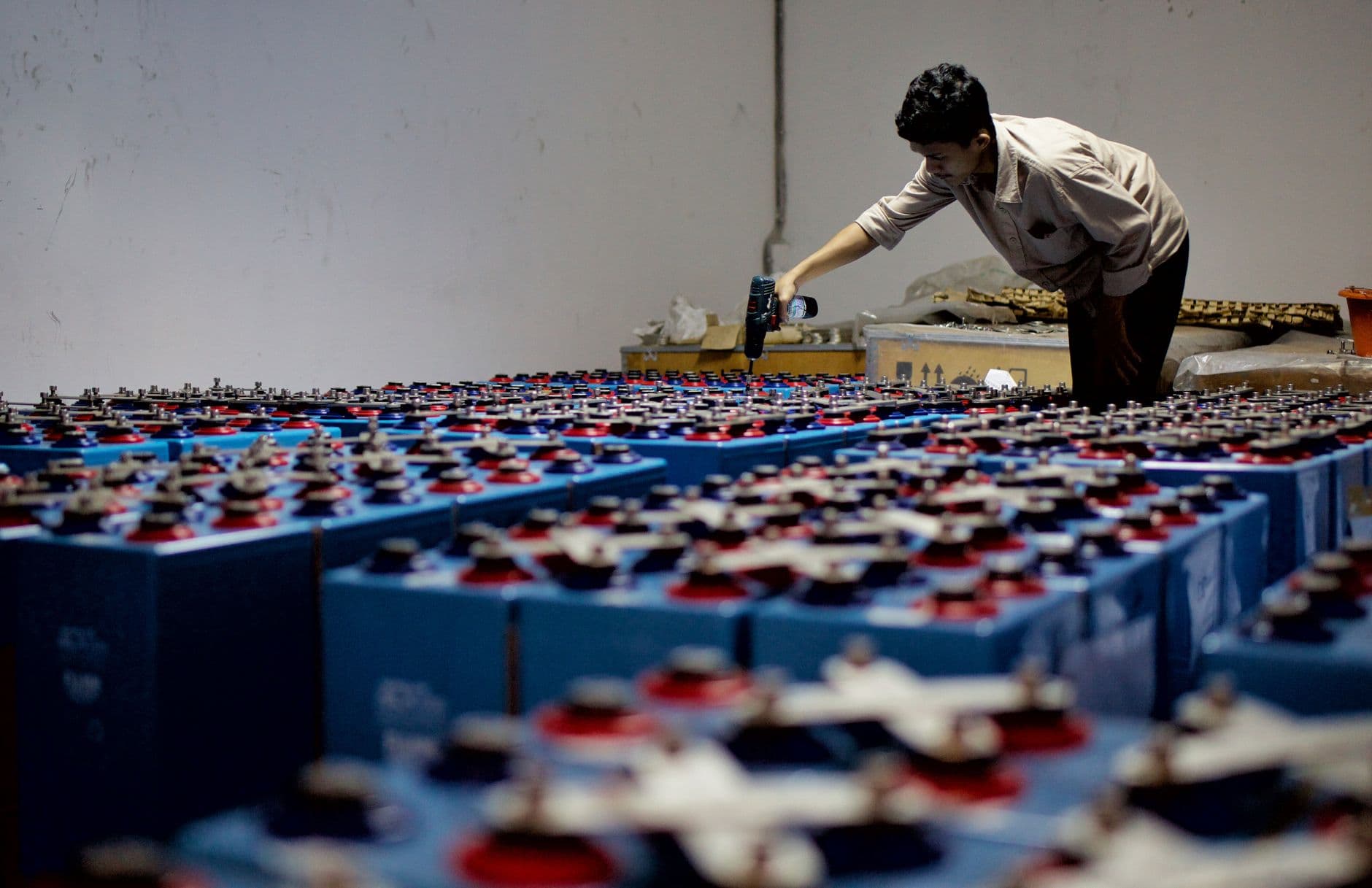
China's major solar panel manufacturers are ramping up higher-margin battery exports to boost revenue as growth in photovoltaic sales slows, betting on rising global demand for renewable energy storage. The sector has been hit by weaker domestic installations, slowing exports and record-low prices, with executives expecting global demand to decline in 2026. That has pushed players including JinkoSolar, JA Solar, LONGi Green Energy and Trina Solar to accelerate expansion into battery storage
, Reuters reported this week.
The pivot is dramatic.
JinkoSolar plans to nearly triple its battery manufacturing capacity from 5 gigawatt-hours to 13-14 GWh by the end of this year
, a company official told Reuters at the SNEC solar industry conference in Shanghai.
Battery exports for energy storage are forecast to jump 30% to 150 GWh in 2026
, according to Rystad Energy. Panel exports, by contrast, grew just 4.7% in 2025—the slowest pace since 2018.
China's solar manufacturers are entering a market dominated by battery giants such as CATL and BYD, but are betting on their supply-chain expertise and ability to offer integrated solar-plus-storage solutions. Such integration has made energy storage "the second growth curve" after photovoltaics
, a Trina Solar official said.
The company's energy storage shipments in the March quarter—about 90% exported—more than quadrupled year-on-year
, the official added.
The strategy makes sense. Solar panels have become a commodity. Margins are razor-thin, and China scrapped its VAT export rebates for photovoltaic products earlier this year, further squeezing profitability. Batteries, meanwhile, still command premium pricing, especially when bundled with panels as turnkey systems.
CATL, the world's biggest battery maker, expects energy storage to account for half of its global sales by 2030, up from 25% now
, driven by the need to support intermittent renewable power.
Will India's Grid Rules Kill Its Clean Energy Boom?
The most-feared regulations, due to take effect in April 2027, sharply increase penalties when renewable power producers fail to deliver electricity matching their commitments to the grid
, Reuters reported.
Under the revised rules, penalties rise according to the gap between scheduled and actual power supplied to the grid. "Developers will face very high penalties even when deviations are small. This tightens margins, revenues will shrink and project viability will be affected," said Debabrat Ghosh, India head at energy consultancy Aurora Energy Research
.
The stakes are enormous.
India seeks to meet its clean energy target of installing 500 gigawatts of non-fossil fuel capacity by 2030. As of March, India had 288 GW of non-fossil fuel capacity, with wind and solar accounting for 73% of the total
. Reaching 500 GW requires sustained capital inflows—exactly what the new rules may deter.
Investors warned about the impact of lower returns, policy unpredictability and financial stress from tighter grid rules, while arguing that regulatory tightening was advancing faster than improvements in transmission infrastructure and battery storage capacity. Because of these challenges, investment in the sector would slow, though Blueleaf remained committed to India because of its long-term renewable energy potential. Blueleaf plans to deploy about $3 billion in India, including around $1 billion in equity over the next three years, but expects grid-related constraints to delay the equity deployment by a further two to three years
, Reuters found.
The irony is sharp. India's regulator argues the penalties are necessary to protect grid stability as renewable capacity expands. But developers counter that the infrastructure needed to comply—better weather forecasting, real-time data systems, and battery storage—lags years behind the regulatory timeline.
Industry executives say weather forecasts in India are typically updated only a few times daily, compared with near real-time forecasting in some European power markets. To adapt, renewable energy companies are investing in upgraded forecasting systems, automated weather stations and data science teams to improve power scheduling accuracy. The industry will need to take other steps, such as adding batteries, said Kartikeya Sharma, co-founder of Sunsure Energy. Sunsure is installing advanced automated weather stations on site and subscribing to real-time, high-resolution satellite weather data from European providers
.
What About Europe's Tax Gambit?
The European Union is developing plans to cut taxes on renewable energy and make electricity systems more flexible as high costs continue to weigh on the region's economy. The European Commission plans to propose a new regulation next month that introduces goals for smart meter adoption and tax changes designed to promote clean energy
, Bloomberg reported Friday.
Recent price shocks tied to the conflict involving Iran are currently draining the bloc's economy by adding an estimated €500 million per day to its import ledger
, the Commission estimates.
Policymakers intend to establish a framework where minimum excise duties for electricity sit comfortably below those levied on natural gas. Furthermore, the draft outlines specific tax relief mechanisms for heavy industry, addressing long-standing complaints from manufacturers that high costs are stifling investment and forcing factory closures
, according to reporting by Bloomberg.
Evidence shows that electricity taxes and levies account for 25% of the price for households, on average. The Commission supports EU countries in reducing such electricity taxes and levies for households
, the Commission said in March.
The proposal is part of a broader strategy to reduce Europe's €340 billion annual fossil fuel import bill.
Although Europe has rapidly scaled up its wind and solar infrastructure, foreign fossil fuels still account for roughly 57% of its total energy consumption
. Tax differentiation—making electricity cheaper than gas—aims to accelerate electrification across transport, heating, and industry. Whether it works depends on implementation. Many EU member states already have the authority to cut electricity taxes but have not used it.
What Changed This Week
The U.S. confirmed it is on track for a record solar year, driven by battery storage and data center demand. China's solar manufacturers publicly acknowledged the panel market is saturated and are racing into batteries to salvage margins. India's renewable sector entered open conflict with its grid regulator, with billions in delayed investment now hanging in the balance. Europe moved closer to using tax policy as a lever to tilt energy economics toward electrification, though the details remain contested.
What to Watch
India's Central Electricity Regulatory Commission is expected to respond to industry pushback on grid penalties in the coming weeks; any softening of the April 2027 rules could unlock stalled projects. The European Commission will release its full tax and electrification proposal in July, including smart meter targets and final language on excise duty floors. In the U.S., watch whether the 3.6 GW SunZia Wind project in New Mexico comes online as scheduled this year—it would be the largest onshore wind farm in the country and a test of whether wind can stage a comeback after years of stagnation. And in China, monitor whether LONGi, JA Solar, and other panel makers can actually compete with CATL and BYD in batteries, or whether their pivot becomes a costly distraction.