Wednesday, June 24, 2026Vol. III · No. 175Subscribe
The Mining, Energy & Technology Wire
Renewables · Analysis

China's $3.6B Bet Meets Shell's Exit

China Resources New Energy is raising $3.6 billion in Shenzhen's largest IPO in four years while Shell prepares to sell its offshore wind farms for $1 billion. Two moves that tell opposite stories about the clean energy transition.
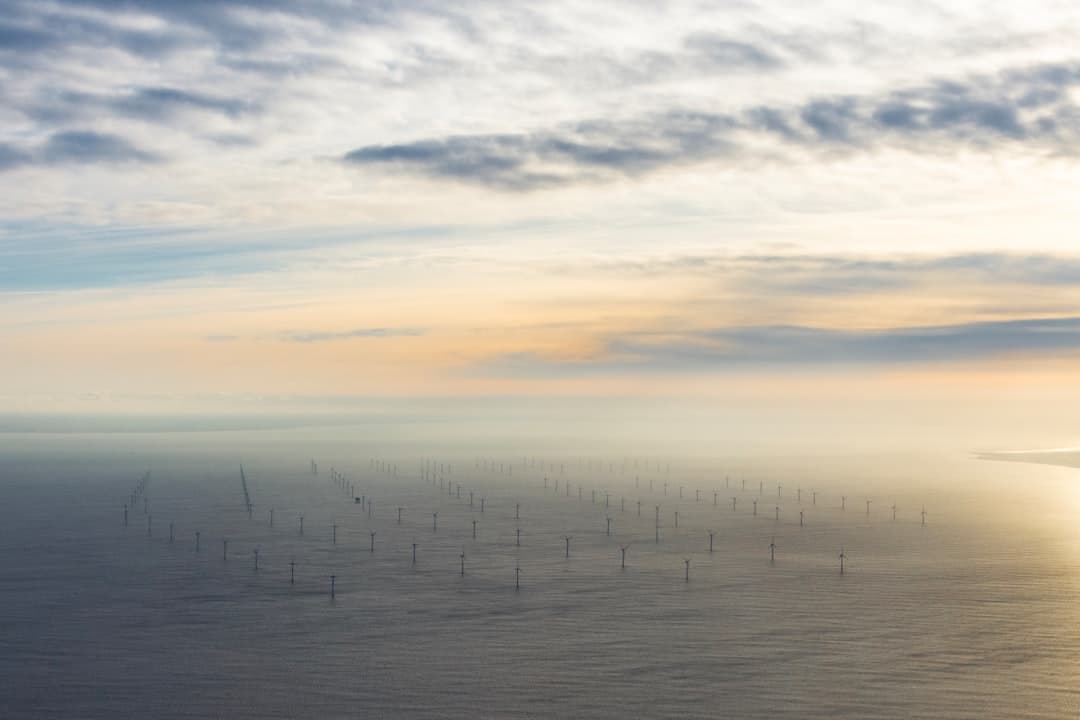
China's $3.6B Bet Meets Shell's Exit
PhotographChina Resources New Energy is raising $3.6 billion in Shenzhen's largest IPO in four years while Shell prepares to sell its offshore wind farms for $1 billion. Two moves that tell opposite stories about the clean energy transition.

China Resources New Energy priced its Shenzhen IPO at 10.11 yuan per share this week, targeting up to 24.5 billion yuan—roughly $3.6 billion—if the greenshoe option is fully exercised.

The offering is set to surpass Yihai Kerry Arawana's $1.9 billion Shenzhen listing in 2020 and become China's largest onshore IPO since Beijing-Shanghai High-Speed Railway raised $4.3 billion in Shanghai in 2009.

Subscriptions opened June 22, with the company planning to sell about 2.1 billion shares, or roughly 16.2 percent of its enlarged share capital.

The stock offering is expected to entrench China's relative insulation from the oil shock by further boosting the share of clean energy in total energy consumption, as renewables had already overtaken crude as the second-largest source of energy in China, according to official statistics. Meanwhile, Shell is preparing to launch a sale of its offshore wind farms in the oil major's latest move away from renewable energy to focus on its higher-returning fossil fuel business, tapping advisers from Rothschild & Co. and PJT Partners to lead the sale, which could fetch over $1 billion.

Can Renewables Compete With Oil Returns?

Shell CEO Wael Sawan has sought to cut costs and offload low-returning assets since taking over more than three years ago, with the plan to sell the offshore farms marking a further departure from the British energy giant's past strategy to diversify into green electricity, with a strong emphasis on wind energy.

Shell once had grand ambitions to be a major player in renewable power, with one executive even floating a goal to turn the company into the world's biggest electricity producer, but those plans were shelved after Sawan took the helm in early 2023 and vowed to focus more squarely on delivering returns for shareholders.

The intended sale follows similar moves including the divestment of Shell's European onshore renewables division and its India-based Sprng Energy business, which it acquired for $1.55 billion in 2022.

The company also walked away from plans to develop offshore wind farms in Scotland last year, and put together, the disposals will leave Shell with little left in its portfolio of green power assets.

The contrast is stark. China Resources New Energy said IPO proceeds will fund investments in wind and solar projects with total planned investment of about 40.4 billion yuan, of which 24.5 billion yuan is expected to be funded by the IPO.

China's renewable power sector needs large, low-cost pools of capital to sustain project development, and the company said IPO proceeds will fund investments in wind and solar projects.

Where Is the UK's Electrification Push Heading?

Britain's clean energy ambitions are running into a stubborn reality: households aren't switching fast enough. Almost half of Brits believe clean technologies such as heat pumps and electric vehicles will shield them from a long-term energy shock that has already impacted the majority of households, according to a poll published June 22. But belief hasn't translated to adoption at the pace the government needs.

The Financial Times reported June 23 that British households are not electrifying fast enough, according to the government's climate adviser, with the report arguing that switching to heat pumps and electric cars would bring down energy bills and avoid price shocks. Much of the UK's housing stock is old, thermally inefficient, and gas-dependent, which makes decarbonising heat one of the most complex infrastructure transitions in Europe, with heat pumps raising three interlinked issues: upfront cost, installation workforce capacity, and grid impact during cold periods.

Heating presents an even greater structural challenge, as gas boilers are replaced with electric heat pumps, leading to winter peak electricity demand rising substantially, and in the UK, a large proportion of buildings will need to transition within the next decade to meet country-wide climate targets—not a like-for-like substitution, but a reconfiguration of seasonal energy demand that places unprecedented pressure on distribution networks.

Is the Solar Trade War Escalating?

A group of American solar manufacturers has filed a petition with the United States Department of Commerce requesting an anti-circumvention inquiry into companies that import solar materials from South Korea, with the group, calling itself American Manufacturers for Energy Resilience (AMER), consisting of three members: Jeffersonville PV Cells Corporation (a wholly owned manufacturing subsidiary of Canadian Solar), SEG Manufacturing Inc. and Heliene USA Inc.

While the petition also names Korean companies HD Hyundai Energy Solutions and Shinsung E&G, AMER is officially requesting a country-wide inquiry that would cover all producers and exporters of CSPV cells operating in the Republic of Korea, with the core of AMER's legal argument being that the companies are performing only "minor or insignificant" processing of the Chinese materials, which AMER alleges constitutes tariff circumvention.

The present request from AMER finds Hanwha Q CELLS on the opposite side of the antidumping argument compared to its role in similar petitions of the recent past, as a member of trade groups called The American Alliance for Solar Manufacturing Trade Committee and the Alliance for American Solar Manufacturing and Trade, Hanwha Q CELLS USA participated as a petitioner in two AD/CVD cases filed in 2024 and 2025. The irony is sharp: yesterday's petitioner is today's target.

Can Africa's Mini-Grids Scale Fast Enough?

WeLight, the operator of more solar mini-grids across Africa than any other company, has secured a strategic investment from the International Finance Corp., giving the World Bank's private-sector lending arm a stake in the business as it eyes expansion into Nigeria and the Democratic Republic of Congo, with the Paris-based firm raising €27 million ($31 million) in a round that also included its founding shareholders, Axian Group Ltd., Sagemcom SAS and Norfund AS.

Six years on, WeLight operates nearly 190 mini-grids across Madagascar and Mali, serving more than 800,000 people. That's impressive growth, but context matters. Renewable energy minigrids, and in particular solar-battery minigrids, offer great potential to address the 733 million people globally—including 567 million in sub-Saharan Africa—who currently don't have access to electricity. WeLight's 190 mini-grids are a drop in an ocean that needs tens of thousands more.

The financing environment remains challenging. Today, the minigrid market in Africa remains nascent, with the private sector facing a range of barriers holding back investment, and except in a few markets, nearly all current investment in minigrids is in the form of grants and noncommercial, patient capital. WeLight's ability to attract the IFC signals progress, but the sector still needs commercial capital at scale.

What About India's Coal Contradiction?

India is boosting the share of domestic coal used in power plants designated to run on imported fuel, as rising local coal production and expanding renewables have helped to cut coal imports to multi-year lows, with India raising the use of domestic coal to 50% at many power plants that have typically run on imported coal, industry and government officials told Reuters on Wednesday.

India, the world's second-biggest coal importer and user after China, has used domestic coal to operate 5.7 gigawatts of capacity at the 18.7-GW plants using imported coal so far this year, with efforts underway to move another 4.3 GW of capacity to using domestic coal.

Between January and May, thermal coal imports into India slumped to a four-year low, as purchases fell by 12% from a year earlier, according to commodities consultancy BigMint.

But here's the paradox: Overall coal-fired power generation and capacity installations in India continue to rise, and coal remains a key pillar of India's electricity mix with about 60% share of total power output, and despite booming renewable capacity additions, India continues to rely on coal to meet most of its power demand as authorities also look to avoid blackouts in cases of severe heat waves. India is simultaneously expanding renewables and coal—not transitioning from one to the other, but scaling both.

What Changed This Week

China demonstrated that state-backed capital markets can still mobilize billions for renewable energy infrastructure, even as a Western oil major walked further away from the sector. The UK's climate advisers acknowledged what the data already showed: household electrification is lagging policy ambition. And the U.S. solar trade war expanded to South Korea, with former allies now on opposite sides of the tariff battle. India, meanwhile, proved that the energy transition isn't linear—cutting coal imports while burning more coal overall.

What to Watch

China Resources New Energy's offering began price consultations on June 16, with subscriptions scheduled to open on June 22. Watch whether the IPO meets its full $3.6 billion target when final numbers are released. Shell's offshore wind sale process could kick off as soon as the end of this year, with a sale likely to take place in 2027. The Commerce Department's decision on the South Korea solar petition will signal whether the U.S. is tightening or loosening trade enforcement. And in the UK, the government's response to its climate adviser's warning on household electrification will reveal whether policy will shift from targets to mandates.

Original reporting and analysis by the Stake & Paper editorial team. See linked sources within the article.

Share this story

More from Stake & Paper

Was this article helpful?

ClaimWatch

Mining claims intelligence — from query to report, in minutes.

Every unpatented mining claim across all twelve BLM states. Leadfile audits, due diligence, site selection, regional prospecting, entity investigations, and AOI monitoring — delivered as complete report packages.

4.4M+
Claims Tracked
12
BLM States
7
Report Types
Request a Sample Report
Stake & Paper AM

One morning brief. The whole energy sector.

Original analysis, the day's most important wire stories, and market data — delivered before your first cup of coffee. Free.