Correction, 9/22/2026. An earlier version said crude prices rose about 30 percent between February and April and corn about 5 percent. EIA's monthly WTI spot averages show a rise of about 55 percent; the corn figure could not be verified against USDA data and has been removed.
Correction, 9/21/2026. An earlier version said Coastal Virginia Offshore Wind delivered its first electricity "last month." Dominion Energy switched on the first turbine in March 2026.
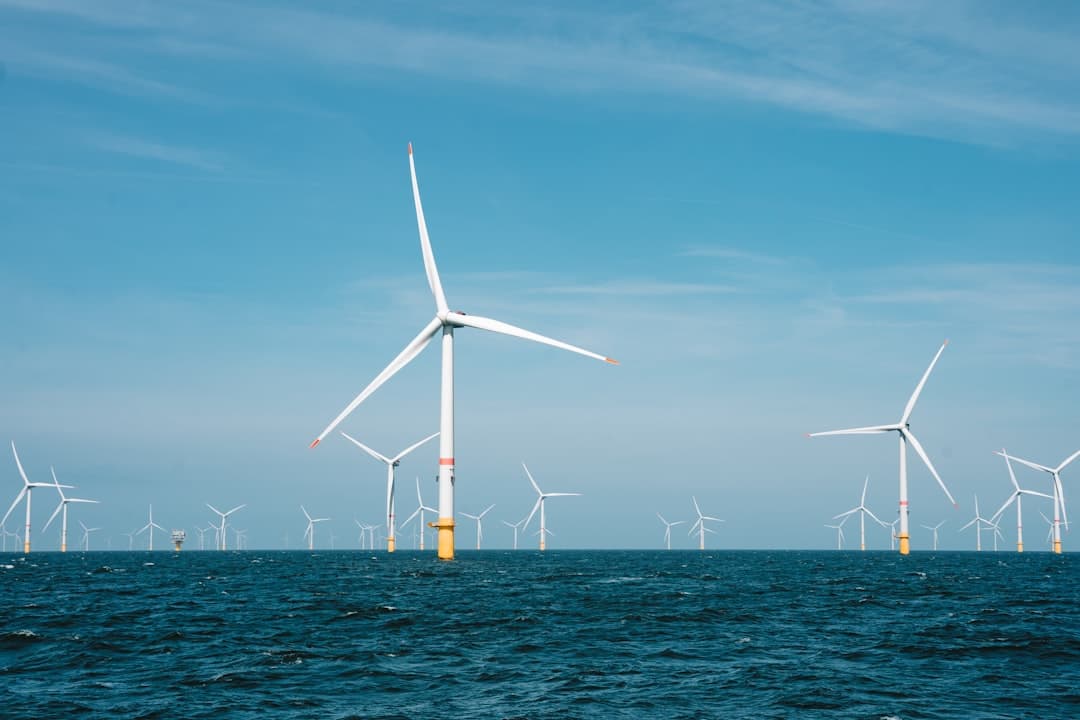
Five federal judges said no. By early February, courts had struck down all five stop-work orders the Trump administration issued for offshore wind projects under construction , clearing projects that will provide enough power for roughly 2.5 million homes and businesses on the East Coast . The Interior Department quietly let the final deadline for appealing the courts' decisions lapse in late March, according to Grist. The legal victories mark a rare clean energy win in an administration openly hostile to wind power—and they arrive just as AI data centers and geopolitical chaos are forcing a broader reckoning over where electricity will come from.
Several courts ruled that the suspension orders and other executive actions announcing or implementing the Administration's offshore wind policies were unlawful , with one Massachusetts judge calling the federal government's suspension "irrational," the East End Beacon reported. The projects—Revolution Wind, Coastal Virginia Offshore Wind, Empire Wind, Vineyard Wind, and Sunrise Wind—had been halted in December on national security grounds. The suspension orders were sent with no notice or prior hearing and provided no reasoning other than the assertion of "impacts to national security from offshore wind projects," according to legal analysis from Jones Day. Developers haven't wasted time: Revolution Wind delivered its first electricity to the New England grid in mid-March, and Coastal Virginia Offshore Wind is about 70 percent complete and delivered its first electricity in March .
The court wins may have broader implications. Senator Sheldon Whitehouse, a Democrat from Rhode Island leading bipartisan permitting reform talks, told congressional Republicans and the Trump administration that negotiations would only resume if the Interior Department declined to appeal the court injunctions for the offshore wind projects . A potential thaw on offshore wind might benefit the president as he tries to manage the fallout from the Iran war, which has sent gasoline prices soaring and contributed to fears of an energy shortage around the world , Grist noted.
Can Biofuels Fill the Gap Left by Middle East Oil?
The same geopolitical crisis driving permitting talks in Washington is reshaping fuel markets in Asia. Interest in biofuels is reviving in 2026, driven by significant price volatility of fossil fuels; the U.S.-Israeli war on Iran and the resulting closure of the Strait of Hormuz have led to energy shortages and driven oil prices sharply higher in recent months , OilPrice.com reported. Between February and April, crude prices rose by about 55 percent, based on EIA's monthly WTI spot averages .
The math is simple: when oil spikes and feedstock stays cheap, biofuels become economically attractive. In October 2025, the government of Indonesia proposed to make biodiesel containing 50% palm oil, known as B50, mandatory by 2026, aiming to reduce imports of gasoil , according to Global Market Insights. Vietnam is switching fully to ethanol-blended gasoline, OilPrice.com reported. A biofuels analyst from Kpler explained, "In Asia, countries do look at biofuels that can be produced from locally sourced feedstocks, as they can reach two goals at once - limit energy imports and increase profitability for farmers" .
Europe remains skeptical. The energy and climate director at Transport & Environment warned that increasing reliance on biofuels could exacerbate geopolitical challenges: "Governments are playing a dangerous game by promoting food for fuel. Leaders are understandably trying to find solutions to the current oil crisis, but biofuels can never play more than a marginal role in our energy system without devastating consequences" . The think tank warns biofuel demand could rise up to 70% by 2030 if oil supply stays constrained, risking a food price crisis .
The Asia-Pacific biofuel market tells a different story. The market was valued at $32.97 billion in 2025 and is expected to reach $70.21 billion by 2032, growing at a CAGR of 11.4% , according to Precision Business Insights. The aviation sector's decarbonization goals are catalyzing demand for Sustainable Aviation Fuel across Asia Pacific; countries like Japan, Australia, and Singapore are investing in SAF production infrastructure, and Japan launched its first commercial SAF plant in April 2025 .
What Happens When AI Meets a Creaking Grid?
The offshore wind court victories arrive at a moment when electricity demand is surging faster than anyone predicted. The Electric Power Research Institute estimates that data centers could grow to consume up to 9% of U.S. electricity generation annually by 2030, up from 4% of total load in 2023 , the Department of Energy reported. By one estimate, the energy consumption of data centers could approach 1,050 TWh by 2026, which, if data centers were a country, would make them the fifth largest energy consumer in the world, between Japan and Russia , according to Brookings.
The collision between AI's appetite for power and the grid's capacity is creating strange bedfellows. In 2024 alone, Big Tech companies accounted for 43% of all clean energy power purchase agreements signed globally, and PPA prices rose by an average of 35% in 2024, driven largely by this surge in procurement from large AI developers . Yet while renewable energy continues to dominate total planned capacity, there has been an increase in natural gas planned capacity from 11.1 percent in 2024 to 18.1 percent in 2026—notably, planned non-renewable additions surged by 71 percent from 2025–2026, while renewable growth flattened to just 2 percent over the same period , the American Action Forum found.
The Financial Times headline captured the tension: "US clean power prices set to soar as AI demand coincides with subsidy cuts." Analysts estimate that this capacity spike will add 10–20% to the average bill in the 13 states that make up the PJM Interconnection—a regional grid serving about 65 million people across the Mid-Atlantic, Midwest, and parts of the South , Forbes reported. Large 24/7 power plants take 5 to 10 years to build, yet data centers are coming online within 24 months; by dumping on renewables, the administration is effectively creating a "generation gap"—a dangerous mismatch between when new power is needed and when the administration's preferred sources can actually deliver it .
Europe faces its own version of the problem, but from the opposite direction: too much renewable capacity and not enough grid to handle it. A new report by energy think tank Ember found that one in every two grid operators has "insufficient grid capacity" to connect upcoming wind and solar projects to the grid—including rooftop solar panels , Euronews reported. Across the 17 countries that report their grid capacity, more than two-thirds of new wind and large-scale solar planned by 2030 are currently at risk, and insufficient grid capacity could delay 16GW of rooftop solar installations, impacting more than 1.5 million households across Europe .
Several European countries are producing more renewable energy than the grid can handle, often paying to shut down wind turbines and resorting back to polluting fossil fuels; the UK spent £1.47 billion last year switching off turbines and paying gas plants to switch on , according to Euronews.