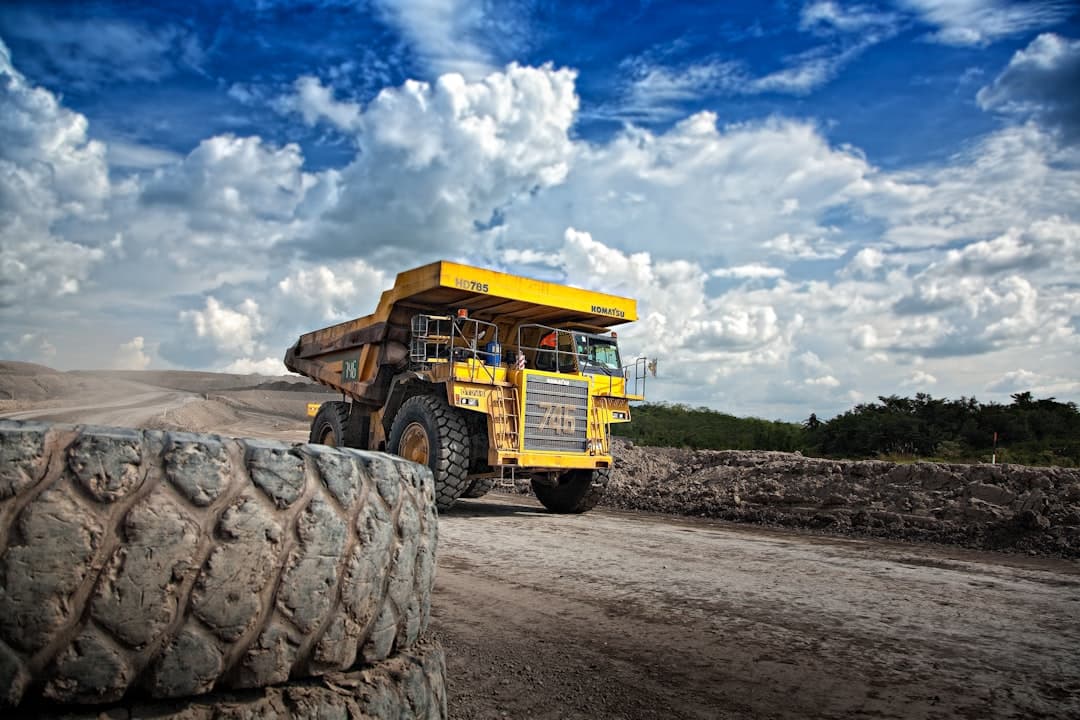
Sandvik and Rio Tinto announced this week they're jointly developing autonomous drill rigs that combine Rio Tinto's remote operations experience with Sandvik's AutoMine technology, starting with support drilling in Western Australia's Pilbara region . The machines will be controlled from Rio Tinto's Perth Operations Centre—hundreds of kilometers from the actual drilling. Testing begins at Sandvik's facility in Finland before moving to Rio Tinto's Australian sites .
This isn't a pilot. Autonomous drilling systems have already demonstrated productivity improvements of up to 30 percent compared to manual operations over more than a decade of deployment, according to Worley . What's changed is the scale. As of January 2026, AI has transitioned from a niche luxury for top-tier miners to a foundational operational requirement across the global sector, AzoMining reported . The question is no longer whether automation works—it's who controls the electrons powering it.
Can Mines Run Without People on Site?
Modern sites adopting end-to-end autonomous workflows are reporting up to 40% productivity gains, owing to fewer unplanned shutdowns, faster cycle times, optimized ore haulage, and higher equipment uptime . The gains come from consistency, not speed. Autonomous systems can operate around the clock without breaks, leading to higher productivity and faster drilling times , but the real value lies in precision.
Navigation in underground settings, where GPS signals are unavailable, depends on inertial navigation systems and LiDAR-based odometry—gyroscopes and accelerometers track position and orientation, providing accurate localization in GPS-denied environments . These systems integrate AI and machine learning to execute drilling cycles, using data from mine planning software like iSURE to optimize drilling patterns and adapt to real-time conditions .
The technology is maturing fast. The Asia-Pacific region holds a 40% share of the AI in mining market as of early 2026, driven by China's massive investment in "smart coal mines" and Australia's leadership in autonomous extraction . But deployment isn't frictionless. A reliable, high-bandwidth wireless network such as LTE is non-negotiable—it's the backbone for low-latency data transmission between equipment and control systems, along with high-precision navigation requiring a stable Global Navigation Satellite System supported by local RTK base stations for accurate hole placement .
What About the Energy to Power the AI?
Here's the paradox: AI is automating energy extraction while consuming unprecedented amounts of energy itself. Global electricity demand from data centers grew by 17% in 2025, while electricity consumption from AI-focused data centers surged 50% , the IEA reported. Capital expenditure from just five technology companies exceeded $400 billion in 2025 and is expected to jump by another 75% in 2026—now larger than global investment in oil and natural gas production .
The constraint is no longer capital. It's control over electrons—the quarter AI infrastructure became constrained by energy , according to analysis from Global Data Center Hub. Morgan Stanley Research forecasts U.S. data center demand could reach 74 GW by 2028, with a projected shortfall of about 49 GW in available power access . That's roughly equivalent to adding 49 nuclear power plants in two years.
Energy companies are responding by embedding AI into their own operations. AI-powered digital twins and predictive analytics tools are moving from niche applications into core operational use across factories and energy assets, as artificial intelligence enters a more operational phase in 2026 , Hanwha reported. Analyses of predictive maintenance deployments cite reductions of roughly 35% in unplanned downtime, 20% in maintenance costs, and measurable increases in asset uptime when AI is used to flag issues before equipment fails .
The applications are getting more sophisticated. AI-equipped satellites and sensors can detect incidents in critical energy infrastructure 500 times faster than traditional ground-based methods and at high spatial resolutions , the IEA noted. AI systems continuously monitor the health of critical energy infrastructure and better plan for maintenance needs—this proactive approach can reduce equipment downtime by up to 50% and lower maintenance costs by 10% to 40% , according to Brookings Institution research.