In September the EPA announced it will relinquish its authority to regulate greenhouse-gas emissions from power plants under the Clean Air Act — the same tool the Biden administration used in 2024 to force the country's coal fleet to capture most of its carbon output or shut down by 2039. Bloomberg reported via Insurance Journal that the rescission was expected "as soon as Monday," as of September 15, 2026, timed to land on the sidelines of a G20 energy ministers' meeting in Houston. OilPrice.com, in its own coverage, described the move as clearing "the way for more coal and gas emissions despite warnings from its own scientists."
That is the federal story. It is not, this week, the important one. BloombergNEF's fund-tracking data shows that for every $1 public-market funds spent on oil, gas and coal projects at the end of 2025, 0.8 went to low-carbon energy — up from 0.73 at the start of 2024. Washington is dropping its climate lever at precisely the moment private capital keeps tilting, unprompted, toward the cleaner side of the ledger. That gap between political retreat and financial advance is the story.
Power plants remain the country's largest industrial source of greenhouse gases, and NRDC put a number on the stakes: "the largest industrial source of those emissions with more than 1.5 billion tons emitted each year." If the U.S. power sector were its own country, an analysis cited by Bloomberg found, "If the US power sector were a country by itself, it would rank as the world's sixth-largest emitter of greenhouse gases," Some utilities pushed for the rollback anyway, telling Bloomberg the Biden-era standards were "unrealistic and not economically achievable," Environmental lawyers disagree sharply. "This is a transparent giveaway to fossil fuel polluters, and the courts should see it that way," said Maggie Coulter of the Center for Biological Diversity. NRDC, the American Lung Association, the American Public Health Association, Clean Air Council, Clean Wisconsin and the Environmental Defense Fund sued the agency on September 17, 2026 at the D.C. Circuit. "The Clean Air Act and Supreme Court precedent demand that the EPA address climate pollution from the largest industrial source in the nation. The EPA's legal reasoning is fatally flawed, so we are going to court," said NRDC's Meredith Hankins. Vickie Patton of the Environmental Defense Fund went further: "This unlawful rule seeks to remove our national limits on climate pollution from power plants at a time when more Americans than ever are suffering from the dangerous heat and more powerful storms," NRDC's own modeling adds another warning: the repeal, the group argues, "will destroy $700 billion in new power sector investments over the next decade, raise consumer bills by more than $30 billion a year by 2035, and reduce by half the power sector carbon reductions likely before its policies took effect." NRDC president Manish Bapna put it plainly: "Instead of fighting for a safer, healthier future for our children and grandchildren, the Trump EPA is desperately trying to keep the expensive status quo that favors polluters over public health and safety,"
That is a real cost, and it is a genuine case against the decoupling thesis. If Washington's guardrails actually shaped investment decisions, NRDC's numbers say the industry will feel it. But the fund data suggests the guardrails were never doing most of the work. Credit funds now enable $1.2 of low-carbon capital for every $1 flowing to fossil fuels — a cleaner tilt than equity funds show — and private markets post the highest ratios of all, just over 1.2. Grid spending by fund-backed portfolio companies alone hit $36 billion, and BloombergNEF found Vanguard and BlackRock "dominate enabled energy capex in public market funds," enabling more energy capital between them than the rest of the top ten managers combined. None of that required a Clean Air Act rule. It required a spreadsheet.
The physical build-out backs this up. BloombergNEF tallied $327.5 billion in global renewable investment for the first half of 2026 — flat against the prior half but down 21% from the peak reached in the second half of 2024. Standalone utility-scale solar financing sank 20% to $75.4 billion, "the lowest investment volume seen since the solar boom began in 2021." according to BloombergNEF. That is a genuine slowdown, and it deserves to be named as one. But co-located solar-and-storage financing hit a record $25 billion, nearly double the prior half and triple the same period a year earlier — capital didn't leave the sector, it moved inside it. And BloombergNEF's own conclusion resists the doom framing: "show that the broader growth story for renewables remains intact despite policy changes in key markets like the US and China." U.S. investment rose 54% year-on-year as developers raced tax-credit deadlines and data-center demand, with solar up 41% to a record $45.8 billion and wind more than doubling to $13.8 billion. Market data over the past year tells a similar story sideways: the Invesco Solar ETF has moved little on net even as headlines about federal retreat piled up, a sign the equity market had already priced politics as noise against the demand curve.
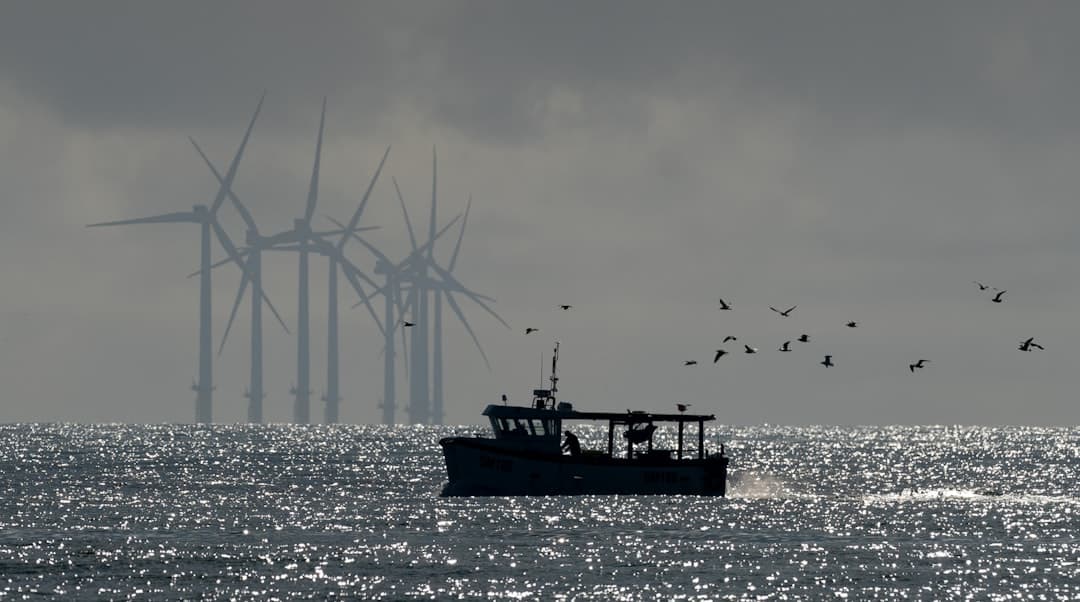
Europe supplies the cleanest test case, because it faces no equivalent of an EPA rollback. WindEurope logged 8.8 GW of new capacity in the first half of 2026, up 30%, putting the continent on pace for what the group calls a record year. The turbines installed in that half alone "can generate enough electricity to power around 7 million European households and replace fossil fuel imports equivalent to 25 LNG tankers a year." National governments awarded more than 17 GW in auctions and plan to tender 26 GW more before year-end — "Europe has never auctioned more new wind in a single year." WindEurope said. The group now expects 436 GW of installed capacity across Europe by 2030, with 342 GW in the EU alone covering 27% of the bloc's electricity demand. Germany permitted more than 9 GW of new onshore wind in the same stretch. None of this bent to Washington's calendar.
Even inside Washington, the politics have started to bend toward economics rather than the reverse. The Senate is nearing a permitting deal, Reuters reported, "after the White House compromised on how renewable energy is treated," Senators Sheldon Whitehouse and Martin Heinrich resumed talks with Republicans months after Trump halted five nearly finished offshore wind farms; Whitehouse told reporters "I appreciate very much what the Trump administration has done to move in this direction," A White House spokesperson said the administration "is actively working to pass historic permitting reform to help improve energy infrastructure and lower costs." Reuters was blunter: "In his second term as president, Trump has hindered the expansion of clean energy technologies that were a cornerstone of former President Joe Biden's climate policy," Yet the same reporting notes that utilities, renewable developers and oil-and-gas trade groups are jointly pressing lawmakers to finish the bill this year — an alliance that exists only because all three now need the same transmission lines and the same permits, regardless of who occupies the EPA.
Read together, these threads point the same direction. The EPA can walk away from carbon rules, and NRDC will fight it in court for years. Neither side of that fight controls what BlackRock's portfolio companies build, what German auctions award, or what a data center in Virginia needs to keep its lights on. The climate rule was always a lagging indicator of where capital was headed, not a leading one. Washington just made that arithmetic easier to see.