Satellites Find Leaks. EPA Would Look Away
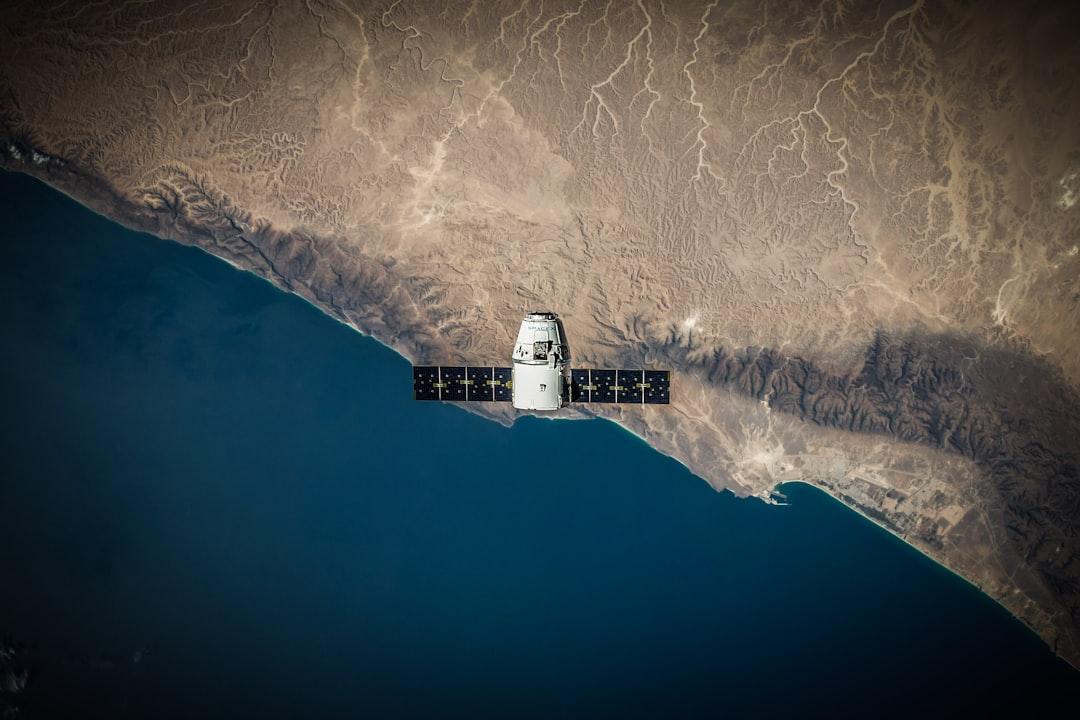
Satellites can now trace a methane plume to one facility within hours. The EPA wants to drop the federal rule that forces operators to investigate, and states and investors are stepping in.
In late August, satellite data flagged a large methane plume over the Midway-Sunset oil field, southwest of Bakersfield. The California Air Resources Board notified the operator. The operator found the source at a flange on top of a storage tank, and repairs were done that same day, according to the state.
That is the loop the technology promises: see the leak from orbit, name the facility, send someone with a wrench. The Environmental Protection Agency now proposes to remove the federal version of that loop. If the proposal survives, a satellite will be able to identify a leaking site within hours, and no federal rule will require the owner to go and look.
A rule that never started
The Super Emitter Program was designed to let EPA-certified third parties use satellite imagery, aerial surveys and other remote sensing to identify large methane releases from oil and gas facilities, Beveridge & Diamond explains. Under the 2024 rule, those parties may report emissions of at least 100 kilograms per hour to EPA. EPA then notifies the potentially responsible operator, who must investigate, report findings and take certain corrective actions.
It has not yet taken effect. EPA delayed implementation in 2025 until January 22, 2027. On October 29, 2026, the agency opened comment on a proposal to rescind what the rule calls the "Super Emitter Program," Beveridge & Diamond reports. Harvard's Environmental and Energy Law Program records that the same proposed rule would end requirements for routing associated gas to sale and exempt low-producing wells.
EPA's reasoning, as relayed by Taxpayers for Common Sense, rests on difficulty identifying responsible operators, limited participation by outside organizations and doubts about its own legal authority. It also questions whether the program would find actionable events, citing "insufficient evidence of the nature and duration of super-emitter events."
Rescinding the program would leave the existing leak detection, repair and reporting requirements in place, Beveridge & Diamond notes. Taxpayers for Common Sense makes the sharper point: other emissions requirements could still apply to a release, but the specific mechanism that compels an investigation would disappear.
What the sensors see
EPA's complaint about duration is where the science is most interesting. Space.com described a study published December 11 in Science, led by Dylan Jervis, that analyzed plume observations collected in 2023. The team estimated annual emissions from 3,114 oil, gas and coal facilities worldwide at about 9 million tons (8.3 million metric tons) per year, Space.com reported. Jervis said the countries with the largest oil and gas methane emissions measured are Turkmenistan, the U.S., Russia, Mexico and Kazakhstan.
The study also describes why the problem is hard. Oil and gas sites emitted detectable methane in only about 16% of observations on average, against about half the time for coal facilities. That intermittency makes oil and gas leaks especially difficult to catch with infrequent monitoring, Space.com reports. Jervis added that the satellite measurements agree moderately with bottom-up inventories at country level, but very little at 0.2 degree by 0.2 degree resolution, about 20 by 20 kilometers.
Hence the case for frequent, facility-level looks. GHGSat, founded in 2011 and based in Québec, says it observes sites at a daily cadence and delivers alerts within hours. A flare-up that lasts a day will not show up in a quarterly survey. It will show up in a daily one.
Who gets the paperwork
EPA's own numbers frame the trade. It projects approximately $45 billion in economic benefits over 2027–2050 from the proposed revisions, plus approximately 210 million barrels of oil and 1.41 trillion cubic feet of natural gas in added U.S. production, per Beveridge & Diamond. It estimates operators would save approximately $2.5 billion a year in compliance costs under its marginal-well approach, and approximately $2.3 billion under the conventional-well alternative, Taxpayers for Common Sense says.
The agency also estimates an additional 60 million short tons of methane emissions between 2027 and 2050 for low-producing wells, and 88 million short tons under the alternative for conventional wells. Taxpayers for Common Sense cautions that those estimates do not cover every change, including elimination of the Super Emitter Program. Legis1 relays EPA's statement that wells producing 15 barrels of oil equivalent per day or less make up approximately 78%-80% of existing U.S. wells but represented approximately 7% of total U.S. production in 2024.
The politics follow familiar lines. Legis1, citing NPR, reports that the American Petroleum Institute backed the proposal as a fix for compliance challenges, while the Environmental Defense Fund argued that capturing gas rather than losing it could offset compliance costs. Citing Reuters, Legis1 says Sierra Club campaign director Mahyar Sorour called the proposal a giveaway to fossil fuel executives. A March 2025 memo from EPA's enforcement office had already said "enforcement and compliance will no longer focus on methane emissions from oil and gas facilities." Harvard's program also records that Congress barred EPA from collecting the Waste Emissions Charge until 2034. Comments are due December 16, 2026, and a virtual hearing is set for November 16, 2026.
Filling the gap
California has built its own loop. Its Satellite Methane Program runs on a partnership with Carbon Mapper and Planet Labs PBC. The satellites pass over the state four to five times a week and can recheck a leak's status, so officials can watch repairs progress. Beveridge & Diamond notes that under California's 17 CCR § 95669.1, operators notified of plumes through approved remote-monitoring technology generally must inspect within five calendar days.
The results are accumulating. Last November the state said the program had helped resolve 10 major leaks in its first six months. Its tally now stands at 50 large leaks: 20 at oil and gas facilities and 30 at landfills. Governor Gavin Newsom, highlighting the October 27, 2026 launch of a second satellite, Tanager-2, said: "We're finding methane leaks and getting them fixed." His office describes the program as a real-world, non-research use of the technology. In New Mexico, Governor Michelle Lujan Grisham declared that the state's "methane rules will remain firmly in place," according to Beveridge & Diamond.
Capital is moving too. GHGSat said in a release dated November 5, 2026 that Mitsubishi Electric Corporation, MUFG Bank and Climate Investment invested in its convertible notes in October 2026. Climate Investment manages $1.8bn of committed capital and was founded by member companies of the Oil & Gas Climate Initiative. MUFG says satellite data could make decarbonization efforts more transparent and help create fair markets. GHGSat's tip-and-cue service, with Mitsubishi Electric as prime contractor, was also selected for a JOGMEC technology verification project.
The Environmental Defense Fund has gone to court as well, filing a petition on June 8, 2026 challenging EPA's April final rule on oil and gas methane in the D.C. Circuit.
The flange at Midway-Sunset was fixed the day the state asked. What the rest of the country gets, once the comment period closes, depends on whether anyone is still obliged to ask.