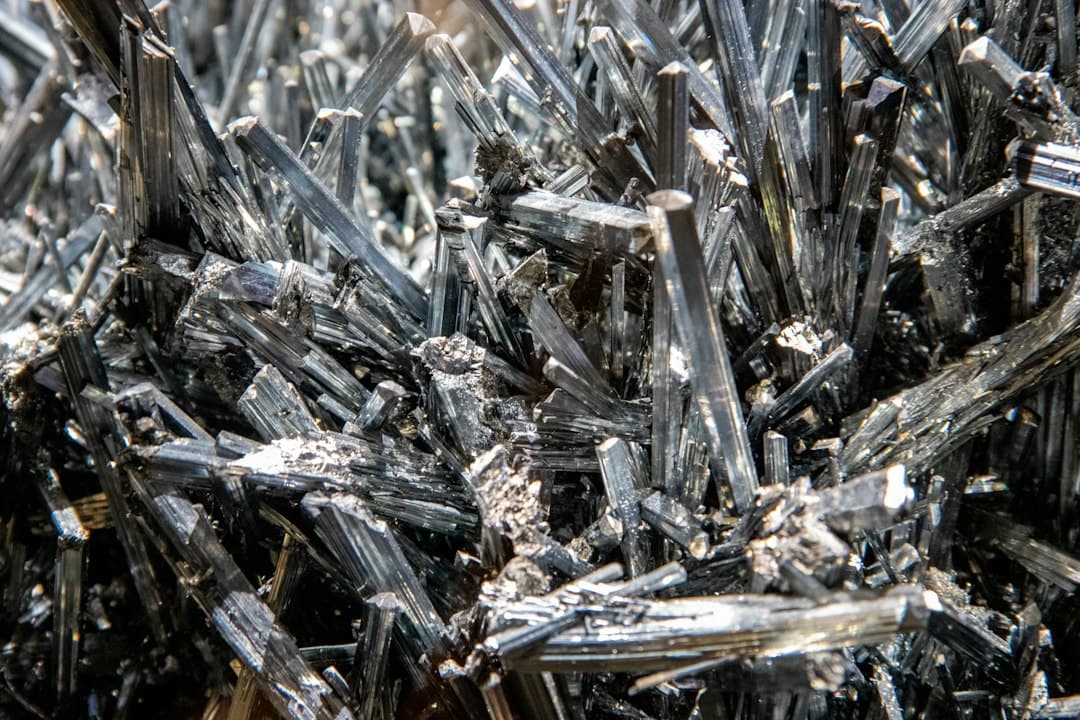
A basic drill assay for total lithium "gives you an overall average, but tells you nothing about the physical texture" of the ore, writes mining consultant Nicholas Vafeas — it cannot tell you whether that lithium sits in clean spodumene crystals a plant can process, or in "a mushy pocket of mica and fine alteration that will blind your processing screens." The number on the report looks identical either way. What happens on the processing floor does not.
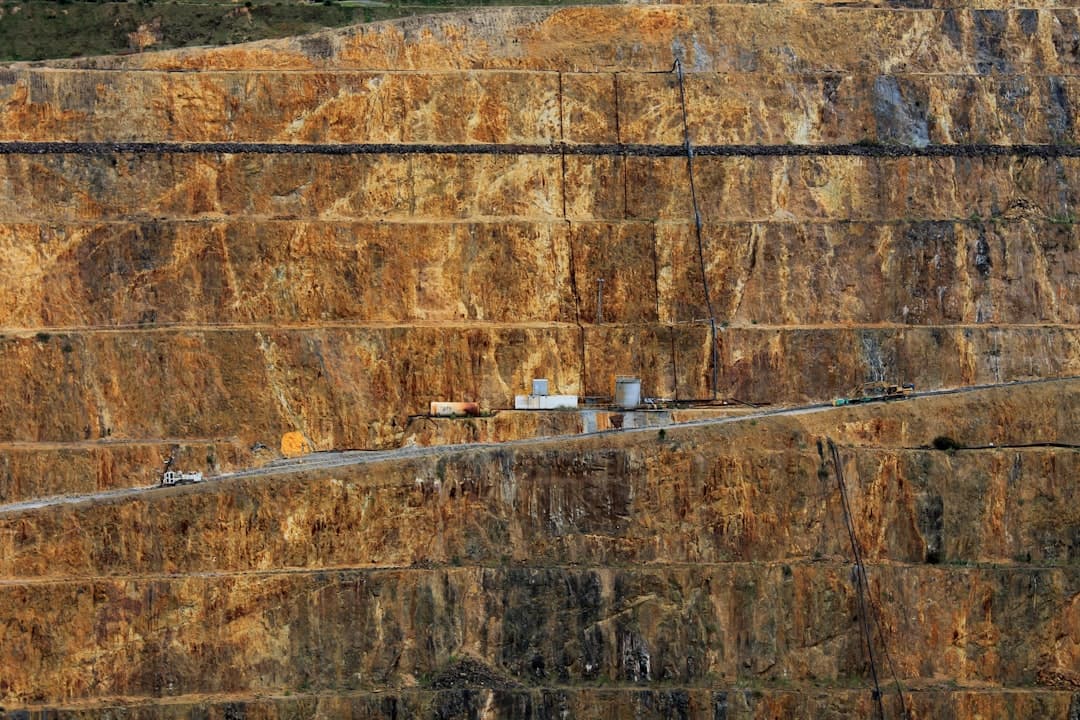
Vafeas, founder of BluMelt Mineral Consulting, laid out that distinction in an op-ed for MINING.COM, and the timing matters. Lithium-cesium-tantalum pegmatites have become the preferred hunting ground for governments trying to wean battery supply chains off brine, because, as Vafeas puts it, "in the modern critical minerals rush, lithium-cesium-tantalum (LCT) pegmatites have taken centre stage as governments look to carve out a share of a market still dominated by brines." But the very geology that makes these deposits attractive also makes them treacherous. LCT pegmatites are "highly zoned ore bodies" built by repeated cycles of heat and fluid, which means, in his words, "the rock you drill at Section A is almost never identical to the rock you process at Section B." A grade that holds at one end of a pit can vanish twenty metres away.
Vafeas doesn't limit the warning to lithium — he cites Magnum Mining's Buena Vista iron project in Nevada as "a painfully fresh example of the impact that poor mineralogical understanding can have on processing behaviour, turning a promising asset into an operational headache," — but he turns much of his attention to Patriot Battery Metals' Shaakichiuwaanaan project in Quebec, which he calls "one of North America's most significant and strategically vital hard-rock lithium discoveries." That project is now racing toward a construction decision backed by two prominent battery industry players. Whether its ore behaves the way its feasibility study assumes is the question Vafeas thinks nobody has answered yet.
Two precedents, one lesson
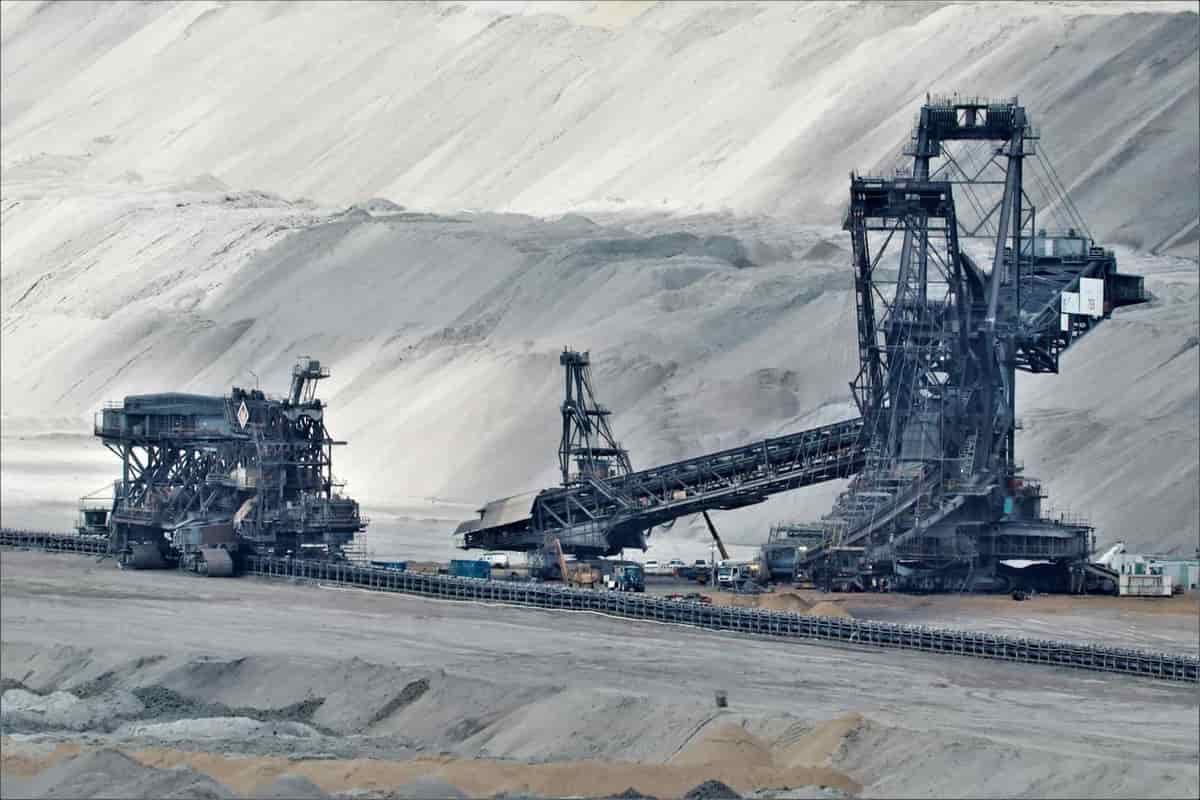
The industry has been burned by this before. At Western Australia's Mount Marion, a hybrid processing circuit combining dense media separation and flotation "suffered from a flawed mineralogical assumption regarding lithium distribution," according to the op-ed. As mining advanced, unexpected zones of fine-grained spodumene and high mica content changed how the ore behaved. Because micas "break down into platy flakes and alter the density of the heavy medium slurry," they dragged concentrate grades down, forcing the joint owners — Mineral Resources and Jiangxi Ganfeng Lithium — into "expensive retrofits and processing modifications just to meet commercial specifications." the op-ed notes. Mount Marion still typically produces spodumene concentrate around 5% and 3.5% Li2O, according to Mining Weekly, and this year MinRes and Ganfeng took a fresh final investment decision, in May 2026, to bolt on a proper flotation circuit "to recover fine spodumene currently transferred to tailings." per Mining Weekly. The upgrade is meant to lift plant recovery toward 70% and raise capacity from about 500,000 tonnes a year of SC6 to 600,000 t/y, Mining Weekly reported — a fix arriving years after the ore first surprised the flowsheet, at a moment when MinRes was still working through A$5.8 billion in debt and a market capitalization that had sunk to A$4.6 billion, MINING.COM reported.
Canada's Tanco mine offers an older version of the same story. For decades operators there relied on "a rigid academic model" assuming a uniform 60% spodumene to 40% quartz ratio. That assumption "was exposed in spectacular fashion" once iron inclusions and phosphate minerals turned up that the model had missed. Discovered in the late 1920s and first mined in 1929, Tanco has cycled through commercial spodumene and tantalum production, a nine-month suspension in 1973, a full shutdown at the end of 1982 after tantalum prices collapsed from a peak of $118 a pound, and eventual sale to China's Sinomine Resource Group in 2019 for $135 million plus a lithium royalty. The mine still holds 82% of the world's known pollucite reserves, per Tancomine — proof that a deposit can be genuinely world-class and still take a generation to understand.
The block model gap
Vafeas credits Patriot's Feasibility Study with "a clean, detailed blueprint for site development, water management, and mining execution," but says its risk register carries "an unusually heavy focus" on permitting delays, labour and logistics while leaving critical geological variables "unaddressed or understated." The specific gap: metallurgical work "acknowledges spikes in micas across the deposit," but mineralogical characterization was run on only 20 drill-core samples and was never carried into the 3D block model. Overall recovery instead leans on "a simplified 1D mathematical formula based strictly on total Li2O head grade." Vafeas also flags that the report treats elevated arsenic and antimony strictly "as an annoying environmental waste nuisance to be isolated in stockpiles," even though the same metasomatic fluids are "a primary cause of spodumene breakdown," — meaning, in his reading, "high-arsenic blocks are most likely going to be lower-recovery blocks."
None of this is a knock on the size of the discovery. Patriot's project, accessible year-round by all-season road in Quebec's Eeyou Istchee James Bay region, has drawn real money on the strength of it. Albemarle put in C$109 million for a 4.9% stake in August 2023; Volkswagen followed with C$69 million for 9.9% in December 2024, paying "at a 65% premium to prevailing market prices," and locking in a long-term offtake through its PowerCo battery unit. As of a June 2026 presentation, Patriot held C$174 million in cash plus the strategic backing, and is aiming for a final investment decision in the second half of 2027. CEO Ken Brinsden called a recent lithium hydroxide milestone a step that "marks a key de-risking step in our development strategy" for the project's CV5 pegmatite, and the company has lined up downstream partners — Koch Technology Solutions on caesium processing since April 2026, and Primero's process, potentially paired with Mitsui and MWCC's microwave calcination technology, chosen in June 2026 as the preferred route for spodumene concentrate. If the targeted ~800 ktpa of SC5.5 output is reached, Patriot would become the largest SC5.5 producer in the Americas.
That is the scale of the bet. Vafeas's argument is simply that the geology underneath it hasn't been tested as hard as the financing has. Mount Marion needed an expensive retrofit to catch up with its own ore. Tanco needed decades. Patriot has until its final investment decision to find out which kind of surprise, if any, is waiting in the mica.