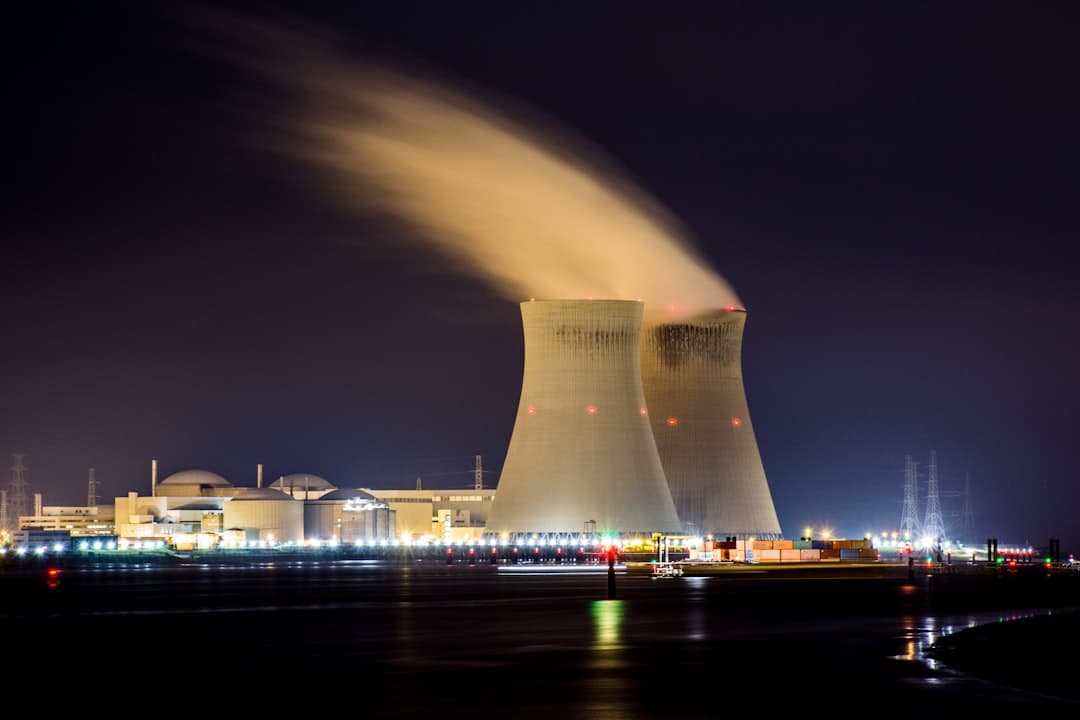
Japan's industry ministry said on Friday the nation needs to replace up to 14 aging nuclear reactors by the 2050s , marking the first time Tokyo has put a number on its post-Fukushima nuclear revival. The proposal comes as Japan rushes to secure enough power generation capacity to meet surging electricity demand, especially for new technologies such as artificial intelligence, data centers and semiconductor factories. Fifteen years after the Fukushima meltdown sent the country's nuclear program into hibernation, Japan is betting its energy future on the very technology it once abandoned.
The timing is no accident. Currently, Japan generates between 60% and 70% of its electricity from hydrocarbons, including coal, oil, and natural gas, which it imports due to lack of its own resources, and the government plans to have 20% of the country's electricity come from nuclear power in fiscal year 2040.
Industry estimates show a potential shortfall in supply of some 5.5 million kW in 2040 —roughly the output of five nuclear reactors. Without new capacity, Japan faces a choice between deepening its reliance on imported fossil fuels or missing its climate targets entirely.
Can Aging Infrastructure Meet Tomorrow's Demand?
Japan currently limits reactor operating lifespans to 60 years, while several facilities have already been in service for around 50 years, and at present, 24 reactors at 11 nuclear power stations are undergoing decommissioning. The ministry's plan calls for replacing up to five nuclear reactors by the 2040s and a total of around 14 by the 2050s. But nuclear power plant construction has become more expensive lately, which casts doubts about whether all the planned reactors would materialize.
The challenge isn't unique to Japan. Across the energy sector, the infrastructure built during the last century is straining under demands it was never designed to meet. In the United States, power burn is forecast to increase 2.0 Bcf/d to 40.3 Bcf/d this summer, remaining the largest U.S. gas demand sector , according to the Natural Gas Supply Association. The record-high natural gas consumption forecast for the summer of 2027 is primarily driven by increasing sales of electricity to the commercial and industrial sectors in the West South Central and Mid-Atlantic regions, with demand growing nationally because of the addition of new data centers and large manufacturing facilities—particularly in Texas and Virginia.
Natural gas hit an unusual milestone in May that hints at the structural shift underway. Lower 48 natural gas power burn approached 40 Bcf/d on multiple days in May, a level rarely hit before June , Natural Gas Intel reported. The early spike raises questions about whether data centers and AI infrastructure have permanently lifted the floor for summer gas demand—or whether May's heat was simply an outlier.
What Happens When the Margins Disappear?
Norway came within hours of finding out. Almost 8% of oil and gas workers offshore Norway threatened to go on a strike from June 5 if trade union negotiations with industry failed, with more than 600 workers out of about 8,100 in total offshore Norway ready to call a strike on Friday, but a last-minute deal with the unions Styrke, Safe, and Lederne in the early hours on June 5 averts the strike.
The industry and trade unions agreed on a general annual pay increase of $4,500 (42,000 Norwegian crowns), including offshore compensation and holiday allowance.
The stakes were global. Norway produces more than 4 million barrels of oil equivalent per day, with oil and gas nearly equally divided at 2 million boepd each, is shipping crude as far as Asia, which struggles without a large part of the Middle Eastern supply, and is also Europe's single biggest gas supplier, having replaced Russia in 2022.
The deal avoids an immediate hit to production estimated at 45,500 barrels of oil equivalent per day. That's a rounding error in normal times. In a market already missing millions of barrels from the Middle East, it would have registered.
The U.S. has been filling the gap—at a cost. The Energy Information Administration reports that U.S. petroleum inventories have fallen to their lowest levels since 2004.
U.S. crude exports climbed to a record 5.6 million barrels per day in May as the Middle East crisis pushed up demand for American oil from Asian and European refiners.
Abhi Rajendran with the Center for Energy Studies at the Baker Institute said the U.S. is "just kind of pulling that out of our inventory, and we're shipping it overseas," and while exports from the U.S. have tempered the global supply shortage and kept prices relatively stable, "the U.S. can't continue to be a backstop just through inventories for too much longer."
The Cushing, Oklahoma storage hub—the delivery point for WTI futures—is approaching operational limits. Cushing inventories fell to 22.4 million barrels as of May 29, down about 4 million barrels compared to February 27, the day before the U.S.-Israeli war with Iran began.
When the level at Cushing gets below 20 million barrels, operational challenges could arise, said Jeremy Irwin, global crude lead for analytics firm Energy Aspects.