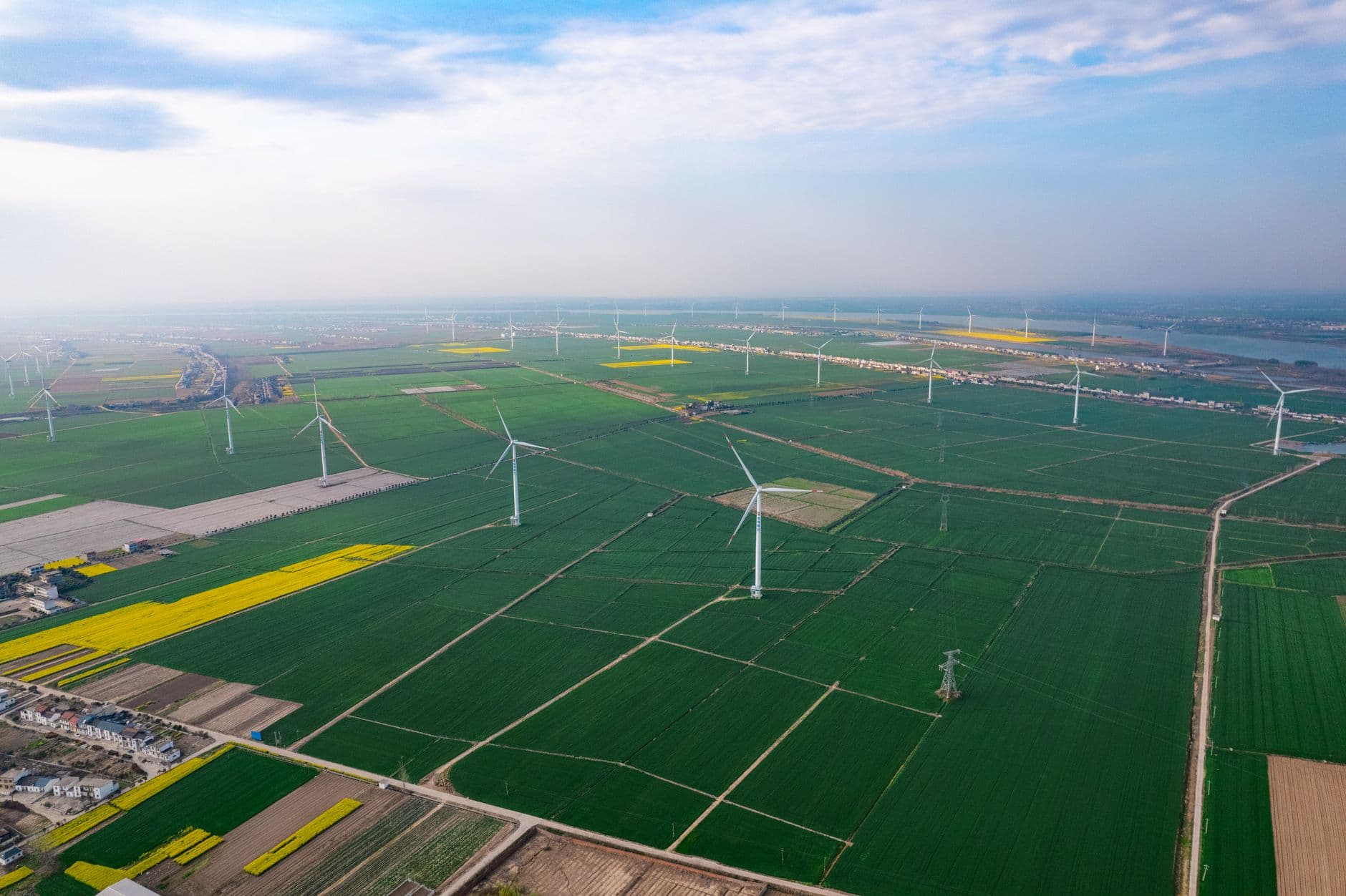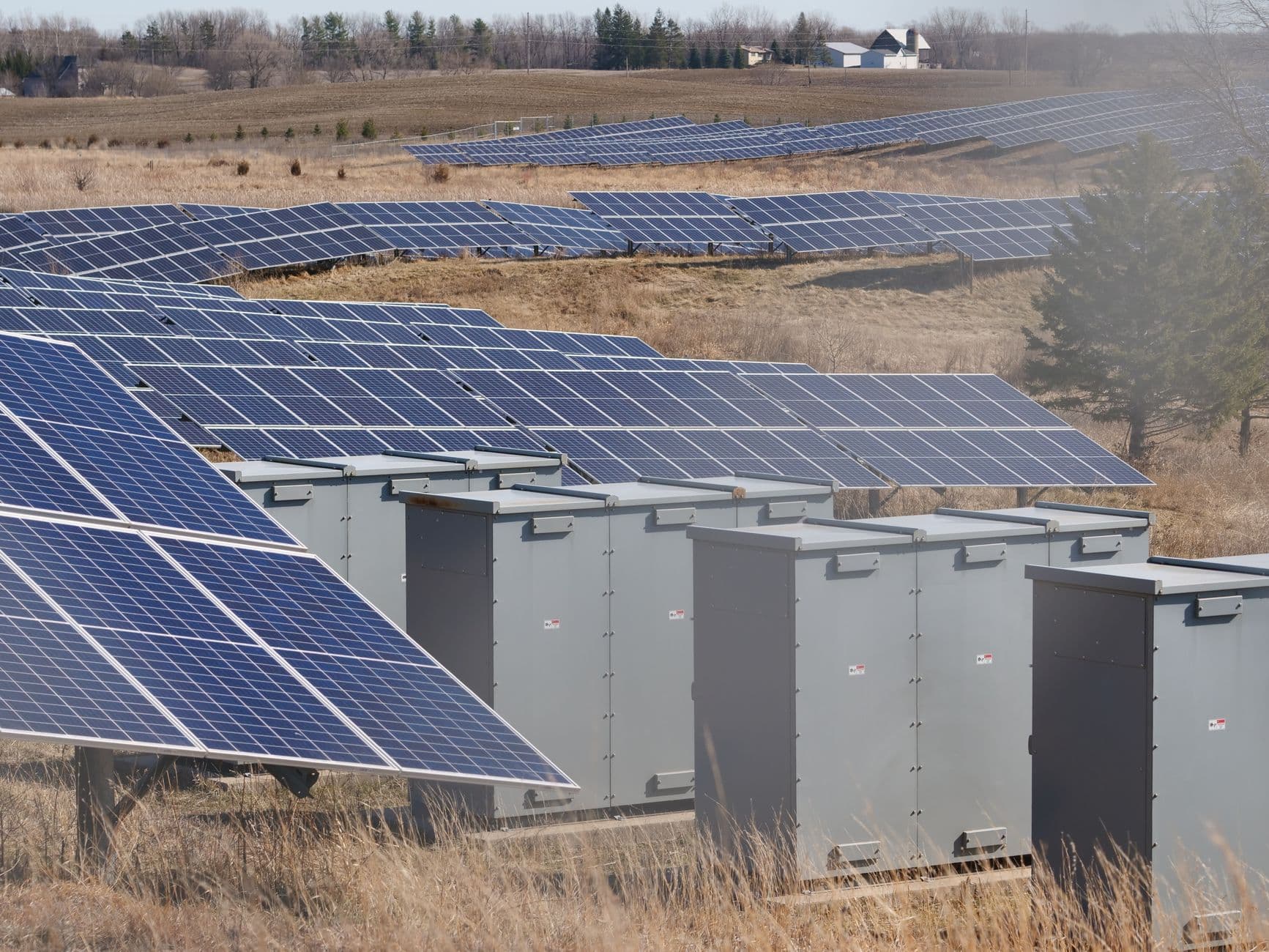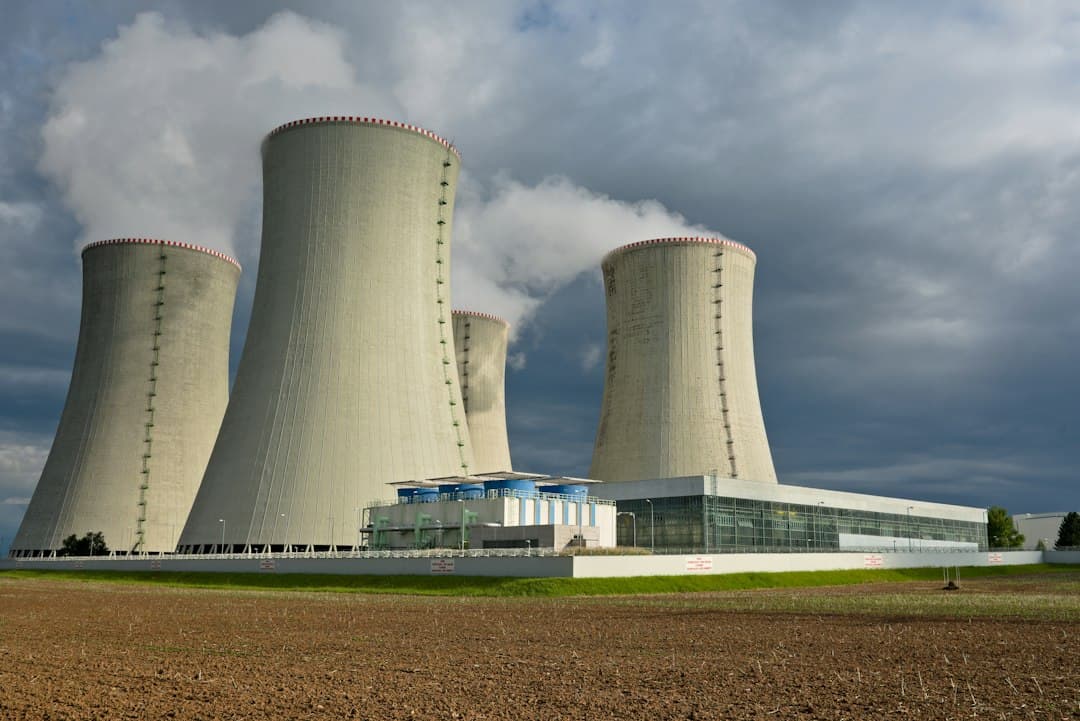
The Global X Uranium ETF (URA) moved +5.36% at Tuesday's close to $48.14, according to market data — its sharpest single-day advance in months. Stretch the lens back a year and the fund has added roughly a quarter of its value since last August. Solar's benchmark fund, TAN, tells the opposite story: it closed Tuesday at $48.85, more than a third below where it stood in May, per market data.
Both funds sit under the "clean energy" umbrella. They are behaving like they belong to different economies. That split is the story: capital chasing the electricity grid's future is rotating hard toward atoms, and away from sunlight, even as governments from Warsaw to Manila pledge exactly the opposite.
Uranium's quiet breakout
Uranium spot prices are closing in on $89 a pound, the highest level since early February, after five months stuck in an $84-to-$87 rut, OilPrice.com reported that uranium prices are gaining momentum again, approaching $89/lb in August after spending five months range-bound between $84 and $87, with a structural supply deficit driving the bullish outlook as years of underinvestment and decade-long mine development timelines struggle to keep pace with expanding reactor demand. The same report notes AI, data centers and China's nuclear buildout could tighten the market further, with utilities accelerating procurement as reliable baseload power becomes increasingly valuable.
It isn't just spot traders. Cameco's stock has climbed alongside its fuel, and long-term contract prices are sitting near 2012 highs, with spot trading around $88.49 a pound, up sharply from a year earlier, according to a recent industry tally. Kazakhstan, source of roughly 40% of the world's uranium, has already seen its state producer Kazatomprom -- the single largest miner, at about a fifth of global output -- trim its 2026 output target, and Niger's SOMAÏR mine has been mired in dispute and its output disrupted since the country's political upheaval, with operations ultimately halted after the mine was nationalized, according to Discovery Alert. Demand is accelerating on one side of the ledger; supply is stuck on the other.
Oil majors bet on the sun's own trick
The atoms-over-photons trade extends past mined uranium and into fusion, a technology that spent seventy years as a physics-department curiosity. Global private investment in fusion hit a record $4.48 billion in 2025, up 69% from the year before, OilPrice.com reported that fusion is shifting from research toward commercialization, with private investment hitting a record $4.48 billion in 2025 and commercial plants targeted for the 2030s and 2040s. Eni has become the most committed of the oil majors, committing more than $1 billion to buying electricity from a Commonwealth Fusion Systems plant and building a business supplying the fuel systems necessary to keep commercial fusion reactors running. Chevron, Equinor, Shell and Cenovus are spreading similar bets across rival fusion technologies, OilPrice.com reported. Eni's head of magnetic fusion initiatives, Francesca Ferrazza, put the ambition plainly to the Financial Times, comparing the technology to "the next refinery" for a company built on oil.
The reason every energy major suddenly wants a stake in a technology that won't generate a commercial watt until the 2040s traces back to the same customer driving the uranium bid: data centers. Wood Mackenzie estimates global nuclear capacity could more than double by 2060, creating a $3.1 trillion investment opportunity, and links much of that growth directly to AI infrastructure. The scale of the underlying demand shift is stark: one industry study projects U.S. data center electricity consumption could rise from 176 terawatt-hours to 580 TWh by 2028. Solar and wind can't promise the constant, dispatchable output a hyperscale data center needs around the clock. Uranium and, eventually, fusion can.
A war that was supposed to help solar
None of this was the plan six months ago. As the U.S.-Israeli war with Iran ground on, the case for renewables looked stronger than ever: governments across Europe and Asia have been scrambling to accelerate a renewables build-out to cut dependence on fossil fuel imports, as the effective closure of the Strait of Hormuz choked off a fifth of the world's oil and LNG shipments, Reuters reported this week. South Korea, Thailand and the EU have all pledged fresh renewables funding in response.
That policy enthusiasm hasn't translated into a matching wave of solar capital, at least not yet. India offers a sharp illustration of the mismatch: the country needs roughly $48 billion to $54 billion a year in renewable investment to hit its 2030 capacity target, but current annual flows sit at just $13 billion to $18 billion — a gap of about $35 billion every year, according to a Knight Frank study. Multiply that shortfall across every import-dependent economy now promising a renewables pivot, and the gap between rhetoric and financing gets large fast.
Put the two trends side by side and the picture sharpens. War and policy are pushing capital toward renewables in principle. AI and grid economics are pulling capital toward uranium and fusion in practice. For now, the second force is winning the argument that matters most to investors: where the money actually goes.