Friday, November 13, 2026Vol. III · No. 317Subscribe
The Mining, Energy & Technology Wire

Clean Power Is Outrunning Its Wires

Britain pays wind farms to switch off, India curtails solar it cannot move, and a Congo copper mine buys batteries to keep the lights on. Money is finally chasing transmission and storage.

Clean Power Is Outrunning Its Wires
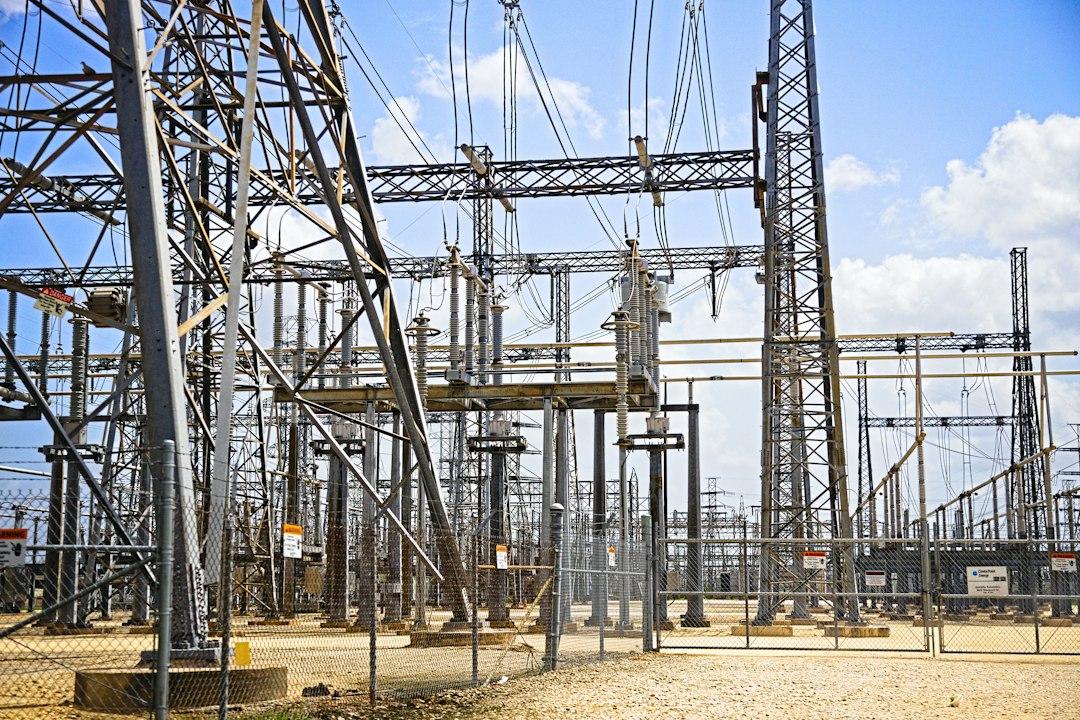
PhotographBritain pays wind farms to switch off, India curtails solar it cannot move, and a Congo copper mine buys batteries to keep the lights on. Money is finally chasing transmission and storage.Photo: Sam LaRussa / Unsplash

On 30 September, Britain paid £30 million to wind and gas generators, Octopus Energy's Wasted Wind tracker showed. Some of that money bought silence from turbines with nowhere to send their power. The rest bought gas plants that fired up to cover the gap. September alone cost £404.3 million in wind-related constraint payments, according to Octopus.

That is the problem in miniature. Wind, solar and storage are going up faster than the wires and firming capacity that deliver them, and the gap is now a line item on someone's bill. This week's developments in Britain, India, Turkey and the Congolese copper belt each put money into transmission or batteries, because generation alone has stopped being enough.

Scotland's wind, England's bill

Britain shows the cost of building first and wiring later. Briefs Finance, in a Nov. 12, 2026 piece linking to a Bloomberg report, says the National Energy System Operator expects the cost of managing the grid to top £3.9 billion next year. Constraint payments reached a record £2.7 billion through October, as NESO pays some generators to turn off and others to fire up.

Octopus says Britain had already passed last year's entire £1.47 billion bill for switching off wind farms and firing up gas plants, with three months of 2026 still to go. "We've already blown past last year's entire bill, and customers are paying every pound of that waste.," said Greg Jackson, Octopus's founder and chief executive. Rebecca Beresford, NESO's director of market, was blunter about the trend: "Constraint costs are extremely high, and they have increased since last year."

The geography explains it. Briefs Finance notes the best wind sites sit in remote parts of Scotland while most demand lies farther south, so NESO pays plants to curtail or ramp, and consumers pick up the charges. Octopus adds that some Scottish transmission boundaries, including B4, were running at just 40% of capacity because temporary upgrade works made existing bottlenecks worse. The fix itself clogs the pipe.

Relief is scheduled but not guaranteed. NESO anticipates a sharp drop after 2030 as major reinforcements move more electricity from north to south. By 2035, though, costs could surge again if generation outpaces the network. Its scenarios put the bill at up to £7.7 billion per year by 2030 at the upper end, Briefs Finance reports, and the government has warned of £10 billion by 2030, per Octopus. Octopus cites FTI analysis it commissioned showing that wholesale pricing reflecting where power is generated would let a typical household save up to £114 a year.

India builds the road

India is trying to avoid the British sequence. Reuters, as carried by Business Standard, reported that the country has approved a high-capacity corridor to carry clean power from western generation hubs to demand centres in the east. The estimated cost is nearly ₹68,800 crore ($7.34 billion), with about six years to build. The 1,150-kV system would be India's highest-voltage power network, able to dispatch far larger volumes than present 765-kV lines. Its first phase links Chhattisgarh, Odisha and West Bengal and connects to a 6,000-megawatt system carrying power from Rajasthan's Bhadla solar region.

The urgency is visible in the curtailment data. OilPrice.com, citing JMK Research & Analytics, reported that grid, flexibility and transmission constraints, plus limited battery storage, forced India to curtail as much as 118.6 GW of solar and wind capacity in September. Grid-India data put 96.9 GW of that in solar and 21.7 GW in wind. The curtailed energy equalled 1.28% of India's renewable generation that month, a small slice for now. But JMK found curtailments rose sharply between May and August versus last year, while 44.6 GW of new solar went in.

India still wants more. Reuters says it targets 500 GW of non-fossil capacity by 2030, from more than 300 GW now. OilPrice.com reports that a senior official said New Delhi plans to soon mandate state-owned utilities to add energy storage.
Turkey buys the whole package

Ankara's new deal pairs generation with the equipment to move and hold it. Daily Sabah reported that Türkiye and China signed a preliminary agreement on the sidelines of the COP31 summit in Antalya. China would invest $15 billion in solar and wind plants totalling 7,000 megawatts, Energy Minister Alparslan Bayraktar said. He said the deal also includes "new energy storage systems and 4,000 megawatts of electricity transmission infrastructure".

The deal fits a target Türkiye unveiled last week: raise renewables' share of installed capacity to 77% from some 63%, with wind and solar reaching 175,000 MW by 2040. Bayraktar said the cooperation would also help domestic production of wind turbine equipment.

Batteries at the mine

One illustration sits in Africa's largest copper mining complex. CrossBoundary Energy's solar and battery facility for Kamoa Copper reached commercial operation on 12 August 2026 and supplies 30 MW of baseload power. It pairs a 233 MWp solar array with a 526 MWh battery system. International Mining reported that Kamoa set the requirement at 30 MW at any hour of any day with 95% availability, a standard no solar farm meets on its own.

Speed matters as much as scale. The plant reached commercial operation 16 months after the April 2025 power purchase agreement, CrossBoundary says. It cites African Energy putting the average African solar-plus-battery project at around 29 months. DHYBRID, which built the control layer, coordinates 1,300 devices. "ask for 30 MW and you get 30 MW, ask for 50 MW and you get 50 MW of stable output." said its chief technology officer, Tobias Reiner. DHYBRID has won the contract to add a further 35 MWh, taking the battery to 561 MWh, with commercial operation targeted for January 2027. Kamoa-Kakula plans to lift its on-site solar baseload to 120 MW within 18 months.

CrossBoundary says firm renewable power has fallen about 50% in cost over five years, making solar-plus-storage cheaper than conventional thermal baseload.

The same arithmetic in America

The U.S. is on the same path. The Energy Information Administration expects power generation to rise 2.7% this year, with most growth over its forecast coming from utility-scale solar. Utility Dive reported that EIA sees the utility sector installing more than 25 GW of battery storage next year, reaching 91.7 GW of installed capacity by the end of 2027. Utility Dive also reported that EIA said rising electricity demand "is met primarily by increasing generation from renewable energy sources."

Cheap generation is no longer the scarce thing. A mine in Congo has worked that out and paid for batteries to firm its solar. Britain's bill shows what happens to a grid that stays in the wrong order: it pays wind farms to stand still while it runs gas next door.

Original reporting and analysis by the Stake & Paper editorial team. See linked sources within the article.

Share this story

More from Stake & Paper

Was this article helpful?

ClaimWatch

Mining claims intelligence — from query to report, in minutes.

Every unpatented mining claim across all twelve BLM states. Leadfile audits, due diligence, site selection, regional prospecting, entity investigations, and AOI monitoring — delivered as complete report packages.

4.4M+
Claims Tracked
12
BLM States
7
Report Types
Request a Sample Report
Stake & Paper AM

One morning brief. The whole energy sector.

Original analysis, the day's most important wire stories, and market data — delivered before your first cup of coffee. Free.