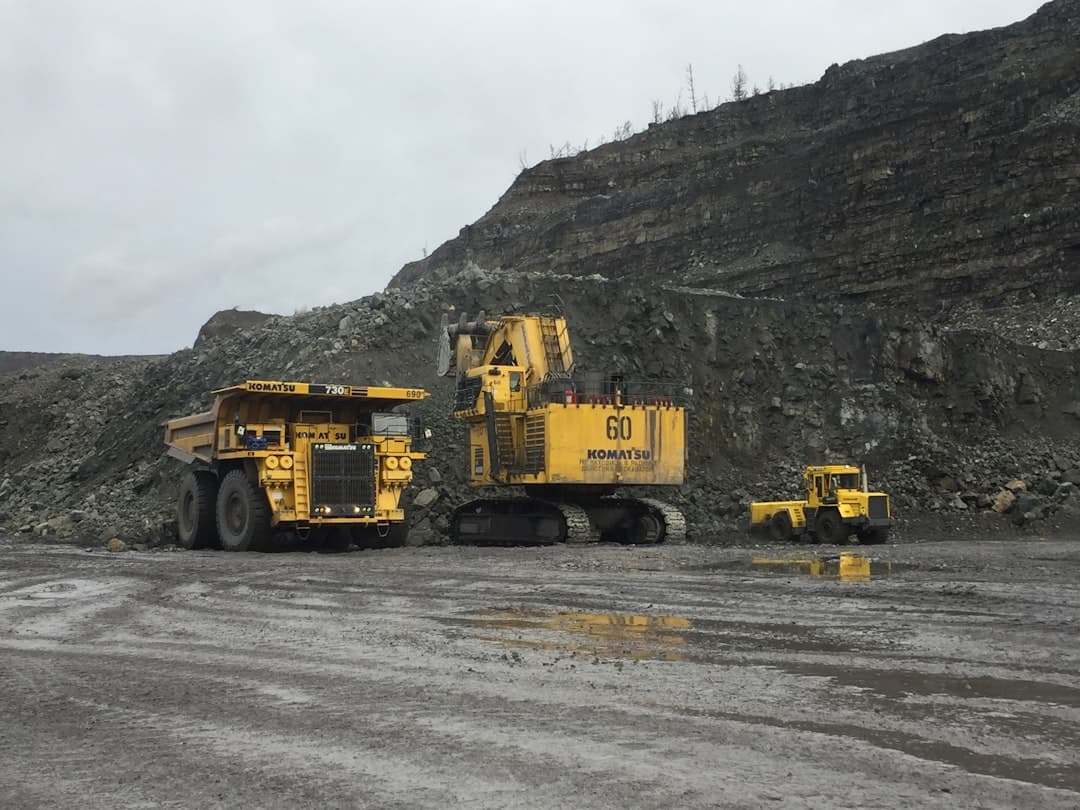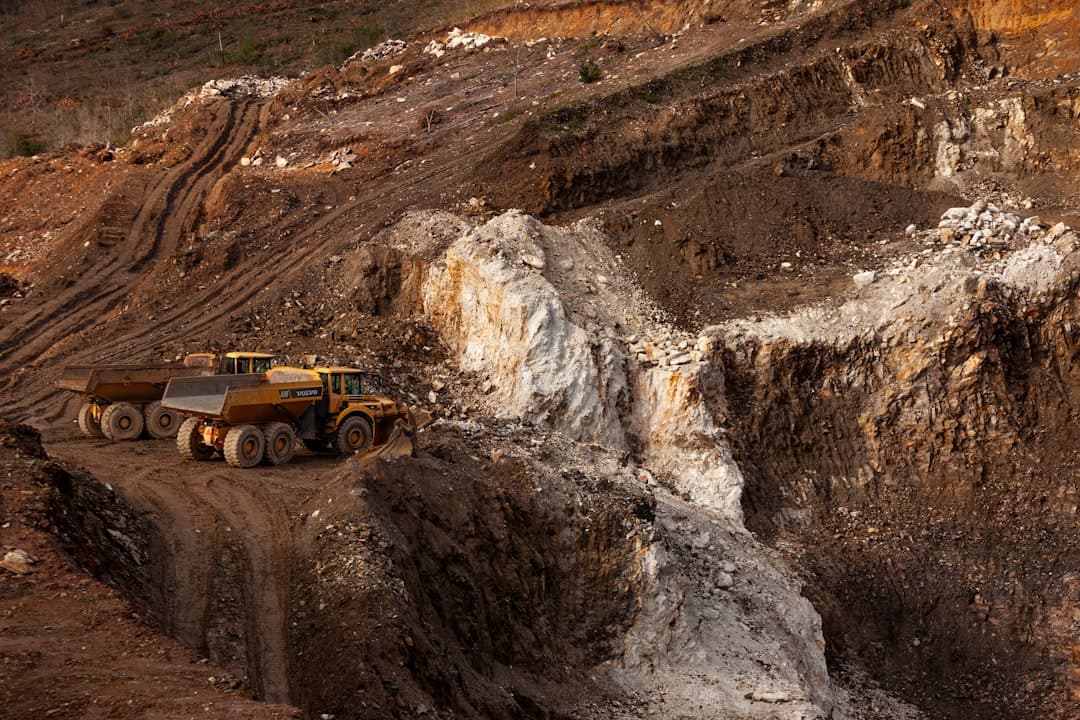
Nine driverless trucks now run a five-kilometer route through a Norwegian tunnel, hauling limestone from quarry to crusher without a driver in the cab. Volvo Autonomous Solutions says its mining and quarrying fleet has now moved more than 3 million tonnes of material autonomously, a figure the company calls a "new milestone achievement." It is not a demo. It is a production line that happens to run on rock instead of rubber and steel.
That milestone is the tell. Mining has quietly solved the hard part of its technology transition — control, sensing, coordination at scale — while the supposedly simpler half, swapping diesel engines for batteries, keeps stalling on cost and power. The same industry that trusts software to drive a truck through a mountain will not yet trust a battery to finish a shift. That asymmetry, not any single autonomy milestone, is the story.
The evidence for automation's maturity is not one company's press release. It is a pattern across three unrelated fleets. Volvo's autonomous haulage at Brønnøy Kalk began in 2023 and reached 1 million tonnes there alone in 2025, while a second site, Boliden's Garpenberg mine in Sweden, runs autonomous trucks through a dam reinforcement project. Caterpillar, which traces its program back to 2013 in large open-pit mines, now has nearly 700 autonomous trucks working worldwide — what the company describes as "among the largest and most proven in the industry," — and in 2024 pushed the technology into its first quarry application, automating four 100-ton Cat 777 trucks at a Virginia plant. Rio Tinto has taken the same logic to rail: up to 53 driverless trains, each hauling 240 wagons, move across a 2,000km Pilbara network at headways as tight as 18 minutes, moving 326.2 million tonnes of iron ore in 2025 alone. A perception system on that network sifts roughly 130,000 detected objects per journey down to about 2,000 genuine hazards, and a tool called Recon AI has lifted the share of trains that can proceed without a manual wagon check from 40% to 60%. Automotive World's read on the Volvo numbers captures the broader shift: "mines and quarries are proving the commercial case for driverless trucks, giving Volvo a controlled setting in which to scale."
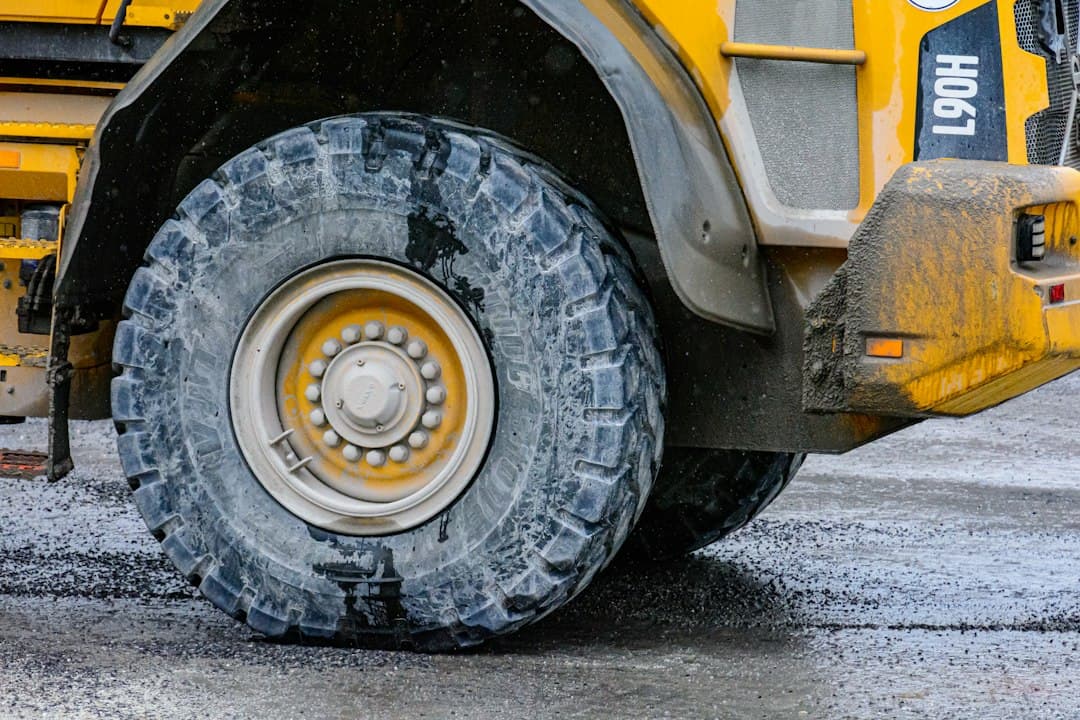
Set that against electrification, and the contrast is almost comic. BHP and Rio Tinto together have exactly two battery-electric haul trucks running, a pair of Caterpillar "Early Learner" vehicles at BHP's Jimblebar mine in the Pilbara that arrived in December. At the same event marking that launch, BHP ordered 62 more diesel trucks for the same mine — locking in combustion haulage there potentially through 2041. BHP Australia president Geraldine Slattery called it "too early" to say whether the company would retire its roughly $500 million diesel fleet even if the trial succeeds. Rio Tinto is not even running its own trucks in that trial; it says it wants to "gauge the results" before committing its own sites. Its own half-year filing is blunter still about the Pilbara push: "technology availability remains the major constraint." A parallel eight-truck battery-swap trial at Oyu Tolgoi in Mongolia, running with China's State Power Investment Corporation since October 2025, has reached only the halfway point of its test. Meanwhile Rio Tinto's Scope 1 and 2 emissions sit at 15.9 Mt CO2e, down 14% from a 2018 baseline, even as Pilbara iron ore output hit its highest H1 level since 2018 — proof that today's efficiency gains are coming from operational tightening, not the trucks.
The honest counter is that electrification is simply earlier in its curve than autonomy was, and will compress the same way. Fortescue makes that case with its checkbook: 200 zero-emission haulers on order from XCMG, phased in from 2028 to 2030, with a claimed 30-minute recharge. Chief executive Dino Otranto insists "We've been standing here for a number of years now saying the technology is real, the economics are real, and it makes sense." Curtin University's Peta Ashworth grants the difficulty but not the delay: "the transition is messy," she said, adding that lessons from recent supply shocks mean the industry has "got to accelerate it." It's a fair point — haulage and locomotives are the main source of BHP's direct Scope 1 emissions, and the Pilbara accounts for about 40% of Western Australia's total carbon output, so the pressure to move is real.
But autonomy's advantage was never really about the software being easier — it was about the economics being obvious. Volvo sells its service as "Autona / earth," a package bundling trucks, virtual driver, infrastructure and fleet management, so miners buy an outcome rather than a fleet, sparing them, in Automotive World's phrase, "spares operators the integration work and heavy capital outlay autonomy would otherwise demand," Batteries offer no equivalent shortcut: they need charging infrastructure, grid capacity and duty-cycle redesign that a mine site cannot lease its way around. Capital is voting accordingly. Copper and energy equities have had a strong run this year — the Global X Copper Miners ETF has climbed up 20.81% so far in 2026, and the Energy Select Sector SPDR is up 38.76% so far in 2026 — money chasing extraction volume, not clean haulage.
If the pattern holds, expect autonomy to keep compounding while electrification stays a rounding error in fleet plans for years, not quarters. The mines that automated early will simply automate diesel trucks for longer, not because anyone doubts the physics of batteries, but because nobody has yet made the economics as boring — and therefore as adoptable — as a driverless truck already is. The tunnel in Norway proves the software works. The engine underneath it, for now, still runs on the same fuel it always has.