Wind Makes Solar's Batteries Smaller
Solar equities have slid for a year while the engineering case keeps improving. Ember's new modelling shows wind cuts the cost of near-firm clean power, and that squeezes the case for new coal and gas plants.
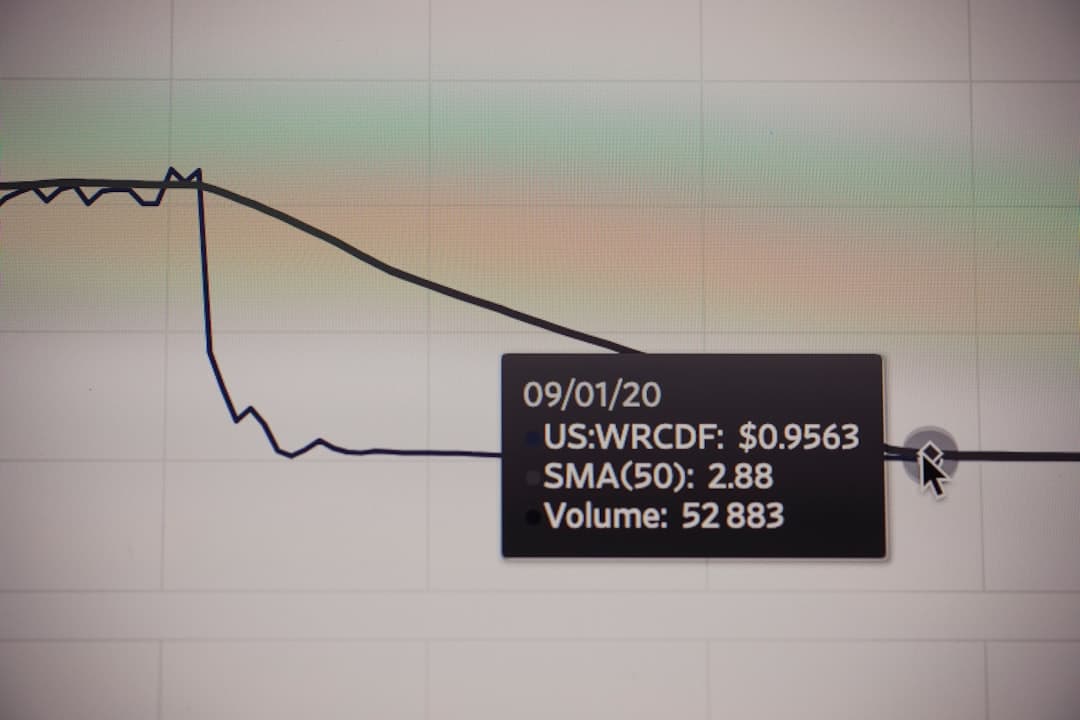
Invesco's TAN solar ETF closed May 2026 at $73.93. Per market data, it ended October at $40.20 and closed at $40.20 on Monday. Over the span from October 2025 to now, TAN is down 20.8%. The lithium and battery fund LIT is down 9.5% over the same stretch, and it dropped 3.27% at its latest close.
Equity markets are marking down solar and storage just as the engineering case for them gets stronger. Ember's latest analysis, "Harnessing the winds," dated 16 Nov 2026, finds that adding wind to solar and batteries cuts the median cost of reaching 90% uptime from $105 to $86/MWh. GreentechLead, which reported the study on November 13, 2026, puts the $19/MWh reduction at an 18.1 percent saving against solar-plus-battery alone. The price charts don't explain the divergence, and the data here can't either. But it frames what follows.
Why wind shrinks the battery
Ember defines uptime as the share of demand a system meets hour by hour from its own solar, wind and batteries, and benchmarks at 90%, with gas or diesel covering the rest. The saving comes mostly from storage. pv magazine, reporting the Ember work, attributes the lower median cost primarily to reduced storage requirements.
The battery needed for 90% uptime shrinks from 24 hours of load to 10 in Canada, according to Ember. In the US and Europe it falls from 20 hours to 12, and in China from 18 to 12. Near the equator the effect fades: in India the battery stays at 14 hours.
Latitude drives the result. North of 45°, pv magazine reports, wind cuts the median cost of 90% coverage by 40%, from $0.164/kWh to $0.099/kWh. In Chile and Argentina, south of 40°S, costs fall from $0.094/kWh to $0.063/kWh. The reason is seasonal. In Germany, GreentechLead notes, wind produces 44 percent of its annual output between November and February, against 12 percent for solar.
Weather lulls rarely coincide. Ember reports that a solar lull week comes roughly four times a year and a wind lull week roughly eight, but both at once only about once every four years. Even Germany's worst combined week of the decade leaves a deficit of approximately five days of average demand, pv magazine reports, against six with either technology alone.
The fossil pipeline
This matters most for the 845 GW of coal and gas plants Ember says are in planning. At 90% uptime, Ember says, wind raises the share with a cheaper renewable alternative from 71% to 90%. Electrek, reporting the analysis, says that once backup for all demand is included, 706 GW of planned fossil capacity sits in regions where the renewable alternative costs under $100/MWh, falling to 520 GW without wind.
Hormuz sharpens the comparison. Ember says the disruption has pushed gas and coal prices sharply higher, and that power from new coal and gas plants is heading above $100/MWh. With wind, Electrek reports, regions that account for 75% of global electricity demand can meet 90% of it for less than $100/MWh, against only 50% with solar and batteries alone.
Electrek's advice to investors is that for plants expected to run for decades, a cheaper renewable alternative is likely already available, so the economics deserve scrutiny.
Ember's own caveats are stiff. Ember says the costs come from a model run on baseload demand, "the same every hour, day and night, summer and winter," and states plainly: "So the costs here are a stress test, not a forecast: real systems should do better."
The limits cut the other way too. GreentechLead notes the comparisons measure the cost of supplying equivalent electricity, not the ability to replace every grid service a single coal or gas plant provides. Ember's wind figures are modelled technical potential, not financed projects. And its 2050 price paths are projections, not guaranteed tariffs.
Capital costs are the real brake. Ember puts the cost of capital where the median person in Africa lives at 14% and in Europe at 8%. With regional rates, the median cost of 90% uptime with wind rises from $76 to $126/MWh in Africa and from $99 to $104/MWh in Europe. Wind helps everywhere, but it doesn't erase the gap between cheap money and dear.
Where the money is going
Amazon is putting money behind the combined-resource logic in India, where solar already outbuilds the US. Ember's Global Electricity Review 2026 says India installed more new solar capacity than the United States for the first time. On November 17, 2026, Amazon said it plans to invest $7 billion in Indian renewables by 2030, on top of $4 billion already contracted. The package includes four new utility-scale projects totalling 934 MW, among them a 234 MW wind farm in Karnataka, its largest wind project contracted in Asia to date. Kara Hurst, Amazon's chief sustainability officer, described the $7 billion as "helping bring additional wind and solar capacity online while contributing to India's energy security".
Storage is moving in step. GreentechLead reports that Maharashtra's state distributor awarded 2,000 MW/4,000 MWh of battery capacity in September 2026, and that winning tariffs for selected two-hour standalone projects ran from ₹2.32 lakh to ₹2.40 lakh per MW per month in 2026. Ember's review adds that battery costs fell a further 45% in 2025 while deployment grew 46% to an estimated 250 GWh.
Electrification is the argument at COP31. Oil & Gas 360 reports that Turkey's proposed "35 by 35" initiative in Antalya seeks to lift electricity's share of final energy consumption to 35% by 2035, from about 23% today. Ember's earlier review found solar and wind together met 99% of 2025 demand growth, and renewables (33.8%) overtook coal (33.0%) in the global mix.
Daan Walter, a principal at Ember, put the research premise bluntly: "We already know that solar and wind are cheap." What the report adds is that wind makes solar's batteries smaller, and a smaller battery is a cheaper power plant. Whether that reaches share prices before the next fossil plant reaches financial close is the open question.